



10 Common Scams in Chiang Mai & How to Avoid Them (2025 Guide)
Traveling to Northern Thailand? Stay safe with our guide to the 10 most common scams in Chiang Mai. Learn how to avoid the gem scam, rental traps, and more. A local's guide by C and R Thai Massage.
CHIANG MAI OLD TOWN AND TRAVEL TIPS
12/13/20259 min read


10 Common Scams in Chiang Mai and How to Confidently Avoid Them: A Local’s Guide to Staying Safe
Chiang Mai is, without a doubt, one of the most magical cities in Southeast Asia. It is the land of misty mountains, golden chedis, incredible street food, and the famous "Sabai Sabai" (relaxed and happy) lifestyle. For the most part, it is also incredibly safe. Violent crime is rare, and the locals are renowned for their hospitality and kindness.
However, like any major tourist destination in the world—from Paris to New York to Bangkok—where there are tourists, there are opportunists.
There is nothing worse than the sinking feeling in your stomach when you realize you’ve been tricked. It’s not just about the money; it’s the feeling of betrayal that can sour a beautiful trip. It creates stress, tension, and anxiety—the exact opposites of the peace and relaxation you came here to find.
At C and R Thai Massage, we believe that true wellness starts with peace of mind. We want you to walk the streets of our beautiful city with confidence, not fear. We want you to save your hard-earned Baht for delicious Khao Soi, beautiful handicrafts, and (of course) a rejuvenating massage, rather than losing it to a trickster.
Knowledge is power. By understanding how these common tricks work, you can spot them a mile away, smile politely, and walk on by. Here is our comprehensive guide to the 10 most common scams in Chiang Mai and exactly how to avoid them.
1. The "Temple is Closed" Scam (and the Helpful Stranger)
This is the grandfather of all Thai tourist scams. It is most famous in Bangkok (near the Grand Palace), but it happens at major Chiang Mai temples like Wat Phra Singh or Wat Chedi Luang too.
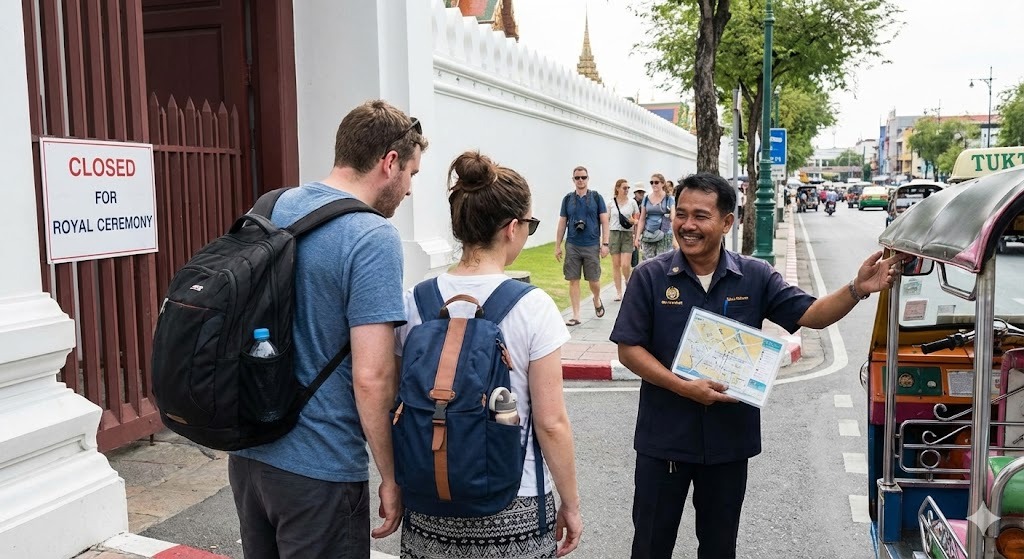
The Scenario: You are walking toward the entrance of a famous temple. A polite, well-dressed stranger approaches you. They speak excellent English. They inform you that, unfortunately, the temple is closed today due to a "Special Buddhist Holiday," "Monk Cleaning Day," or a "Royal Ceremony."
But don’t worry! They have a great alternative. They know a Tuk-Tuk driver who can take you on a special tour of other "Lucky Buddhas" or lesser-known temples for a very low price (like 20 Baht).
The Trap: The temple is not closed. The stranger is a tout. If you get in that Tuk-Tuk, you will be driven to gem shops, tailor shops, and souvenir stores where the driver gets a commission for everything you buy (or a fuel voucher just for bringing you). You will waste half your day being pressured to buy things you don't want.
How to Avoid It:
Check the Gate: Walk all the way to the ticket booth or gate yourself. If it’s open, it’s open.
Trust Official Sources: Temples rarely close unexpectedly.
Polite Refusal: Just smile, say "Mai Pen Rai" (No worries), and keep walking.
2. The Motorbike Rental "Passport Hostage" & Scratch Scam
Renting a scooter is the best way to see the Samoeng Loop or drive up Doi Suthep, but it can be risky if you choose the wrong shop.
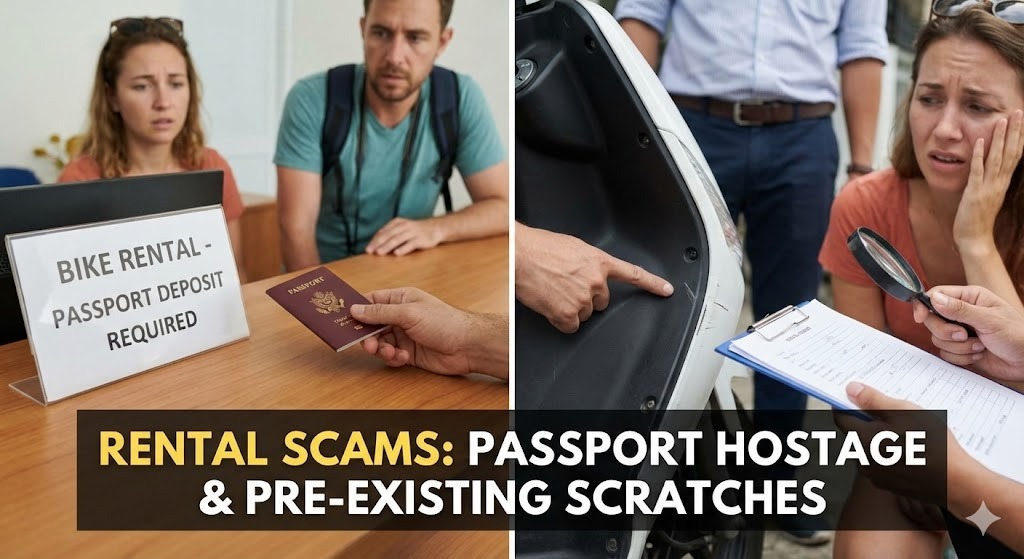
The Scenario: You find a rental shop offering bikes for a very cheap price. They demand you leave your original passport as a deposit. When you return the bike, they point out a small scratch (which was already there) or a mechanical issue and demand an exorbitant fee (thousands of Baht) to fix it. They hold your passport hostage until you pay.
The Solution:
Never Leave Your Passport: It is illegal for them to keep it. Reputable shops will accept a cash deposit (usually 3,000–5,000 Baht) and a copy of your passport.
The 360-Video: Before you drive away, take your phone and film a slow, high-resolution video of the entire bike. Zoom in on existing scratches. Point them out to the owner.
Read Reviews: Only rent from shops with high ratings on Google Maps.
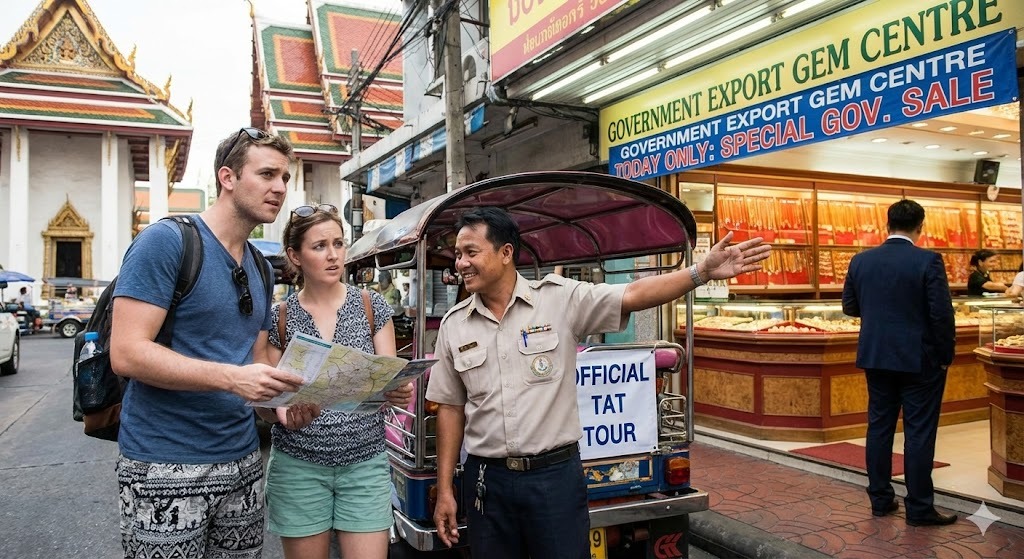
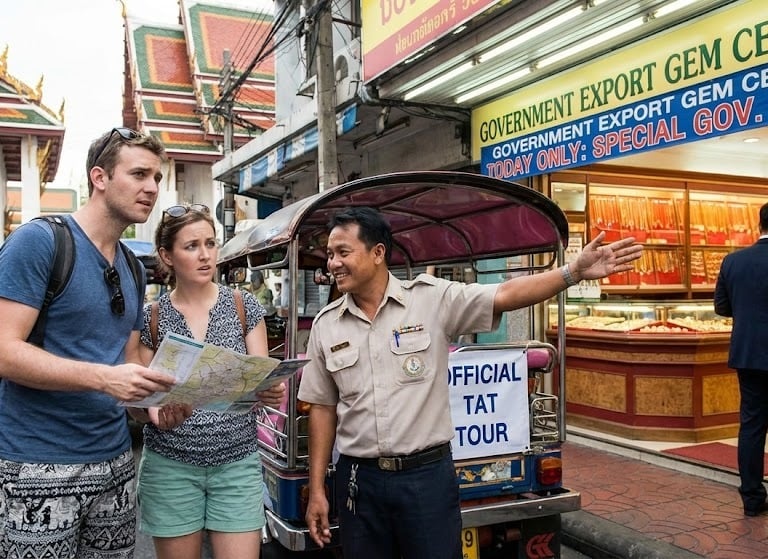
3. The Tuk-Tuk Gem Scam (The "Government Sale")
This often follows the "Temple is Closed" scam.
The Scenario: A Tuk-Tuk driver offers you a ride for an insanely low price, maybe 10 or 20 Baht. He tells you that today—and today only—is a special "Government Export Sale" or "Thai Student Promotion." He says you can buy Thai rubies or sapphires tax-free and sell them in your home country for double the price.
The Trap: There is no government sale. The gems are usually low-quality or synthetic glass. They are worth a fraction of what you pay. You will not be able to resell them.
How to Avoid It:
If it sounds too good to be true, it is.
Avoid 20 Baht Rides: Pay the fair market price for transport. If a driver offers a trip across town for less than the cost of a bottle of water, there is a catch.
4. The "Tailor Shop" Pressure Cooker
Chiang Mai has many talented tailors, but there are also many aggressive sales traps.
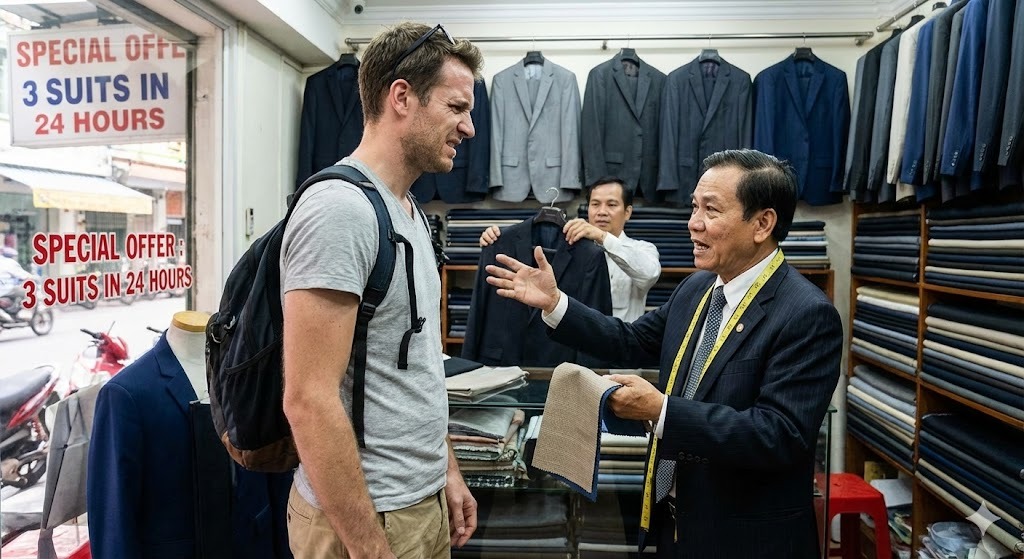
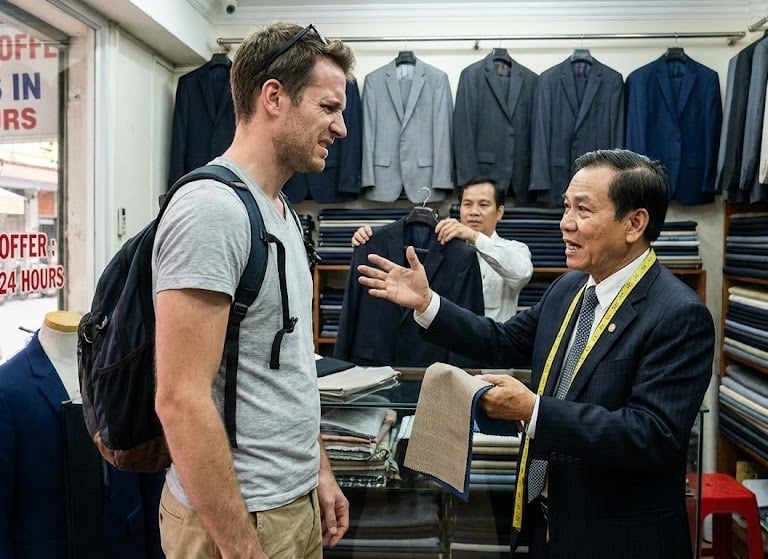
The Scenario: Similar to the Gem Scam, a driver or tout takes you to a tailor. You are promised an Armani-quality suit or silk dress for a rock-bottom price, ready in 24 hours.
The Trap: The materials are often cheap polyester blends, not cashmere or silk. The stitching is rushed and poor quality. Once you pay the deposit, their attitude changes, and if you aren't happy with the fit, getting a refund is impossible.
How to Avoid It:
Do Your Research: Go to tailors that have distinct reputations and reviews, not random ones a driver takes you to.
Check the Fabric: Learn to feel the difference between real silk/wool and synthetic.
Take Your Time: Quality tailoring takes days and multiple fittings, not 24 hours.
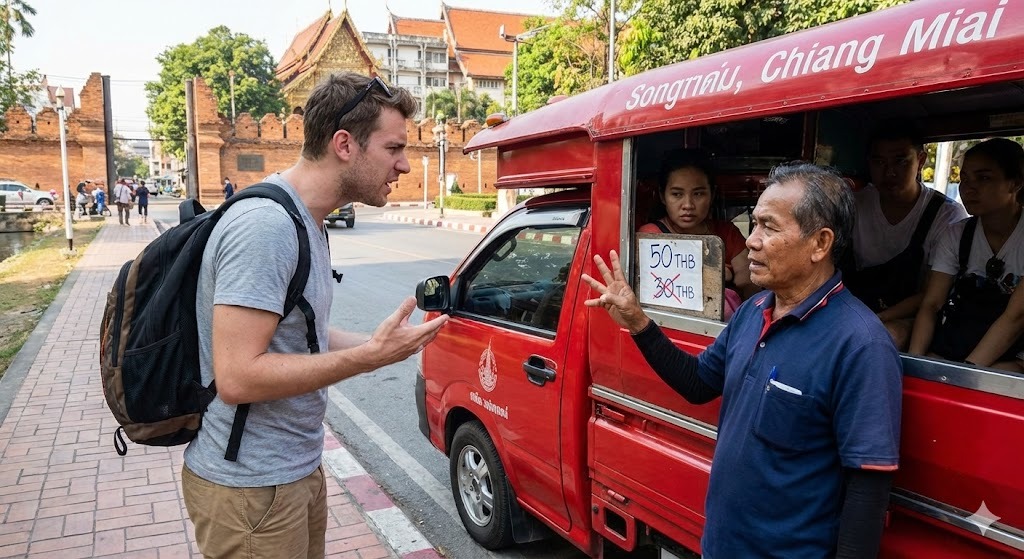
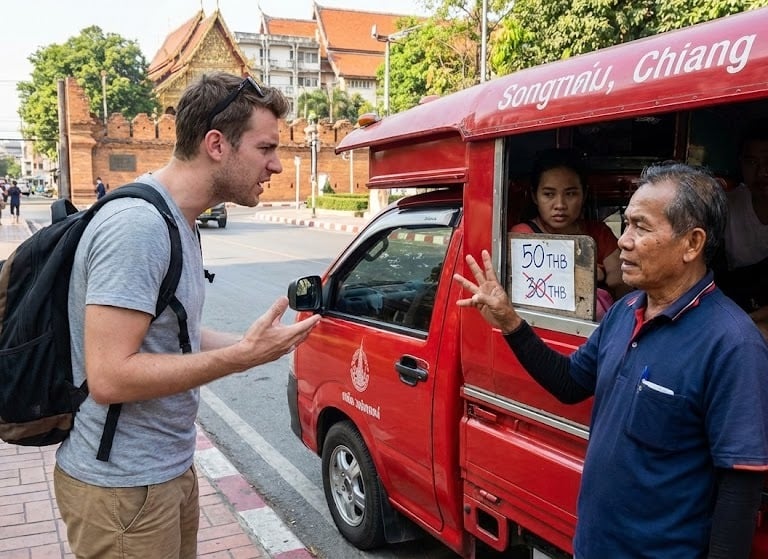
5. The Songthaew (Red Truck) Price Hike
The Rod Daeng (Red Truck) is the iconic transport of Chiang Mai. They operate as shared taxis.
The Scenario: You flag down a red truck. You ask the driver, "How much to go to Nimman?" The driver looks at you, sees you are a tourist, and says "100 Baht."
The Trap: The standard price for a shared ride within the city (inside the Middle Ring Road) is usually 30 Baht per person. By asking "How much?", you signal that you don't know the price, inviting them to overcharge you.
How to Avoid It:
Know the Rule: Flag the truck, tell the driver your destination. If he nods, hop in the back.
Don't Ask, Just Pay: When you arrive, get out, walk to the driver’s window, and hand him 30 Baht per person confidently. 99% of the time, he will take it and drive away.
Negotiate for Private: If the truck is empty, he might offer to take you as a "private taxi." In this case, negotiating a price (100-150 Baht) is fair.
6. The "Sexy Massage" Trap (And How to Find Real Massage)
This is a sensitive topic, but important for our industry.
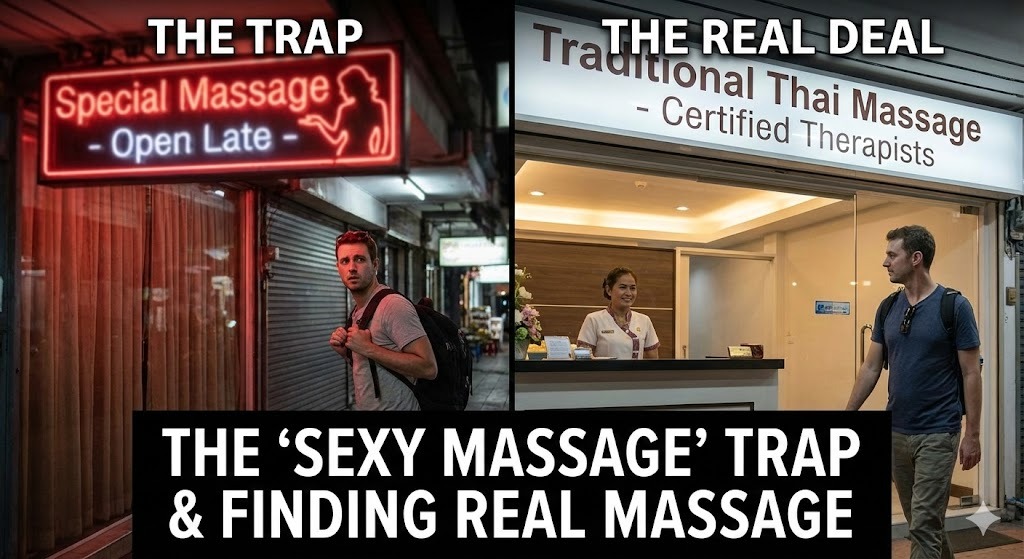
The Scenario: You are walking down the street looking for relief for your back pain. You see a shop with neon lights, perhaps girls in revealing clothing sitting outside calling out to men.
The Trap: These are not therapeutic massage clinics. You will not get a professional massage; you will likely be pressured into other services. For families, couples, or anyone looking for genuine healing, this is uncomfortable and awkward.
The Solution:
Look at the Uniforms: Professional therapists (like at C and R) wear modest, professional uniforms (often traditional Thai clothing or polo shirts).
Look at the Environment: Is it clean, bright, and focused on wellness? Or is it dark with red lights?
The Price: If the price is suspiciously low (like 100 Baht), be wary. Quality linens, air conditioning, and trained staff cost money.
Come to C and R Thai Massage: We pride ourselves on being a legitimate, family-friendly, therapeutic environment. We focus on anatomy, muscle release, and relaxation.
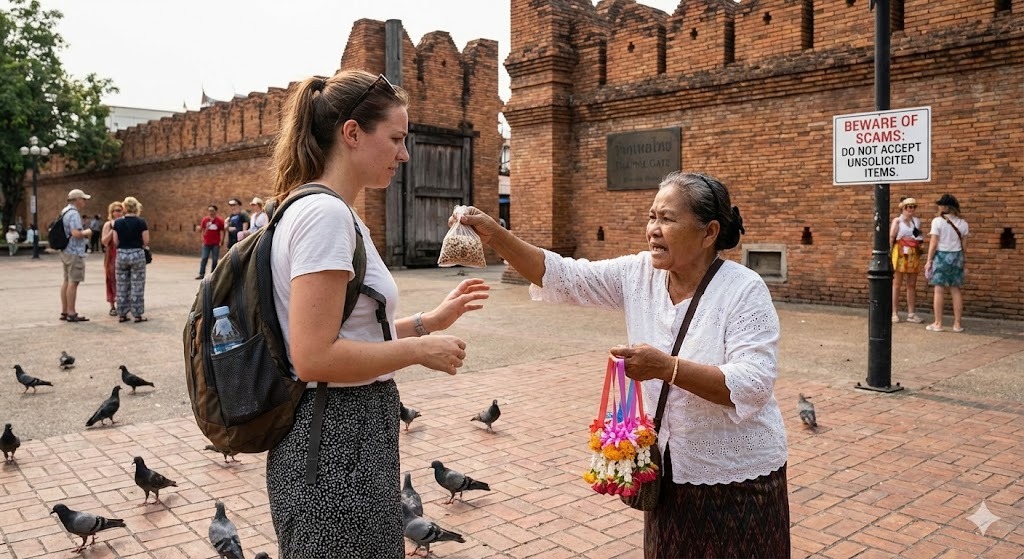
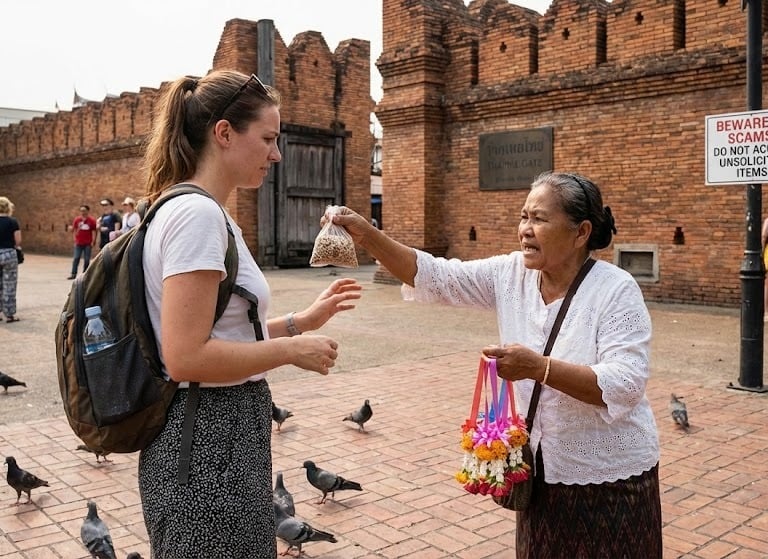
7. The Bird Seed / Flower Scam at Tha Phae Gate
The Scenario: You are at Tha Phae Gate taking photos of the pigeons or the ancient wall. Suddenly, someone shoves a bag of bird feed or a flower garland into your hands. You instinctively grab it.
The Trap: The moment you touch it, they demand payment (often 100 Baht). They will cause a scene if you try to give it back, claiming you "contaminated" it or already used it.
How to Avoid It:
Hands in Pockets: Be aware of your personal space.
Refuse Firmly: Do not accept anything handed to you. Shake your head and walk away.
Note: Feeding pigeons at the gate is actually discouraged by the municipality for hygiene reasons anyway!
8. The "Incorrect Change" / The 1,000 Baht Bill
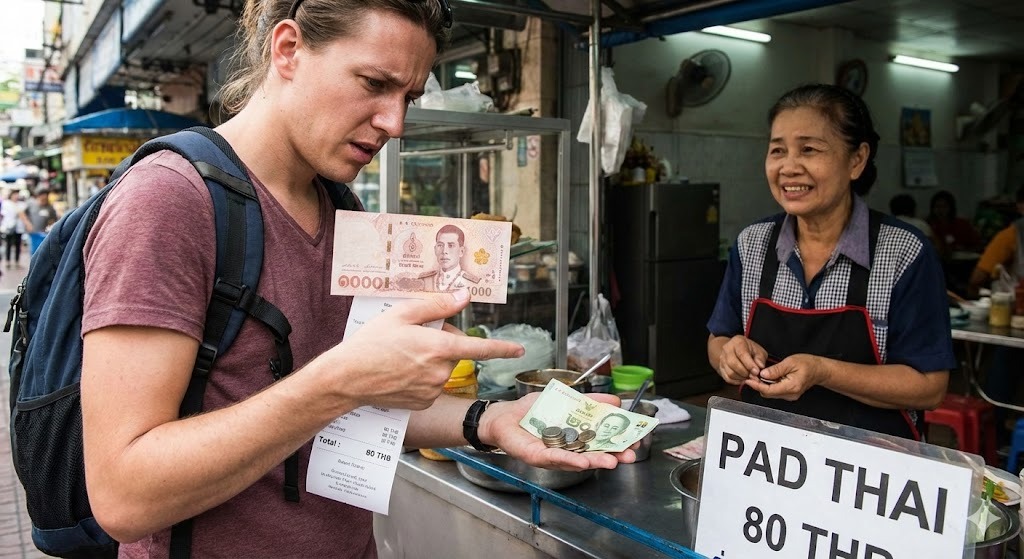
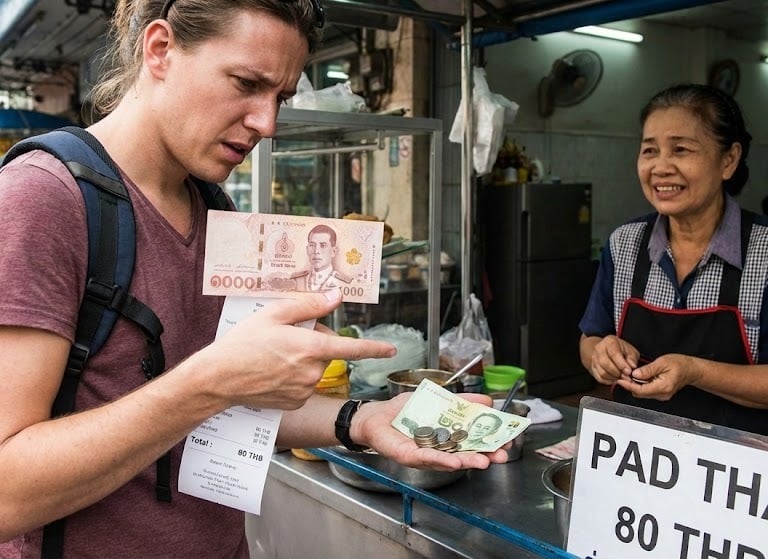
The Scenario: You buy a souvenir at a market for 150 Baht. You hand over a 1,000 Baht bill. The vendor gives you change for a 500 Baht bill. When you correct them, they insist you only gave them 500.
The Trap: This relies on the fact that 1,000 and 500 Baht notes can look somewhat similar in low light, and tourists aren't familiar with the currency colors yet.
How to Avoid It:
Vocalize Your Payment: When you hand over a large bill, say out loud: "Here is one thousand Baht."
Look at the Note: Make eye contact while holding the note before handing it over.
Break Bills at 7-11: Try to use small change at markets and keep your 1,000 Baht notes for 7-Eleven or larger restaurants where receipts are automatic.
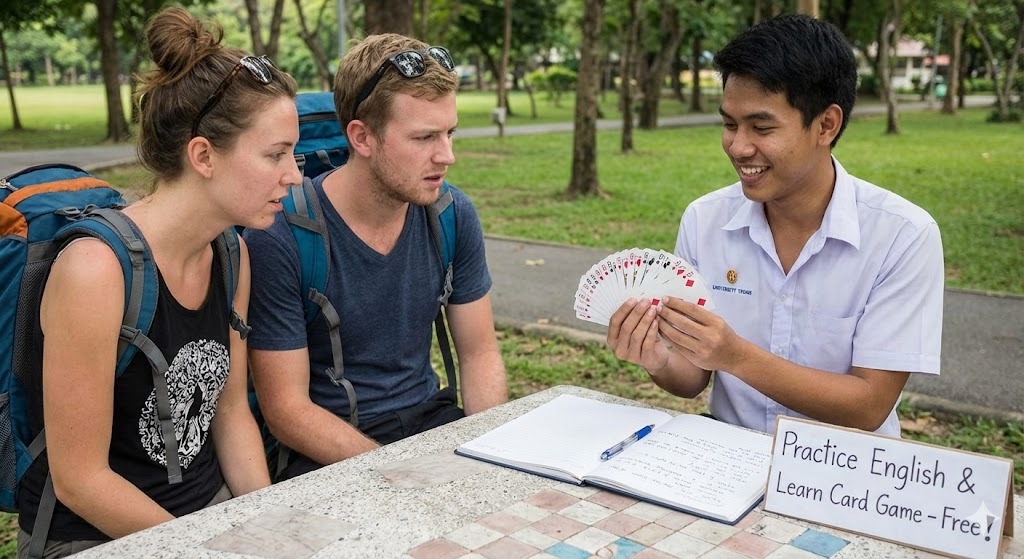
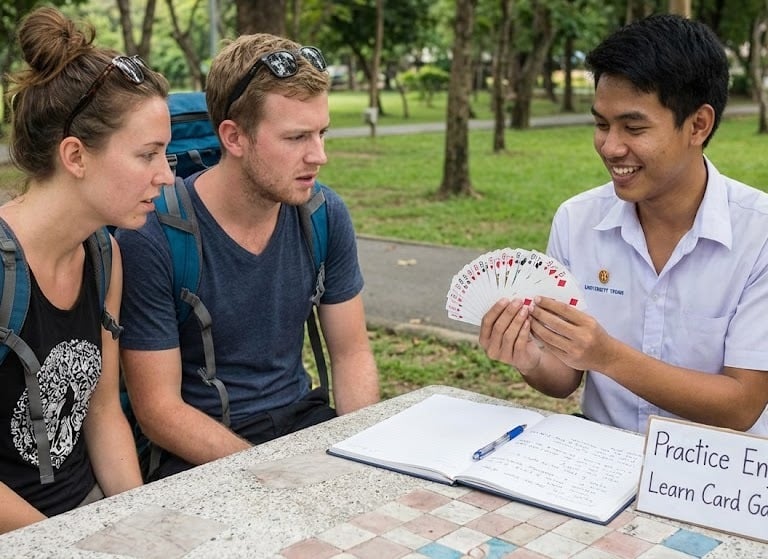
9. The "Friendly Local" / English Student Card Game
The Scenario: A very friendly local approaches you at a mall or market. They ask where you are from. They mention their daughter/son is going to study in your country soon. They invite you to their home for a meal to "practice English."
The Trap: Once at the house, a card game (Blackjack or Poker) is suggested. It starts for fun, but soon money is involved. You are tricked into thinking you are winning, the stakes are raised, and suddenly you lose a massive hand and owe them thousands of dollars. They may act aggressive to get you to pay.
How to Avoid It:
Stranger Danger: While Thais are friendly, random invitations to a stranger's private home immediately upon meeting are rare and culturally unusual.
Decline Politely: Say you have a tour booked or are meeting friends.
10. The Overpriced Night Market Antique
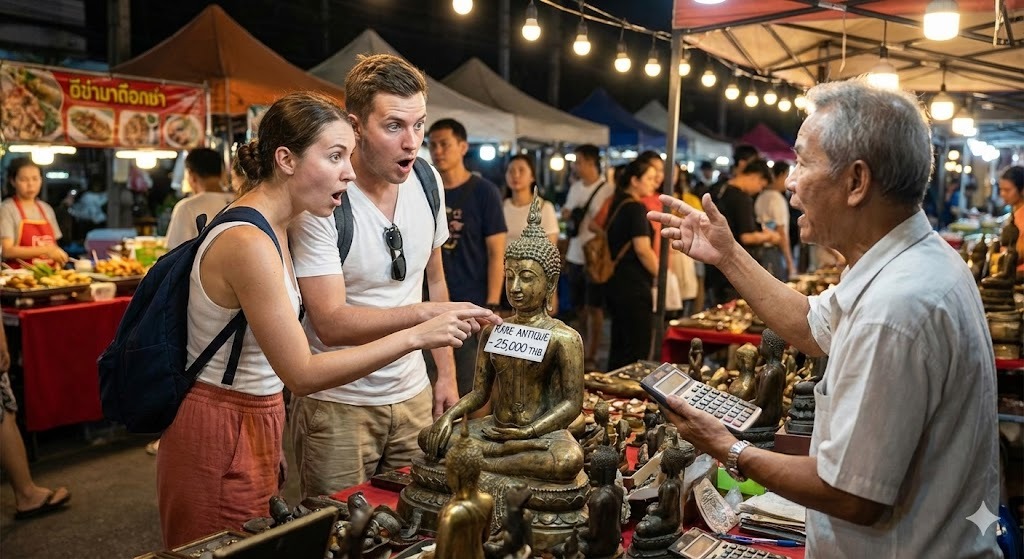
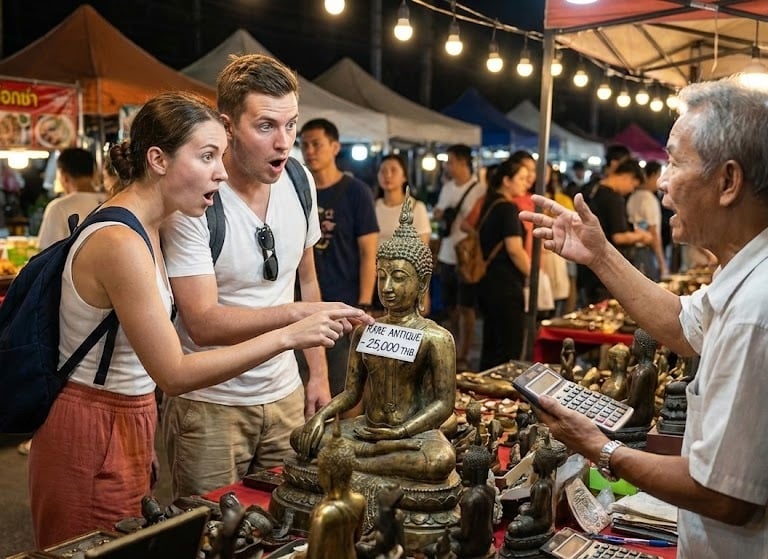
The Scenario: You see a "vintage" Lanna artifact, an "ancient" Buddha statue, or "authentic" hill tribe silver at the Night Bazaar. The seller tells you it is 100 years old.
The Trap: It is almost certainly a reproduction made in a factory last week and "aged" with dirt or chemicals. You end up paying antique prices for a souvenir.
How to Avoid It:
Buy for Beauty, Not Investment: If you love how it looks and the price is fair for a reproduction, buy it! Just don't buy it expecting it to be a museum piece.
Export Laws: Be aware that taking genuine antique Buddha images out of Thailand requires a special license from the Fine Arts Department. If a vendor doesn't mention this, they are likely selling fakes.
The Golden Rule: Trust Your Gut
Chiang Mai is safe. You can walk the streets at night without fear of violent crime. These scams are "nuisance crimes"—they hurt your wallet and your pride, but rarely your physical safety.
The best defense is a smile and a confident "No, thank you."
Why C and R Thai Massage is Your Safe Haven
Traveling requires constant vigilance. You are navigating maps, currency, languages, and avoiding the traps listed above. It is mentally exhausting.
That is why C and R Thai Massage exists.
When you step through our doors, you leave the chaos outside.
Transparent Pricing: Our menu prices are net. No hidden fees. No surprises.
Professionalism: Our staff are vetted, trained, and focused solely on your health.
Safety: We provide a secure, clean, and peaceful environment where you can close your eyes and truly let go.
You’ve successfully navigated the streets of Chiang Mai; now let us help you navigate your way to relaxation.
Have you ever encountered one of these scams? Or do you have a tip we missed? Share your story in the comments below to help fellow travelers!
Branch 1: Sunday Walking Street
(10 AM - 10PM)
Address: 145/8 Rajdamnern Road T. Prasingh
A. Mueng Chiang Mai 50200
Branch 2: Chiang Mai Gate
(10 AM - 10PM)
Address: 18/5 Rat Chiang Saen Road T. Hai Ya
A. Mueng Chiang Mai 50100
Phone Number:
+66 (0) 94 601 6207
+66 (0) 83 480 2627
Email: services.crgroup@gmail.com