

Speaking Like a Local: 10 Basic Northern Thai Phrases (Kham Mueang) to Impress
Want to impress locals in Chiang Mai? Learn these 10 basic Northern Thai (Kham Mueang) phrases. A guide to speaking like a local for your next trip.
CHIANG MAI OLD TOWN AND TRAVEL TIPS
11/28/20256 min read


Speaking Like a Local: 10 Basic Northern Thai (Kham Mueang) Phrases to Impress
You’ve landed in Chiang Mai. You’ve mastered the standard "Sawasdee Krap/Ka" (Hello) and "Khob Khun Krap/Ka" (Thank you). You feel polite, respectful, and ready to explore.
But then, you walk into a small noodle shop or a local market, and you hear something different. The language sounds softer, more melodic, almost like a song. The sharp tones of Bangkok seem to melt away into a gentle rhythm.
You are hearing Kham Mueang (คำเมือง), the language of the Lanna Kingdom.
Welcome to the C and R Thai Massage Blog. We are proud of our Northern roots. While standard Thai is spoken everywhere, Kham Mueang is the language of our hearts. It’s the language we use with our families, our friends, and our neighbors.
For a traveler, learning just a few words of the local dialect is like possessing a magic key. It unlocks smiles that are just a little bit wider. It turns a transaction into a relationship. It shows that you aren't just passing through; you are paying attention.
Today, we are going to teach you 10 essential Northern Thai phrases. These aren't just words; they are tools to help you navigate the markets, enjoy your food, and yes—even get a better massage!
The Secret Ingredient: "Jao" (เจ้า)
Before we get to the vocabulary, we have to talk about the most famous word in the North.
If you spend five minutes in Chiang Mai, you will hear it: a drawn-out, high-pitched, sweet sound at the end of sentences. "Sawasdee Jaaaooooo."
In standard Thai, women say "Ka" and men say "Krap" at the end of sentences to be polite. In Northern Thai, women use the word "Jao" (เจ้า) instead of "Ka."
It is softer, sweeter, and incredibly charming.
For Female Travelers: Replace your "Ka" with "Jao." It works for "Yes," "Okay," or just as a polite particle.
For Male Travelers: It is generally safer to stick to "Krap," but you can use the Northern vocabulary we list below. (Note: In some contexts, Northern men do use Jao, but it’s complex. Sticking to Krap keeps you safe from awkward misunderstandings!)
Phrase 1: The Lanna Hello
Standard Thai: Sawasdee Ka/Krap Northern Thai: Sawasdee Jao (สวัสดีเจ้า)
Let's start simple. When you walk into C and R Thai Massage, or your hotel, or a 7-Eleven, try this. Instead of a quick Sawasdee Ka, slow it down. Smile. And say Sawasdee Jaaaaao.
The difference is in the speed. The Northern vibe is slower (Jai Yen Yen - cool heart). Your greeting should reflect that.
Phrase 2: The Ultimate Compliment for Food
Standard Thai: Aroi (Delicious) Northern Thai: Lam (ลำ) or Lam Khanat (ลำขนาด)
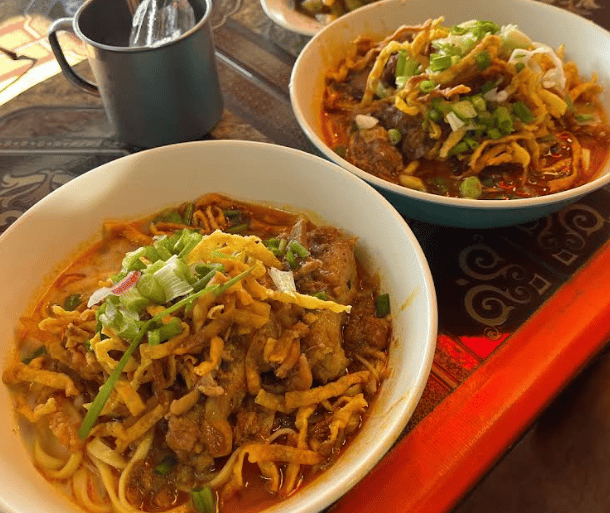
Chiang Mai is a food capital. When you are eating Khao Soi or Sai Oua (Northern Sausage) and the vendor asks if you like it, don't just say "Aroi."
Say "Lam!" (Pronounced like 'Rum' but with an L). If it’s amazing, say "Lam Khanat!" (Very delicious). If it’s the best thing you’ve ever eaten, say "Lam Tae Tae Jao!" (Truly, truly delicious).
Pro Tip: If you say this to a street food auntie, she might just give you an extra scoop for free next time.
Phrase 3: Speaking the Language of Massage
Standard Thai: Puad (Pain/Ache) or Jeb (Hurt) Northern Thai: Muea (เมื่อย)
As a massage shop, we hear customers say "Hurt" or "Pain" a lot. But in Northern Thai, there is a specific word for that deep, tired muscle ache that comes from walking all day or sitting on a plane.
That word is "Muea."
Muea is not sharp pain (that is Jeb).
Muea is the dull ache of exhaustion.
When you come in for your massage at C and R, point to your shoulders and say "Muea Khanat" (Very aching). Your therapist will immediately understand exactly what kind of pressure you need to release that tension.
Phrase 4: The "Excuse Me" / "I'm Sorry"
Standard Thai: Khor Thob / Khor Aphai Northern Thai: Su Ma Teu (สูมาเต๊อะ)
This is a very polite, very old-school Lanna phrase. You use it when you accidentally bump into someone at the Walking Street Market, or when you need to get a server's attention.
Saying "Su Ma Teu Jao" is incredibly respectful. It shows humility. In a culture that values "saving face" and non-confrontation, knowing a polite apology is worth its weight in gold.
Phrase 5: The Market Negotiator
Standard Thai: Tao Rai? (How much?) Northern Thai: Tao Dai? (เต้าใด)
Want to shop at the Warorot Market (Kad Luang) like a local? When you pick up that pair of elephant pants or that bag of dried mango, ask: "Tao Dai Jao?"
And if the price is a little high, you can playfully ask for a discount: Standard Thai: Lod Dai Mai? Northern Thai: Lod Dai Gor? (ลดได้ก่อ)
The "Gor" Particle: In the North, we often use "Gor" at the end of a question, similar to "Mai" in standard Thai. It makes the question sound softer and friendlier.
Phrase 6: Beautiful / Handsome
Standard Thai: Suay (Beautiful) / Lor (Handsome) Northern Thai: Ngam (งาม) / Phor Liang (พ่อเลี้ยง - specifically for a well-off/handsome man)
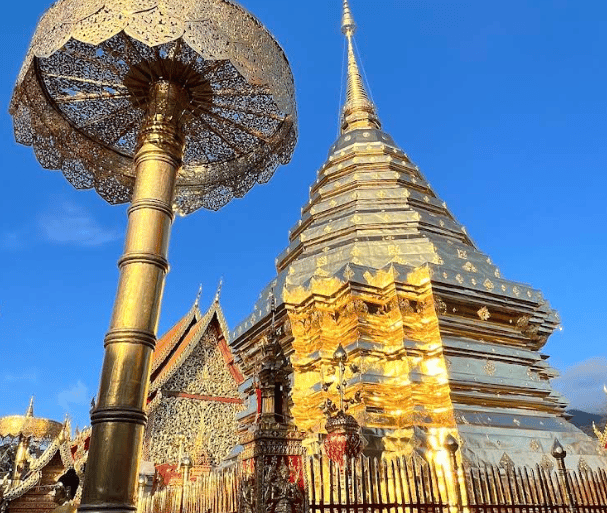
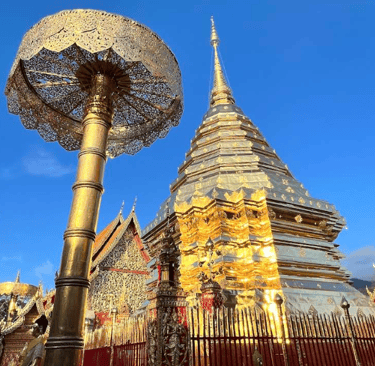
If you visit a temple like Wat Phra Singh, looking at the golden chedi, you can whisper "Ngam Tae Tae" (So beautiful). If you see a woman in traditional Lanna dress, you can tell her she is "Ngam."
Fun Fact: You might hear locals calling men "Ai" (Older Brother) instead of "Pee." So if you want to call a male waiter or driver, you can say "Ai Krap/Jao."
Phrase 7: Where are you going? (The Local Greeting)
Standard Thai: Pai Nai? Northern Thai: Pai Nai Jao? / Pai Nai Phor?
In the West, we say "How are you?" In Thailand, and specifically in the North, we greet friends by asking "Where are you going?"
We aren't actually being nosy! We don't need your GPS coordinates. It’s just a greeting. If a local asks you "Pai Nai Jao?", you can simply smile and say:
"Pai Aew" (Going to hang out/travel/wander).
"Pai Kin Khao" (Going to eat).
[**Expansion Point 3:** Expand on "Pai Aew." This is a concept of leisure. Explain that Chiang Mai people love to "Pai Aew"—to go for a drive, visit a waterfall, or sit at a cafe. It fits the slow life lifestyle. ]
Phrase 8: No Worries / It's Okay
Standard Thai: Mai Pen Rai Northern Thai: Bor Pen Yang (บ่เป็นหยัง)
You know the famous Thai phrase Mai Pen Rai. It embodies the Thai spirit of "no worries." The Northern version is "Bor Pen Yang."
Bor means No.
Yang roughly means Thing/Matter.
Did the waiter bring the wrong drink? Bor Pen Yang Jao. Is it raining? Bor Pen Yang.
Using this phrase proves you have a "Cool Heart."
Phrase 9: Really? / Is that so?
Standard Thai: Jing Ror? Northern Thai: Tae Ka? (แต้กา)
This is a great conversational filler. If a local is telling you a story, or telling you that the temple is very old, you can respond with an interested "Tae Ka?" (Really? Is that true?).
It keeps the conversation flowing and shows you are engaged.
Phrase 10: The Family Connection (Pi / Nong / Mae / Ui)
Finally, to truly speak like a local, you must understand how we address each other. We almost never use "You" and "I." We use family titles.
In the North, these titles are warm and essential:
Mae (Mother): Use this for vendors or ladies the age of your mother.
Por (Father): For men the age of your father.
Ui (Grandparent): This is specific to the North! If you see an elderly person, calling them "Ui" is very affectionate and respectful.
Pi (Older Sibling) / Nong (Younger Sibling): Use these for people around your age.
When you buy fruit from an elderly lady at the market, say "Khob Khun Jao, Ui" (Thank you, Grandma). You will likely make her day.
Conclusion: It’s About the Heart, Not the Perfection
Don't worry about your tones. Don't worry about getting the grammar perfect. The people of Chiang Mai are famous for their hospitality. The fact that you are trying to speak Kham Mueang is enough.
It shows that you respect the unique culture of Lanna. It shows that you see us not just as a tourist destination, but as a people with our own history and language.
Next time you come into C and R Thai Massage, try out your new vocabulary! Tell us you are "Muea" (aching), tell us the massage was "Lam" (Wait, no—don't say the massage was delicious! Say it was Sabai or Dee Khanat!), and greet us with a big "Sawasdee Jao."
We can’t wait to welcome you, chat with you, and help you relax in true Chiang Mai style.
Do you know any other Northern Thai words? Share them with us in the comments!
Branch 1: Sunday Walking Street
(10 AM - 10PM)
Address: 145/8 Rajdamnern Road T. Prasingh
A. Mueng Chiang Mai 50200
Phone Number:
+66 (0) 94 601 6207
+66 (0) 83 480 2627
Email: services.crgroup@gmail.com