

Chiang Mai Buddhist Holidays Guide: Visakha Bucha & Temple Etiquette
Visiting Chiang Mai during a Buddhist Holiday? Read our 2025 guide to Visakha Bucha, the Doi Suthep walk, temple etiquette, and what to expect during the alcohol ban.
CHIANG MAI OLD TOWN AND TRAVEL TIPS
12/13/20257 min read


A Guide to Chiang Mai's Buddhist Holidays: What to Expect During Vis
There is a special energy that descends upon Chiang Mai during a major Buddhist holiday. The usual hum of motorbikes seems to quieten. The air fills with the scent of jasmine and burning incense. The skyline, usually dotted with the golden spires of chedis, glows a little brighter under the light of the full moon.
Chiang Mai is often called the spiritual capital of Thailand. With over 300 temples (wats) scattered throughout the city and province, Buddhism isn't just a religion here; it is the rhythm of daily life.
For a traveler, stumbling upon a major holiday like Visakha Bucha or Makha Bucha can be a confusing but magical experience. You might find that your favorite bar is closed (due to the alcohol ban), but in exchange, you witness a river of candlelight flowing around an ancient stupa. You might find traffic blocked, not by cars, but by a procession of orange-robed monks receiving alms.
Welcome to the C and R Thai Massage Blog. As locals, we cherish these days. They are a reminder to slow down, reflect, and "make merit" (Tum Boon). They align perfectly with our philosophy of wellness: that a healthy body must house a peaceful mind.
In this comprehensive guide, we will walk you through the major Buddhist holidays you might encounter in Chiang Mai. We’ll explain what they mean, what you will see, the etiquette you need to follow, and—most importantly—how to participate in these beautiful traditions respectfully.
Part 1: The "Big Three" – The Holiest Days of the Year
There are three major holidays that revolve around the life of the Buddha. They all fall on the full moon of different lunar months, so the dates change every year.
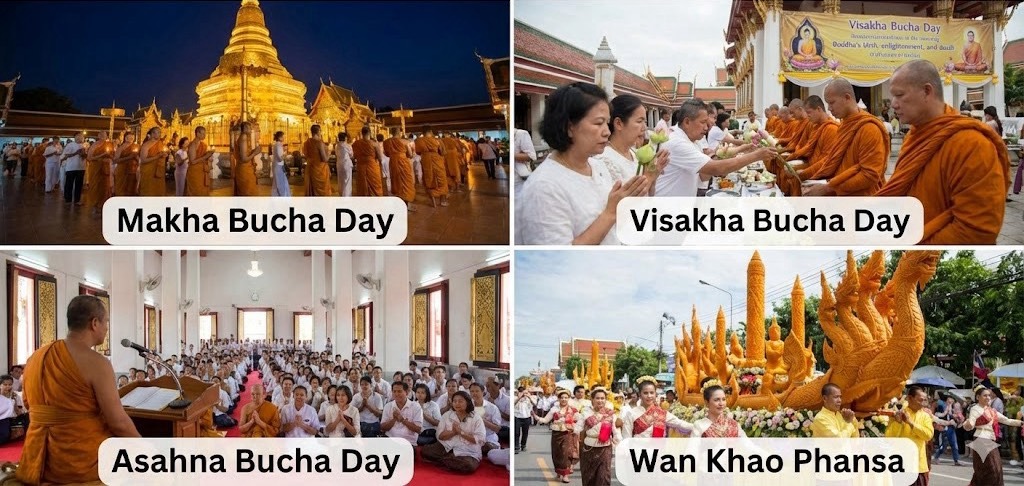
1. Makha Bucha Day (February/March)
The Meaning: This day commemorates a miraculous event where 1,250 disciples gathered spontaneously to hear the Buddha preach without prior appointment. It is a day to celebrate the community of the Sangha (monks) and the core teachings: "Do good, avoid evil, and purify the mind."
What to Expect in Chiang Mai:
The Vibe: Quiet gratitude. It falls during the cool/dry season, so the evenings are pleasant.
Where to Go: Wat Chedi Luang in the Old City is spectacular. Seeing hundreds of monks chanting at the base of the massive, ruined brick chedi under a full moon is a sight you will never forget.
2. Visakha Bucha Day (May/June)
The Meaning: This is the most important day in the Buddhist calendar. It marks three major events: The Birth, Enlightenment, and Death (Parinirvana) of the Buddha. It is essentially "Buddha Day."
The Unique Chiang Mai Tradition: While this day is celebrated all over the world, Chiang Mai does something unique. The night before Visakha Bucha, thousands of locals (and tourists) walk up the mountain to Doi Suthep.
The Pilgrimage: The road up the mountain is closed to traffic. Devotees walk the 11 kilometers from the base (near Chiang Mai University) to the temple at the top.
The Experience: Aid stations with free water and food are set up along the winding road. It is a festive, communal atmosphere of endurance and faith. If you are fit and ready for a challenge, joining this walk is a once-in-a-lifetime experience.
3. Asahna Bucha Day & Wan Khao Phansa (July)
The Meaning: Asahna Bucha marks the Buddha's first sermon. The following day, Khao Phansa, marks the beginning of "Buddhist Lent" (the Rains Retreat).
What Happens: Monks retreat to their temples for three months during the rainy season. They do not travel.
The Candle Festival: Because monks traditionally stayed indoors without electricity in ancient times, people offered large wax candles to provide light for reading scriptures. Today, you will see beautiful, large carved candles being paraded to temples.
The Vibe: This signals the start of the "Green Season." It is a time of introspection. Many Thai men ordain as monks for a short period during this time.
Part 2: The Cultural Festivals with Religious Roots
While the "Big Three" are strictly religious, two other festivals define Chiang Mai's calendar.
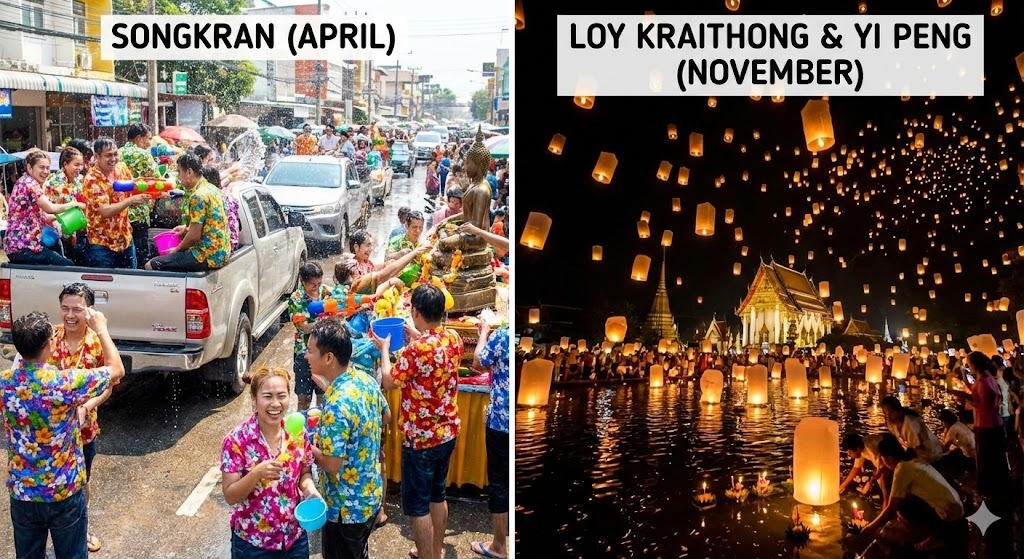
4. Songkran (Thai New Year - April)
You know it as the water fight. But traditionally, this is a Buddhist holiday.
The Ritual: In the mornings, we go to the temple to bathe the Buddha images with scented water (Song Nam Phra) and build sand pagodas.
The C and R Tip: If you want to see the real Songkran, go to a temple like Wat Lok Molee in the morning. Watch the locals carrying sand and placing flags. It is a beautiful contrast to the water guns on the street.
5. Loy Krathong & Yi Peng (November)
The Lantern Festival. This is Lanna culture at its peak.
The Ritual: Floating baskets (Krathong) on the river to ask forgiveness from the Water Goddess, and releasing lanterns (Khom Loy) into the sky to float away bad luck.
The Spiritual Aspect: It is about letting go. Letting go of anger, grudges, and negativity. It is a mental detox.
Part 3: The Rituals – How to Participate
You don't have to be Buddhist to join in. In fact, locals love seeing respectful tourists participating. Here are the key rituals you will see.
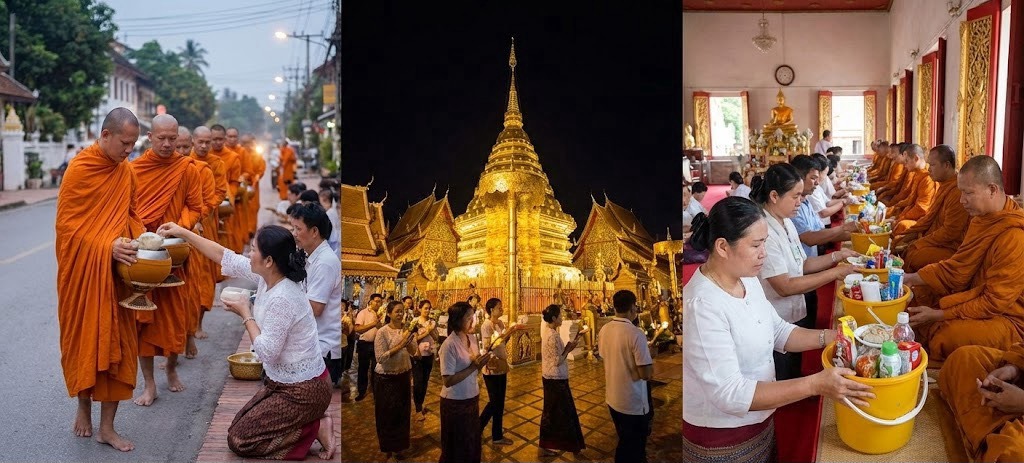
1. Tak Bat (Morning Alms)
Every morning (around 6:00 AM), monks walk the streets barefoot carrying alms bowls.
What to do: If you wish to offer food, take off your shoes. Kneel down. Place rice, curry, or snacks into the bowl.
The Rule: Do not touch the monk (especially if you are female).
The Meaning: You are not "giving charity" to a beggar. You are receiving the opportunity to make merit. The monk is doing you a favor by accepting it.
2. Wian Tien (Candlelight Procession)
This happens in the evening of the major holidays (Visakha, Makha, Asahna Bucha).
What to do: Go to a major temple around 7:00 PM. You will see people holding flowers, incense, and a lit candle.
The Walk: Join the line. Walk around the main Chedi or Chapel three times in a clockwise direction.
Round 1: Remind yourself of the Buddha.
Round 2: Remind yourself of the Dharma (Teachings).
Round 3: Remind yourself of the Sangha (Community).
The Feeling: It is meditative walking. It is silent, hypnotic, and deeply moving.
3. Sangkhathan (Bucket Offerings)
You will see yellow buckets for sale in supermarkets. These are sets of essentials (toothpaste, soap, robes) for monks. You can buy one and offer it at any temple during a holiday.
Part 4: The "No Alcohol" Rule (Wan Phra)
This is the most practical tip we can give you!
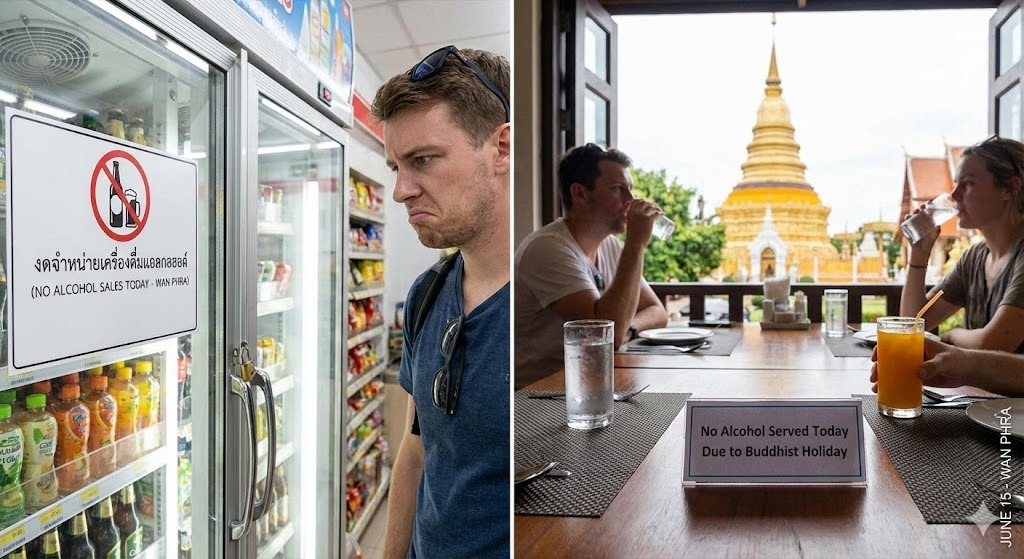
On the major religious holidays (Visakha Bucha, Makha Bucha, Asahna Bucha, Khao Phansa, and End of Buddhist Lent), the sale of alcohol is prohibited by law across the entire country.
7-Elevens: The beer fridges will be locked or covered.
Bars: Most bars will close for the day.
Restaurants: You can order food, but you cannot order a beer.
The Duration: Usually 24 hours (from midnight to midnight).
Don't get frustrated. Look at it as a chance to have a detox day. Embrace the local culture. Grab a fresh coconut, a Thai tea, or a fruit smoothie instead.
Part 5: Temple Etiquette 101
During holidays, temples are crowded. Being respectful is crucial.
Dress Code: This is non-negotiable. Shoulders and knees must be covered. No tank tops, no short shorts. If you forget, many temples have sarongs for rent, but it is better to dress appropriately before leaving your hotel.
Feet: Take off your shoes before entering the Viharn (hall). Never point your feet at a Buddha image or a monk. Tuck your legs behind you when sitting (Mermaid style).
Head: The head is high; feet are low. Try not to stand over a monk or someone praying. Lower your head slightly when passing people.
Public Displays of Affection: Keep hugging and kissing for the hotel. The temple is a place of restraint.
Photography: It is usually okay to take photos, but be discreet. Do not stand directly in front of someone who is praying to get a shot. And never take a selfie with your back turned to the Buddha (it is considered disrespectful to treat the Buddha as a background prop).
Part 6: Physical and Spiritual Wellness – The Connection
Why are we, a massage shop, talking about Buddhism?
Because in Thai culture, health is holistic. You cannot have a healthy body if your mind is chaotic.
Participating in these festivals—walking up the mountain, meditating during the candle procession, waking up early for alms—is a form of spiritual wellness. It lowers your blood pressure. It connects you to the community. It grounds you.
However, these activities can also be physically demanding!
The "Temple Feet": Walking barefoot on hard marble or tile floors for hours can leave your arches aching.
The "Prayer Posture": Sitting on the floor in a kneeling position creates tension in the knees and lower back.
The "Doi Suthep Hike": If you do the Visakha Bucha walk, your calves will be screaming the next day.
This is where C and R Thai Massage comes in.
After a day of making merit, treat your body to some gratitude.
Foot Reflexology: Perfect for relieving the ache of walking barefoot.
Thai Herbal Compress: The heat helps relax muscles tight from kneeling or hiking.
Traditional Thai Massage: Helps realign the body after a long day of standing or walking.
Think of it as the perfect end to a holy day: You have purified your mind at the temple, now purify your body at the spa.
Conclusion: Open Your Heart to Chiang Mai
If you are lucky enough to be in Chiang Mai during a Buddhist holiday, do not stay in your hotel room. Do not be annoyed that the bars are closed.
Go to the temple. Light a candle. Walk the procession.
The beauty of Chiang Mai isn't just in the scenery; it’s in the faith of its people. Witnessing the golden glow of a thousand candles moving around a chedi is a memory that will stay with you long after your tan fades.
And when your soul is full but your feet are tired, remember that C and R Thai Massage is here to welcome you back to earth.
Will you be in Chiang Mai for the next full moon? Check the calendar, and come join us for a day of peace, culture, and relaxation.
Branch 1: Sunday Walking Street
(10 AM - 10PM)
Address: 145/8 Rajdamnern Road T. Prasingh
A. Mueng Chiang Mai 50200
Branch 2: Chiang Mai Gate
(10 AM - 10PM)
Address: 18/5 Rat Chiang Saen Road T. Hai Ya
A. Mueng Chiang Mai 50100
Phone Number:
+66 (0) 94 601 6207
+66 (0) 83 480 2627
Email: services.crgroup@gmail.com