

A Guide to Chiang Mai's Cooking Schools: Choosing the Right One for You
Our 2025 guide to Chiang Mai's cooking schools. Learn to choose the perfect class for you, from farm-to-table to vegan, Lanna cuisine, or half-day options.
LOCAL FOODS AND RESTAURANTS
11/26/20257 min read


A Guide to Chiang Mai's Cooking Schools: Choosing the Right One for You
Close your eyes and think of Chiang Mai. What comes to mind?
Beyond the golden temples and the mist-covered mountains, it’s the flavors. It’s the rich, coconut-and-spice aroma of Khao Soi from a street-side stall, the fiery, fresh punch of Som Tum (papaya salad), and the fragrant cloud of lemongrass and galangal from a perfectly balanced Tom Yum soup.
Here in Northern Thailand, food isn't just fuel; it's medicine, it's culture, and it's a way of life.
Welcome to the C and R Thai Massage Blog, where we believe in holistic wellness. We know that true health comes from a balance of a relaxed body, a calm mind, and a nourished spirit. And what better way to nourish your spirit than by learning the art of Thai cooking?
Taking a cooking class is one of the most popular and rewarding experiences for visitors to Chiang Mai. But a quick search will show you dozens of options. Farm-to-table or in-city? Half-day or full-day? Lanna cuisine or "greatest hits"?
It can be overwhelming.
As locals who are passionate about the healing traditions of our city, we want to help you find the perfect experience. This isn't just about a recipe; it's about finding a class that matches your style, your schedule, and your curiosity. This guide will walk you through, step-by-step, how to choose the right Chiang Mai cooking school for you.
Part 1: The First Big Decision: Farm-to-Table vs. In-City Market Tour
Your first choice will define your entire experience. Do you want to be in the countryside, or in the heart of the city?
A) The Farm-to-Table Experience
This is the quintessential Chiang Mai postcard experience.
What it is: A school van picks you up from your hotel and drives you 30-60 minutes into the scenic countryside. The school is located on a beautiful, small organic farm.
The Experience: You'll be given a basket and a hat and taken on a tour of the farm. You'll smell, taste, and pick your own fresh ingredients—pulling Thai eggplants from the vine, smelling fresh kaffir lime leaves, and digging up galangal. You then cook in a beautiful, open-air pavilion, surrounded by rice paddies and nature.
Who It's For: The nature lover, the family, the person who wants a full-day, immersive escape from the city. If you're passionate about organic food and seeing exactly where your ingredients come from, this is for you.
The Trade-Off: It’s a full-day commitment (usually 8:30 AM to 4:00 PM). A significant portion of your day is spent on transport, which is lovely, but it's time away from exploring the city.
B) The In-City Market Tour
This experience is more focused on the real, daily life of Thai cooking.
What it is: The school is located in or near the Old City. The day starts with a walking tour of a bustling local market, like the Chiang Mai Gate Market or Ruamchook Market.
The Experience: Your instructor will guide you through the chaos, introducing you to vendors, explaining the different types of rice, showing you how to choose a good coconut, and introducing you to exotic fruits and pastes. It’s a vibrant, authentic, and fast-paced cultural lesson. You then return to the in-city school to cook.
Who It's For: The person on a tighter schedule (half-day options are common), the foodie who wants to learn how to shop for Thai ingredients back home, and anyone who loves the energy of a local market.
The Trade-Off: You miss the serene, green farm experience. The cooking environment is more of a classroom than a peaceful pavilion.
Our Local Insight: There is no "better" option. It's a choice between serenity (farm) and city energy (market). Both teach you to cook delicious food.


Part 2: 5 Key Questions to Find Your Perfect Class
Once you've picked "Farm" or "City," use these questions to narrow down the exact school.
1. What's on the Menu? (Lanna vs. "Greatest Hits")
This is the most important question. Not all Thai food is the same.
"Greatest Hits" (Central Thai): This is what most of the world knows as "Thai food." Think Pad Thai, Green Curry, Red Curry, Tom Yum Goong (Spicy Prawn Soup), and Mango Sticky Rice. Nearly every school offers this, and it's perfect if you want to learn the classics.
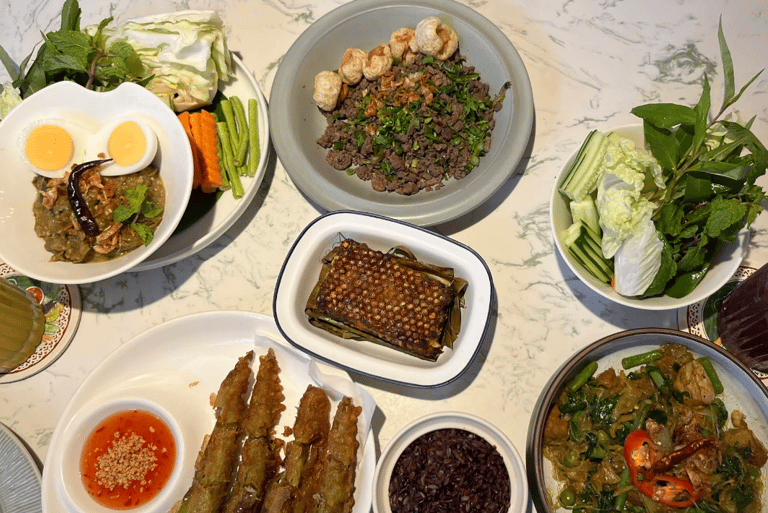
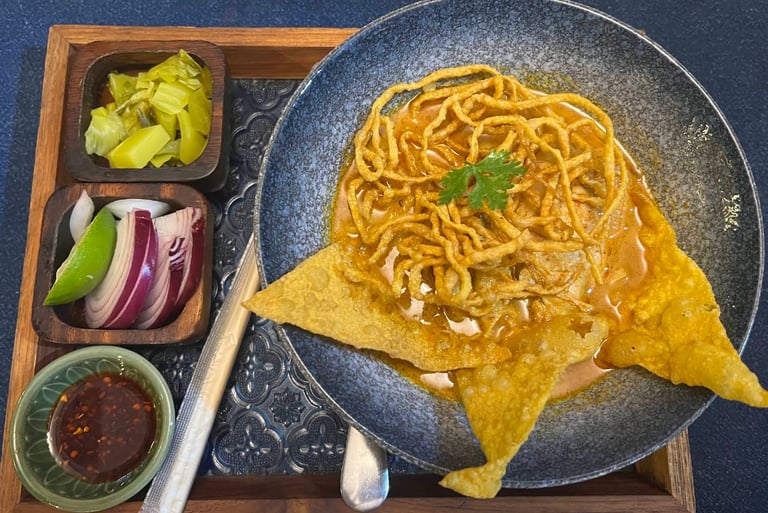
Northern (Lanna) Cuisine: This is the local food of Chiang Mai, and it's fantastic. These dishes are often less sweet and have different influences (Burmese, Shan). Key dishes include Khao Soi (Curry Noodle Soup), Gaeng Hung Lay (Pork Belly Curry), Sai Oua (Chiang Mai Sausage), and Nam Prik Ong (Tomato Pork Chili Dip).
Our Local Insight: We highly recommend finding a school that offers at least one Lanna dish like Khao Soi. It’s the true taste of our region. Many schools let you choose your own menu from a list, so you can often mix and match!
2. What's Your Dietary Need? (Vegan, Vegetarian, Gluten-Free)
In the past, this was tricky. Now, Chiang Mai is a haven for plant-based eaters.
Most schools are very accommodating. You can make almost any dish vegetarian by substituting tofu for meat and mushroom sauce or soy sauce for fish sauce. Just tell them when you book.
Dedicated Vegan/Vegetarian Schools: For those who are passionate about plant-based cooking, there are schools (like the famous May Kaidee) that are 100% vegan and teach you incredible techniques for things like making your own tofu, soy milk, and complex mock-meats.
Gluten-Free: Thai cooking is naturally very gluten-free friendly (most sauces are soy or fish sauce, and we use rice noodles). Just confirm with the school when booking.
3. Half-Day or Full-Day?
How much time do you have?
Half-Day (Morning or Evening): This is a great, efficient option. You'll typically cook 3-4 dishes and be done in about 4 hours. The evening classes are very popular, as you get to cook and eat your own dinner.
Full-Day: This is a more immersive, leisurely experience. You'll cook 5-7 dishes (usually adding an appetizer, a dessert, and an extra stir-fry) and often learn to make your own curry paste from scratch. Most farm schools are full-day only.
Our Local Insight: If you have the time, do the full day. The single best part of a cooking class is learning to make curry paste from scratch in a mortar and pestle. You'll smell every ingredient and pound them into a fragrant paste. It's hard work, but it’s a revelation. Many half-day classes skip this and use pre-made paste.
4. What's the Class Vibe? (Social vs. Intimate vs. Pro)
The personality of the instructor and the size of the class are crucial.
The Social Party: These are larger classes (10-15 people) where the instructor is a charismatic, funny host. The vibe is fun, social, and great for solo travelers looking to meet people.
The Family Home: These are small-group classes (often 4-8 people) taught in a family's home kitchen. The instructor is often a "grandma" type who teaches you authentic, generations-old recipes. It feels less like a class and more like cooking with family.
The Professional School: These are for serious foodies. You'll learn advanced techniques, plating, and the "why" behind the chemistry of Thai food. These are less common but amazing for those who want to go beyond the basics.
[**How to Expand to 2000 Words:** This is a great place to add more detail. Find 2-3 (anonymous or real) examples of schools for each category. For "The Social Party," talk about a popular, highly-rated farm school. For "The Family Home," describe a smaller, in-city school. For "The Professional School," research and mention a school that offers multi-day or advanced courses for chefs. ]
5. What are the "Special Extras"?
Look for small details that show a school cares.
A Recipe Book: Does it come with a small, printed cookbook or a PDF e-book? This is essential for recreating the dishes at home.
Making Curry Paste: As mentioned, does the class include making curry paste by hand?
Extra Skills: Some schools add bonus lessons, like learning to carve a tomato into a rose, making sticky rice, or brewing fresh lemongrass tea.
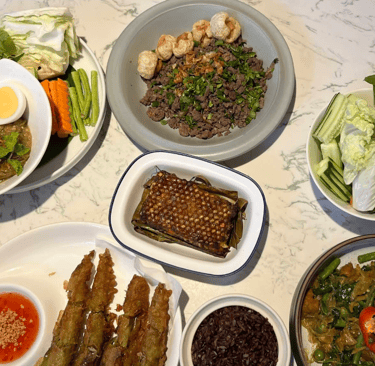
Specialty Courses: Some rare schools offer classes dedicated only to Isaan food (like Som Tum and Laab) or even royal Thai fruit carving.


Part 3: A Local's Final Word: The Healing Art of Cooking
From our perspective at C and R Thai Massage, a cooking class is a form of therapy.
It's a mindful practice. You are engaging all your senses: the smell of the herbs, the texture of the rice, the sound of the sizzling wok, the vibrant colors of the curry. For a few hours, you are fully present, using your hands to create something beautiful and nourishing.
You learn the core of Thai wellness: balance. You'll be taught to taste and adjust your dish constantly, balancing the five key flavors: spicy, sour, salty, sweet, and bitter.
This philosophy of balance is the same one that guides a traditional Thai massage. It’s about restoring harmony to the body.
After a long, wonderful day on your feet—walking the farm, pounding the pestle, and standing over a hot wok—your body will be pleasantly tired. You've nourished your spirit, and now it's time to care for your body.
We believe the perfect day in Chiang Mai combines these two traditions: a day spent learning the healing art of Thai food, followed by an evening spent receiving the healing art of a traditional Thai massage. You will have nourished your body from the inside out, and the outside in. That is the true, holistic Chiang Mai experience.
Branch 1: Sunday Walking Street
(10 AM - 10PM)
Address: 145/8 Rajdamnern Road T. Prasingh
A. Mueng Chiang Mai 50200
Phone Number:
+66 (0) 94 601 6207
+66 (0) 83 480 2627
Email: services.crgroup@gmail.com