


Chiang Mai Festivals Guide: Beyond Yi Peng & Songkran
Explore the hidden cultural heart of the North! A complete guide to Chiang Mai's authentic festivals: Inthakhin, Bo Sang, Flower Fest, and post-event massage tips.
CHIANG MAI OLD TOWN AND TRAVEL TIPS
2/10/20268 min read


Beyond the Lanterns: A Guide to Chiang Mai’s Hidden Festivals
If you ask a traveler to name a festival in Chiang Mai, you will almost certainly get one of two answers: Songkran or Yi Peng.
And it’s easy to see why. Songkran, the Thai New Year in April, is a city-wide, multi-day water fight that brings the blazing heat of summer to a joyful, chaotic halt. Yi Peng, celebrated in November, is the stuff of fairy tales—thousands of illuminated paper lanterns floating into the night sky, creating an image so beautiful it feels like a dream.
They are spectacular. They are famous. And they are very, very crowded.
But the cultural heartbeat of Chiang Mai—the ancient Lanna Kingdom—does not only beat twice a year. The Lanna lunar calendar is packed with vibrant, deeply spiritual, and beautifully local festivals that most tourists never get to see. These are the celebrations where communities come together, where ancient animist beliefs blend with Buddhism, and where the true soul of Northern Thailand shines brightest.
At C and R Thai Massage, we love sharing our culture with visitors. We know that attending a local festival—walking in processions, eating street food, and standing in the sun—is an incredible experience, but it’s also exhausting! That’s why we’ve put together this guide to Chiang Mai’s "hidden" festivals. We want you to experience the authentic magic of our city, and we’ll be here to help your body recover when the celebrations are over.
Step away from the crowds. Here is your guide to the festivals of Chiang Mai beyond Songkran and Yi Peng.
Part 1: Inthakhin Festival (The City Pillar Festival)
When: Usually late May or early June (Starts on the 12th day of the waning moon of the 8th lunar month). Where: Wat Chedi Luang (Old City).
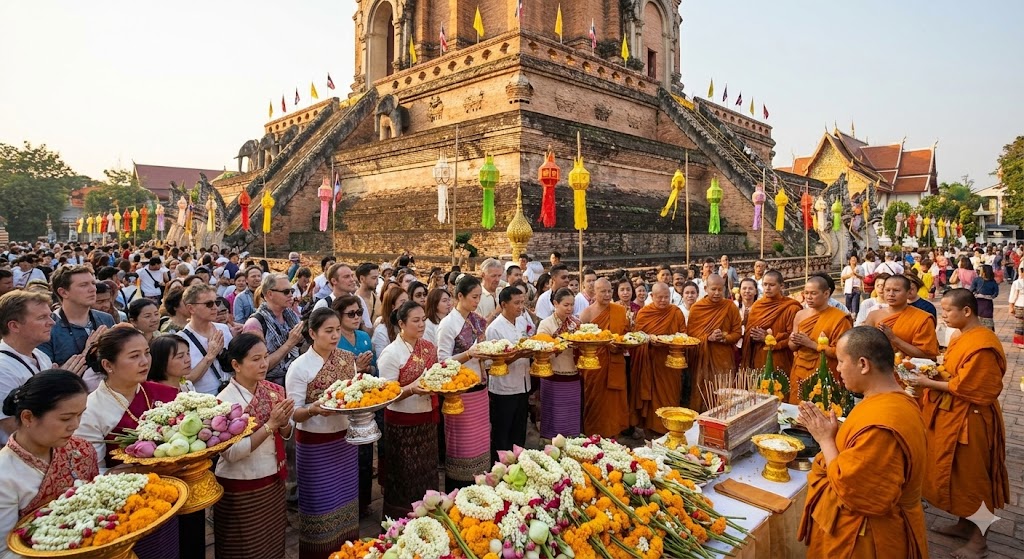
Before Chiang Mai was a tourist destination, before it was even a modern city, it was a kingdom protected by spirits. The Inthakhin Festival, also known as the City Pillar Worship, is arguably the most important spiritual event for Chiang Mai locals.
The History: According to legend, the god Indra gave the original city pillar (Sao Inthakhin) to the people of Chiang Mai to protect them from disasters. Today, the pillar is housed in an exquisite, cross-shaped shrine inside the grounds of Wat Chedi Luang. For most of the year, this shrine is closed. But for seven days in May/June, the doors are opened.
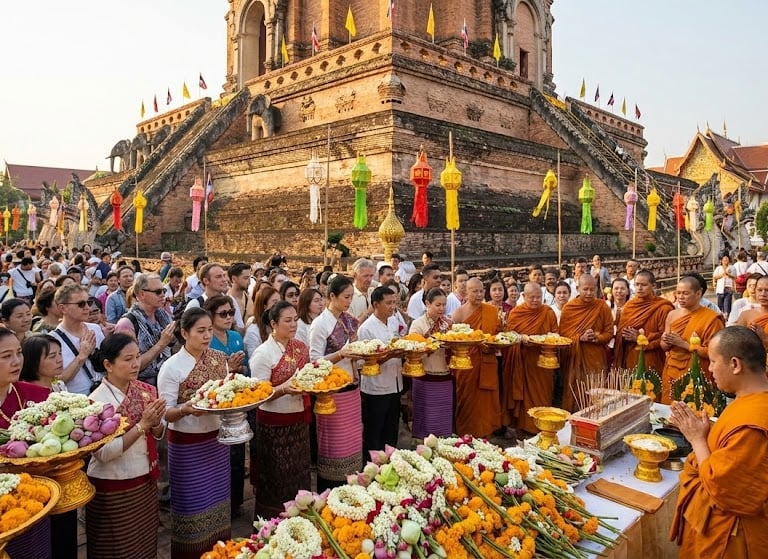
The Experience: This is a festival of flowers, incense, and deep devotion. You will see thousands of Chiang Mai residents dressed in traditional Lanna clothing (often white or indigo) walking slowly around the shrine. They carry small bowls filled with colorful flowers, candles, and incense, placing them in designated offering bowls.
The atmosphere is incredibly moving. It is quiet, respectful, and deeply rooted in the community. Outside the temple grounds, however, the streets come alive with a massive local night market, traditional Lanna dance performances, and carnival games.
Note for Visitors: Women are strictly prohibited from entering the inner shrine where the actual pillar stands due to ancient beliefs. However, everyone can participate in the flower offerings in the courtyard and enjoy the incredible atmosphere.
Part 2: Bo Sang Umbrella Festival
When: Usually the third weekend of January. Where: Bo Sang Village (San Kamphaeng District, about 9km east of the city).
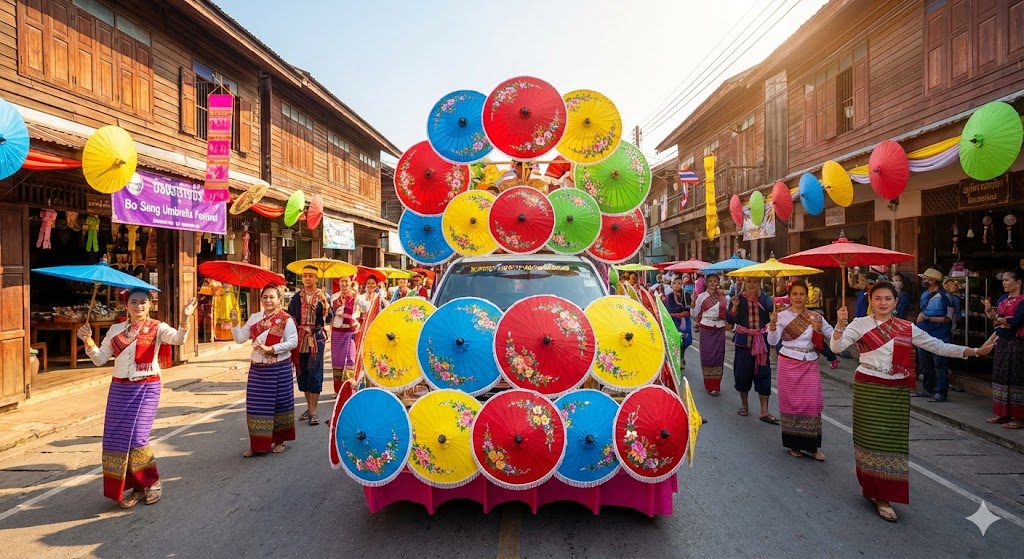
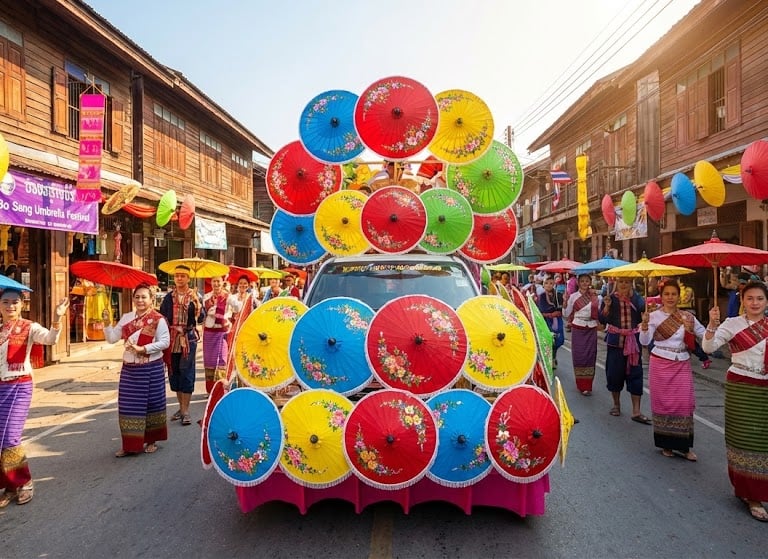
If you love art, color, and handicrafts, this is the festival for you. Bo Sang is globally recognized as the "Umbrella Village," where artisans have been making hand-painted, bamboo-and-mulberry-paper umbrellas for generations.
The Experience: During the festival, the entire main street of the village is closed to traffic and transformed into a vibrant pedestrian zone. Every house and shop front is decorated with hundreds of colorful parasols.
The highlight is the daytime and evening parades. You will see women riding bicycles while elegantly holding beautiful paper umbrellas, traditional Lanna musicians, and floats decorated with flowers.
The Craft: The best part of this festival is the interactivity. You can watch the masters at work, carving bamboo ribs and painting intricate floral or dragon designs with lightning speed. You can even buy a blank umbrella or fan and paint it yourself.
Pro Tip: Bring your phone case or a canvas bag; the artists will paint a beautiful custom design on it for a small tip!
Part 3: Salak Yom Festival (The Tree of Offerings)
When: September or early October. Where: Lamphun Province (Just a 30-minute drive south of Chiang Mai, specifically Wat Phra That Hariphunchai).
While technically in the neighboring province of Lamphun, the Salak Yom festival is so unique and visually stunning that it is a must-see for anyone staying in Chiang Mai during the rainy season.
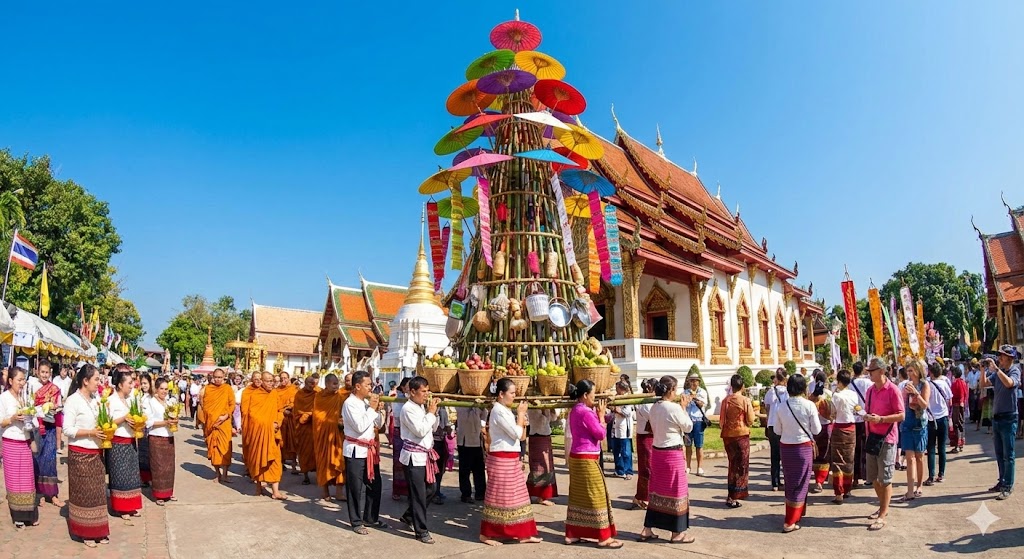
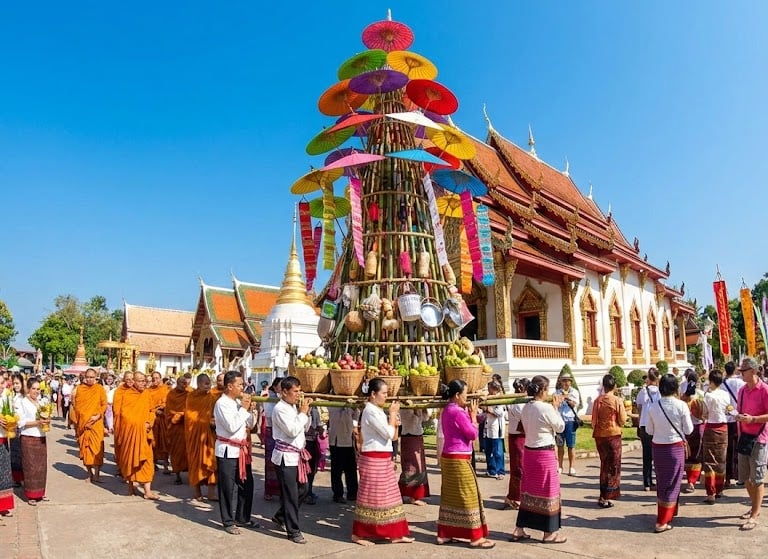
The Tradition: This festival is unique to the Yong ethnic people of Lamphun. Historically, it was a coming-of-age ceremony for young, unmarried women. They would spend months, and their life savings, creating massive, towering "trees" (up to 10 meters high!) made of bamboo and decorated with thousands of brightly colored, hand-dyed paper ornaments, daily necessities, and money.
These "trees" are offerings to the monks and to deceased ancestors. The belief is that the merit gained from this massive offering ensures a prosperous future.
The Experience: Walking into the temple courtyard feels like walking into a Dr. Seuss book. The towering, brightly colored Salak Yom trees are breathtaking. The festival includes parades where these giant structures are carried through the streets, accompanied by traditional music and dancing. It is a photographer’s dream and a brilliant display of community dedication.
Part 4: Poy Sang Long (The Crystal Sons)
When: Late March or early April. Where: Various temples, primarily in areas with a strong Shan (Tai Yai) community, such as Wat Pa Pao in the Old City or temples in the Mae Hong Son province (if you are willing to travel a bit further).
Poy Sang Long is the Shan ordination ceremony for young boys (usually between 7 and 14 years old) entering the monkhood as novices. It is one of the most colorful, joyous, and moving ceremonies in Southeast Asia.
The Tradition: The ceremony reenacts the life of Prince Siddhartha before he abandoned his worldly wealth to become the Buddha. Therefore, for three days before they shave their heads and put on the simple orange robes, these young boys are treated like absolute royalty.
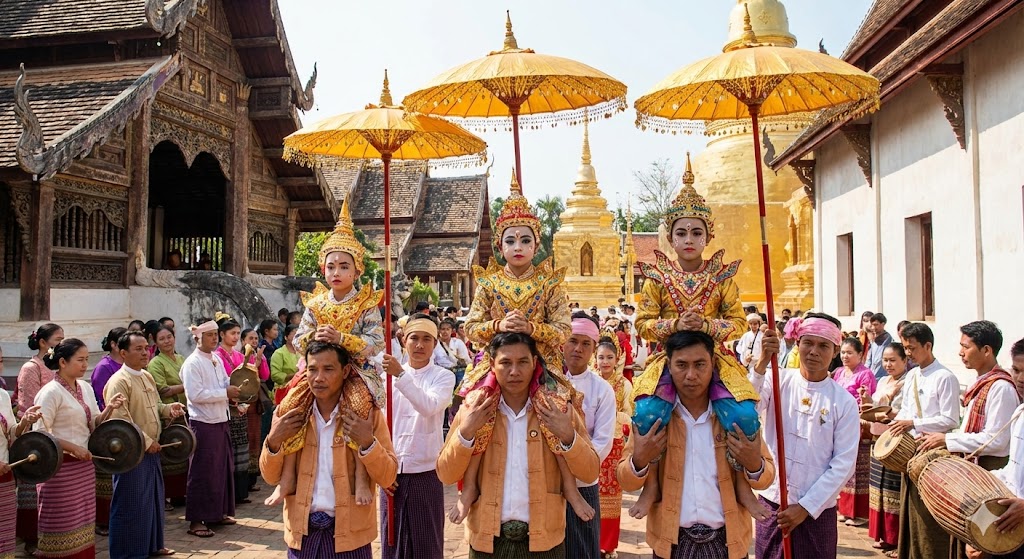
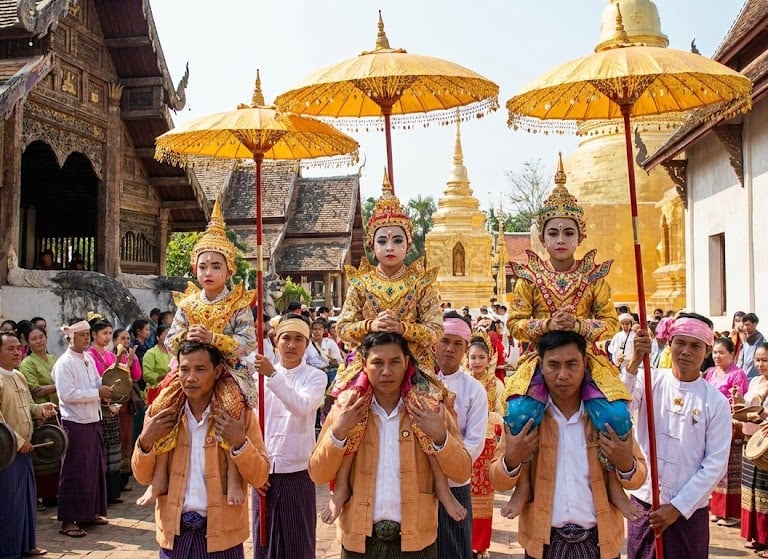
The Experience: The boys, known as "Sang Long" (Crystal Sons), are dressed in wildly extravagant, brightly colored costumes covered in jewels, sequins, and elaborate floral headdresses. Their faces are heavily made up.
Because they are considered "royalty" during this time, their feet are not allowed to touch the ground. They are carried everywhere on the shoulders of their male relatives, protected by gold umbrellas. The parades are loud, featuring gongs, drums, and dancing, as the community celebrates the immense merit the boys are bringing to their families.
It is a beautiful, deeply emotional cultural event that showcases the strong family bonds in Northern Thailand.
Part 5: Chiang Mai Flower Festival
When: The first weekend of February. Where: Suan Buak Haad Park (Southwest corner of the Old City) and Thapae Gate.
Chiang Mai is known as the "Rose of the North," and in February, when the cool season brings the local flora to its absolute peak, the city proves it.
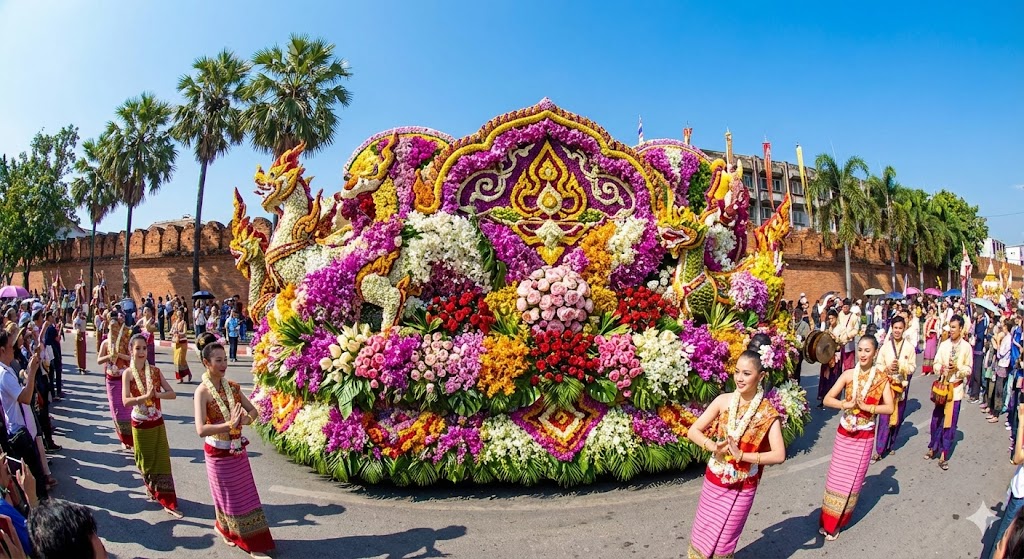
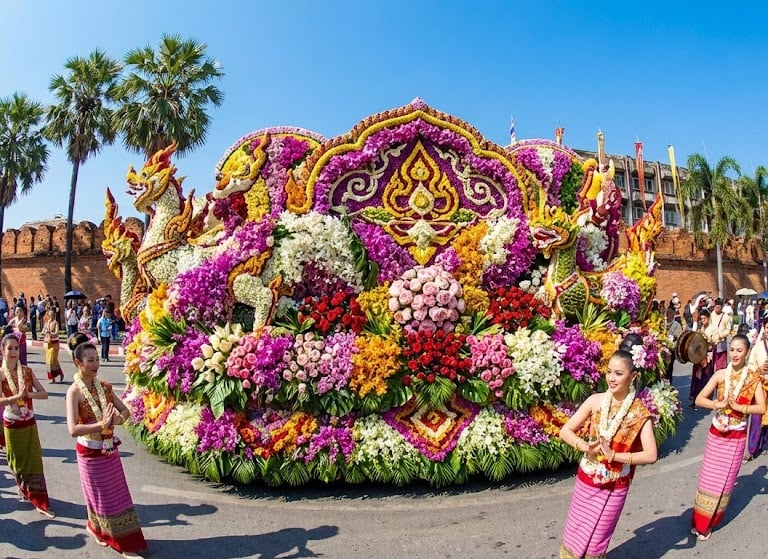
The Experience: The main event is the Saturday morning parade, starting from Nawarat Bridge and ending at Suan Buak Haad Park. The floats are massive, intricately designed sculptures made entirely of fresh flowers—orchids, chrysanthemums, roses, and marigolds. They are accompanied by marching bands, hill tribe groups in traditional dress, and the candidates for the Miss Chiang Mai Flower Festival beauty pageant.
At Suan Buak Haad Park, the grounds are transformed into a botanical wonderland with landscaping competitions, rare plant sales, and agricultural exhibits. If you have a green thumb or simply love nature photography, this is a spectacular, sweet-smelling event.
Part 6: The "Festival Hangover" (And How to Cure It)
Attending these local festivals is an adventure. You are immersing yourself in the culture, eating incredible food from street vendors, and making memories.
But let’s be honest about the physical reality.
The "Parade Feet": Standing on the side of the road for two hours waiting for the flower floats or the Sang Long procession takes a toll on your arches and calves.
The "Temple Shuffle": Walking slowly through crowded temple courtyards during Inthakhin, constantly starting and stopping, tires out your lower back and hips much faster than walking at a normal pace.
The "Sun Fatigue": Many of these events (like the Flower Festival or Poy Sang Long) take place during the heat of the day. The combination of walking, heat, and carrying a camera can leave your shoulders in knots and your energy depleted.
Part 7: The C and R Festival Recovery Plan
When the parade is over and the incense has burned down, you don't want to spend the next day of your holiday nursing sore legs in your hotel room.
At C and R Thai Massage, we have designed treatments that act as the perfect "post-festival" reset.
1. For the "Parade Feet" (Thai Foot Reflexology)
Duration: 60 Minutes.
Why it works: If you’ve spent the day walking around Bo Sang or standing at Thapae Gate, your feet are likely swollen and aching. Our reflexology treatment starts with a cooling herbal soak to refresh the skin. We then use traditional techniques to stimulate blood flow, flush out lactic acid from the calves, and release the tension in your arches. You will walk out feeling like you have new legs.
2. For the "Temple Shuffle" (Traditional Thai Massage)
Duration: 90 Minutes or 2 Hours.
Why it works: Slow walking and standing compress the spine and tighten the hip flexors. Traditional Thai Massage (often called "assisted yoga") is the perfect antidote. We use deep, rhythmic pressure along the 'Sen' energy lines and incorporate gentle stretching to open the hips, lengthen the hamstrings, and decompress the lower back.
3. For "Sun Fatigue" (Aromatherapy Oil Massage)
Duration: 60 or 90 Minutes.
Why it works: If the heat and crowds have left you feeling drained and overstimulated, you need to soothe your nervous system. A relaxing oil massage using cooling essential oils (like lemongrass or peppermint) helps hydrate sun-exposed skin, melts away tension in the shoulders, and provides a quiet, meditative space to reflect on the beautiful culture you just witnessed.
Conclusion: Embrace the Rhythm
Songkran is a blast, and Yi Peng is breathtaking. But to truly understand Chiang Mai, you have to look beyond the international headlines.
You have to smell the flowers at the Inthakhin pillar. You have to hear the drums of the Poy Sang Long parade. You have to marvel at the towering paper trees of Salak Yom. These are the moments when the Lanna spirit is most alive, where the community celebrates not for the tourists, but for themselves.
We invite you to align your visit with one of these hidden festivals. Dive into the culture. Walk the streets. Take the photos.
And when you are done, C and R Thai Massage will be here waiting for you. Let us take care of your tired muscles, so you can wake up ready to explore the magic of the North all over again.
Branch 1: Sunday Walking Street
(10 AM - 10PM)
Address: 145/8 Rajdamnern Road T. Prasingh
A. Mueng Chiang Mai 50200
Phone Number:
+66 (0) 94 601 6207
+66 (0) 83 480 2627
Email: services.crgroup@gmail.com