



A Chiang Mai History Walking Tour: A Local's Guide to the Moat & Gates
BlTake the ultimate Chiang Mai history walking tour with our local guide. Explore all 4 ancient city gates (Tha Phae, Chang Puak) and the 4 hidden corners of the moat.
CHIANG MAI OLD TOWN AND TRAVEL TIPS
11/27/20256 min read


A Tour of Chiang Mai's History: Walking the Ancient City Moat and Gates
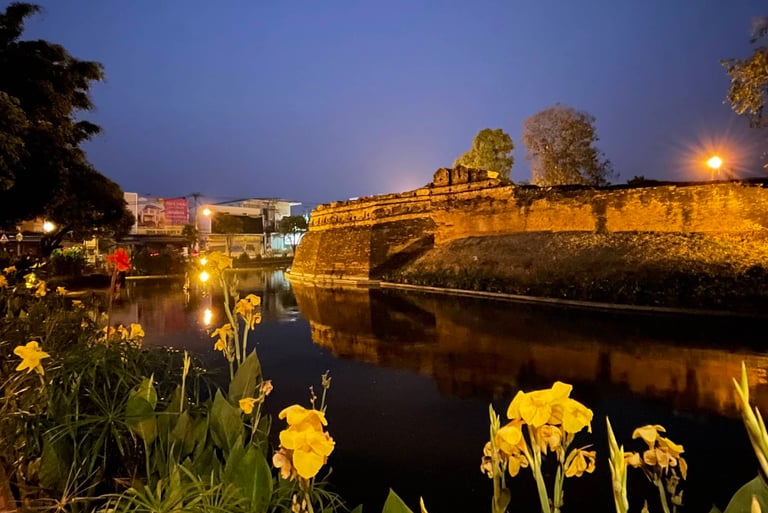
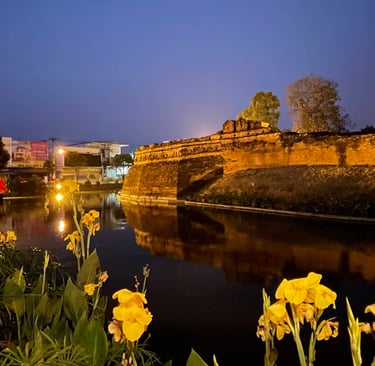
When you arrive in Chiang Mai, the first thing that orients you isn't a modern skyscraper. It's a perfect, 700-year-old square of water and ancient, crumbling brick: the Old City Moat and Walls.
In a city that is growing and changing every day, this 1.5-kilometer square (around 6-7km to walk the full loop) is our anchor. It’s a living, breathing museum, a backdrop for our most vibrant festivals, and a constant reminder of the city's deep Lanna roots.
Welcome to the C and R Thai Massage Blog. As locals passionate about the holistic wellness of our city, we believe that understanding where you are is the first step to truly relaxing into your visit.
Many visitors see the moat from a rod daeng (red truck) or a Grab car. But to truly feel the history of Chiang Mai, you must walk it.
This isn't just a history lesson; it's a journey. It's a mindful walk that connects you to the past and grounds you in the present. So, put on your comfortable shoes, grab a bottle of water, and join us for a tour of Chiang Mai's ancient heart.
Our Walking Tour: A Gate-by-Gate, Corner-by-Corner Journey
Let's begin at the city's "front door."
1. Start: Tha Phae Gate (The Eastern Gate)
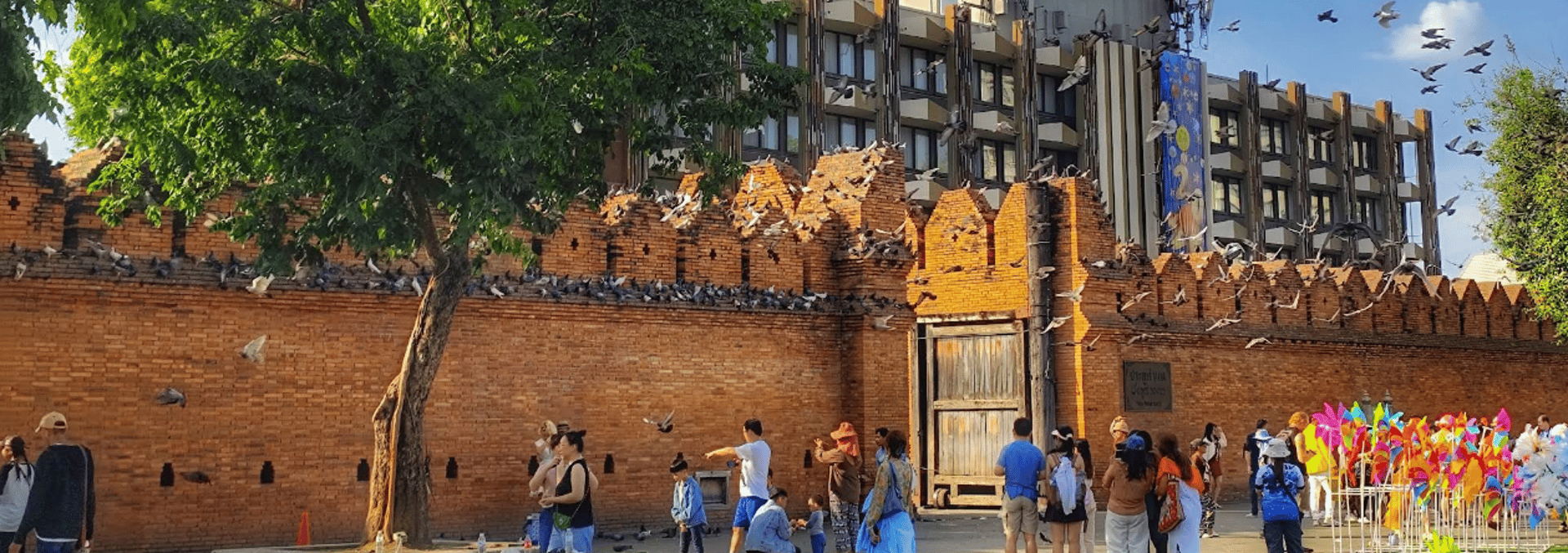
This is the one you've seen in every photo. Tha Phae Gate (ประตูท่าแพ) is the most famous and most fully restored gate.
History: As the eastern gate, it faced the Ping River, which was the city's highway for trade. "Tha" means "river landing" or "port." This was the gate for merchants, traders, and visitors.
The Vibe Today: It's the city's main public square. You'll find the (infamous) pigeons, tourists taking photos, and the starting point for the massive Sunday Walking Street Market. It’s a hub of activity and the perfect place to start.
2. The First Corner: Jaeng Sri Phum (The Northeast Corner)
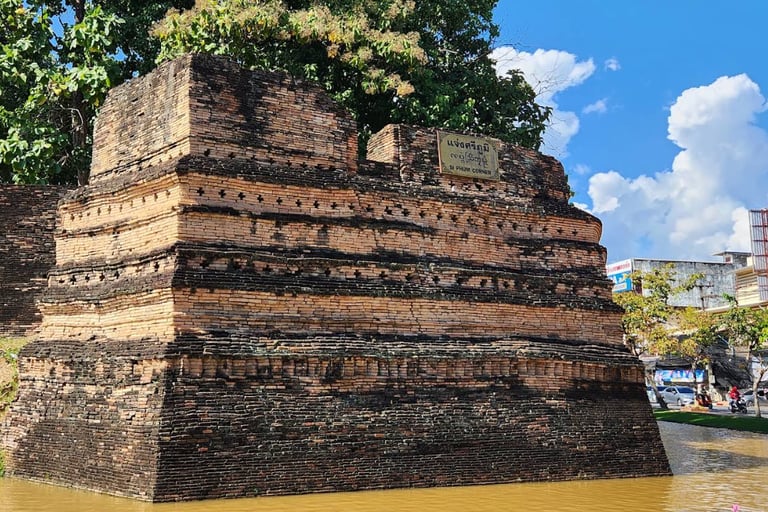
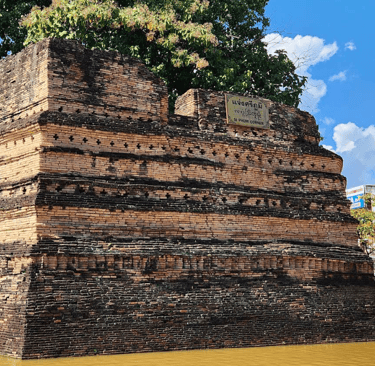
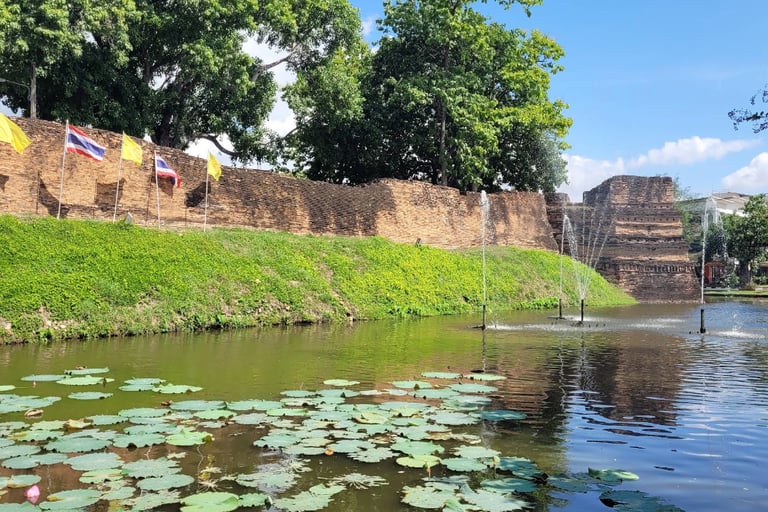
As we walk north from Tha Phae, our first stop isn't a gate, but a corner. The four corners (called "Jaeng" - แจ่ง) have some of the best-preserved sections of the original wall.
Jaeng Sri Phum (แจ่งศรีภูมิ) is arguably the most beautiful and impressive. This large, square bastion juts out from the corner, and the surrounding trees and moat make it a picture-perfect spot. It gives you the best sense of what the city's original defenses looked like.
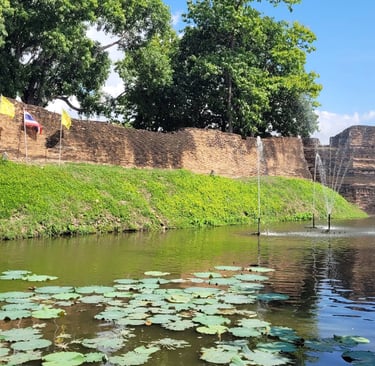
3. The Royal Gate: Chang Puak Gate (The Northern Gate)
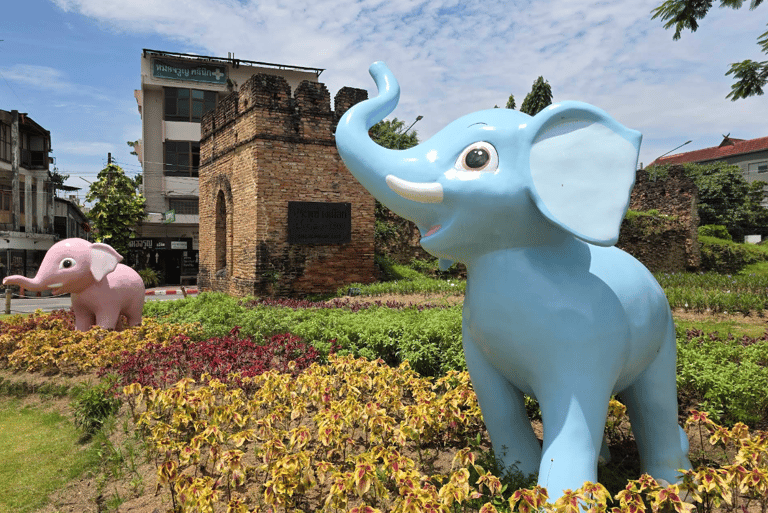
Walking west along the north moat, you'll pass a park and arrive at Chang Puak Gate (ประตูช้างเผือก).
History: This means "White Elephant Gate." In Lanna culture, a white elephant is a sacred symbol of royal power and a good omen. This was the "royal" gate. When the King left the city on official or military business, he would use this gate.
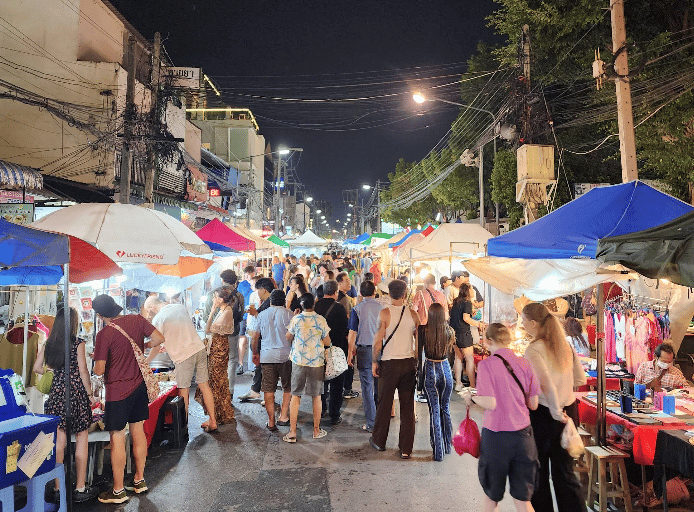
The Vibe Today: Food! This gate is a legendary street food hub at night. It's home to the famous "Cowboy Hat Lady" (Khao Kha Moo Chang Puak) serving life-changing stewed pork leg on rice. It’s also the site of a vibrant local market.
4. The Water Corner: Jaeng Hua Rin (The Northwest Corner)
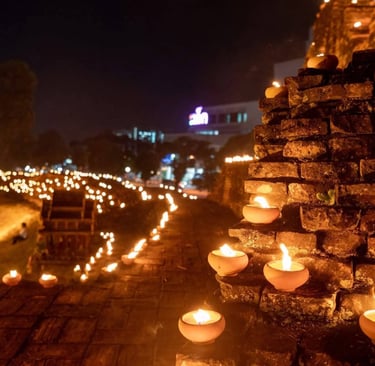
Continuing west and turning south, you reach Jaeng Hua Rin (แจ้งหัวริน). This "Head of the Aqueduct" corner is historically vital. This is where water from the streams running off Doi Suthep was channeled to feed the city's intricate network of canals and, most importantly, the moat itself. It's the source of the city's lifeblood.
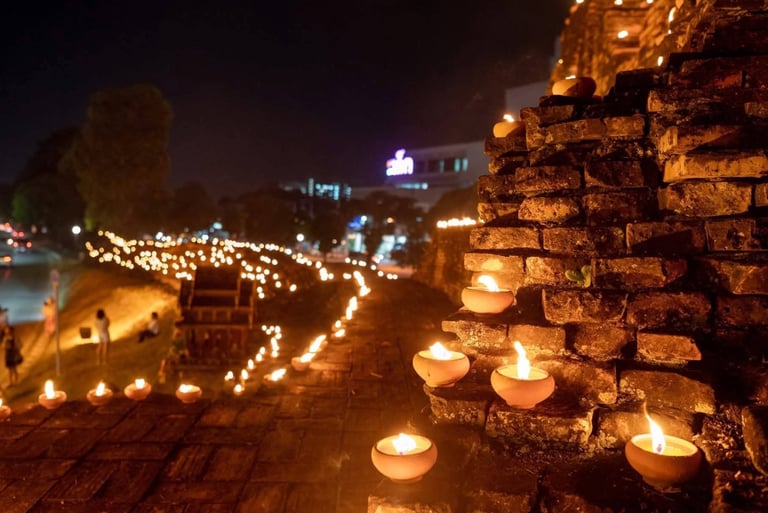
5. The Garden Gate: Suan Dok Gate (The Western Gate)
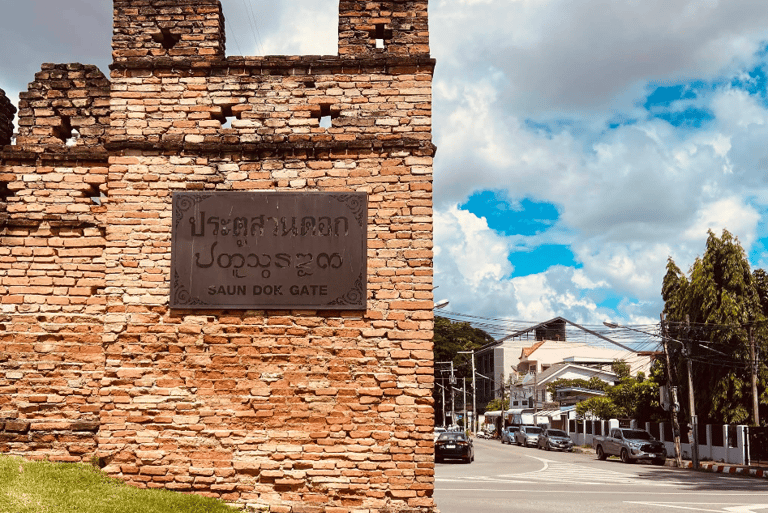
This gate feels different—it's wider, more modern, and a major traffic artery. But Suan Dok Gate (ประตูสวนดอก) has a beautiful history.
History: "Suan Dok" means "Flower Garden." This gate opened onto the royal gardens and forest lands west of the city. It was the gate used for ceremonial processions to the important Wat Suan Dok (which is just 1km down the road) and for journeys up to the sacred Doi Suthep.
The Vibe Today: It's a bustling, modern intersection. The real beauty here is the view from the gate—it offers one of the clearest, most direct views of Doi Suthep. It's the gate that connects the city to the mountain.
6. The "Hidden" Corner: Jaeng Ku Huang (The Southwest Corner)
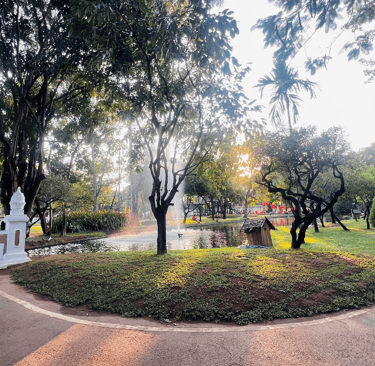
Turning east onto the southern moat, you'll find Jaeng Ku Huang (แจ่งกู่เฮือง). This corner bastion is often overlooked, but it's a key part of the city's defense. The real secret here is what's just inside the wall: Suan Buak Haad Park. This is the only public park inside the Old City. If you need a break from your walk, you can duck in here to see the fountains, relax on the grass, or even feed the fish.

7. The People's Gate: Chiang Mai Gate (The Southern Gate)
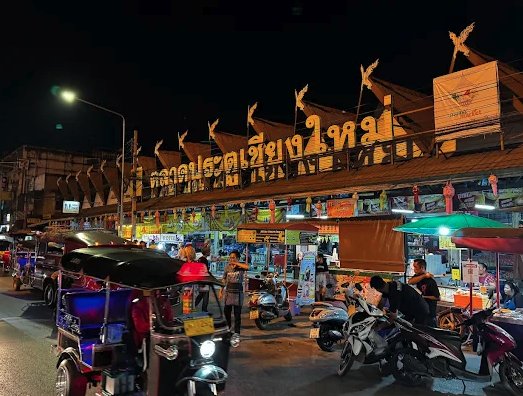
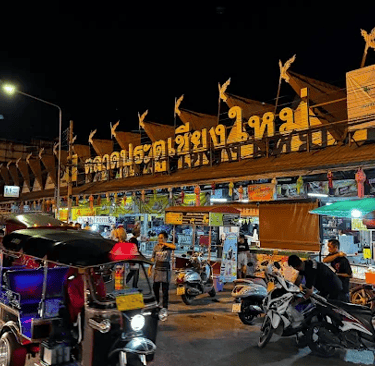
This is perhaps the most "local" and vibrant of all the gates. Chiang Mai Gate (ประตูเชียงใหม่) is a non-stop hub of activity.
History: As the southern gate, it faced the Ping River and the route to other ancient Lanna settlements, like Wiang Kum Kam. It was a primary gate for commoners, farmers, and market-goers.
The Vibe Today: It still is! By day, it hosts a huge morning market where locals shop for fresh produce, flowers, and meat. By night, the same spot transforms into one of the city's best street food markets, offering everything from pad thai to northern sausages (sai oua) and khanom krok (coconut pancakes).
8. The Final Corner: Jaeng Gatam (The Southeast Corner)
As we walk north back towards Tha Phae, our final corner is Jaeng Gatam (แจ้งกะต๊ำ). This is a quiet, peaceful corner. It's a popular spot for locals to come and feed the (enormous) catfish in the moat, a simple, mindful act that's said to "make merit."
From here, it's just a few hundred meters back to Tha Phae Gate, completing our 7km historical loop.
Your Walk as a Wellness Journey: Connecting Past and Present
You've just walked over 700 years of history.
This walk is more than just exercise. It's a form of active meditation. You disconnect from your phone and connect to your surroundings. You notice the rhythm of the city: the monks walking in the morning, the street vendors setting up, the way the light hits the ancient brick.
This is the philosophy of wellness we cherish at C & R Thai Massage: balance.
A trip to Chiang Mai is a balance between exploration and relaxation. You spend the day on your feet, absorbing the culture, the history, and the food. You've worked your muscles, and your mind is full.
What comes next is the other, essential half of wellness: recovery.
After a 7-kilometer walk, your body deserves to be honored. A traditional Thai massage isn't a luxury; it's the perfect, logical next step. It's the ancient Lanna way to un-do the knots from your walk, to stretch the muscles in your legs and back, and to give your mind a quiet space to process all the beauty you just saw.
You've walked the city's ancient defenses. Now, you can let your own defenses down, relax, and heal.
Branch 1: Sunday Walking Street
(10 AM - 10PM)
Address: 145/8 Rajdamnern Road T. Prasingh
A. Mueng Chiang Mai 50200
Phone Number:
+66 (0) 94 601 6207
+66 (0) 83 480 2627
Email: services.crgroup@gmail.com