




Ethical Hill Tribe Tours Chiang Mai: A Respectful Guide
Want to visit a Hmong or Karen village respectfully? Read our guide on ethical hill tribe tours in Chiang Mai, cultural etiquette, and community-based tourism.
CHIANG MAI OLD TOWN AND TRAVEL TIPS
12/19/20258 min read


Beyond the Photo Op: How to Visit a Local Hmong, Karen, or Lisu Village Respectfully and Ethically
Chiang Mai is a city cradled by mountains. When you look west from the Old City walls, you see the emerald embrace of Doi Suthep and the ranges beyond. Hidden within those folds of green are lives, histories, and cultures that are entirely distinct from the Thai culture you experience in the city center. These are the homes of the Highland People—often referred to as "Hill Tribes."
For decades, a visit to a "Hill Tribe Village" has been a staple on the Chiang Mai tourist itinerary. We have all seen the brochures: colorful traditional dresses, silver ornaments glinting in the sun, and promises of an "authentic" look into a simpler life.
But for the conscious traveler, these tours can sometimes feel uncomfortable. There is a fine line between cultural exchange and a "human zoo." There is a difference between appreciating a culture and consuming it.
At C and R Thai Massage, we believe that travel, like wellness, should be holistic. It should be good for the visitor, and good for the host. Just as we treat the human body with reverence and respect in our spa, we believe we should treat the diverse communities of Northern Thailand with the same level of care.
So, how do you cross that cultural bridge? How do you visit a Hmong, Karen, or Lisu village in a way that is ethical, respectful, and creates a genuine connection?
This guide is your roadmap. We will move beyond the surface-level tourism and explore how to have a meaningful interaction with the diverse ethnic groups that make Chiang Mai so unique.
Part 1: Understanding Who You Are Visiting
First, let’s remove the generic label of "Hill Tribe." Each of these groups has its own language, lineage, religion, and dress. Lumping them together is like saying French, German, and Italian cultures are all the same.
1. The Hmong (Miao) Originating from the mountain ranges of Southern China, the Hmong are known for their independence and incredible craftsmanship.
What to notice: Their hemp textiles and batik work are legendary. You will often see indigo-dyed clothes with intricate embroidery.
Location: They tend to live at higher altitudes (cool climates). The village near Doi Suthep (Doi Pui) is Hmong, as are many villages in the Mae Rim and Mon Jam areas.
2. The Karen (Pga K'nyau) The Karen are the largest ethnic minority group in Thailand, originally from Myanmar. They are traditionally forest dwellers who practice rotating agriculture and have a deep spiritual bond with elephants.
What to notice: Unmarried women traditionally wear white V-neck tunics, while married women wear brightly colored shirts and sarongs. They are famous for their weaving skills.
Location: They are often found in the foothills and deep forests, particularly towards Doi Inthanon and Mae Wang.
3. The Lisu Originating from Tibet and Yunnan, the Lisu are known for being vibrant, outgoing, and colorful.
What to notice: Their traditional dress is perhaps the most colorful of all, featuring bright blues, pinks, and greens, with heavy silver jewelry worn for special occasions and New Year.
Location: Often found in the Chiang Dao and Phrao districts north of Chiang Mai.


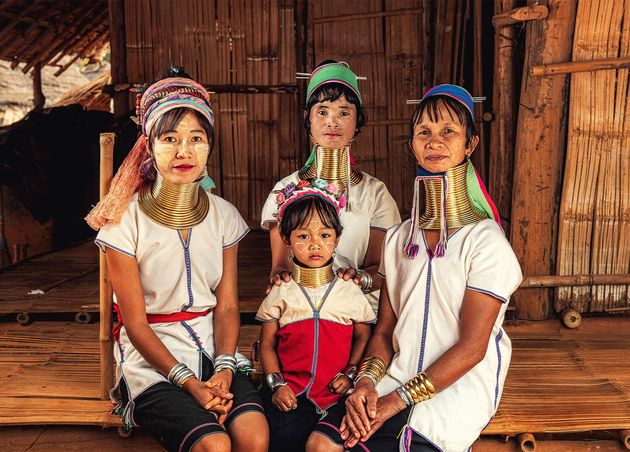
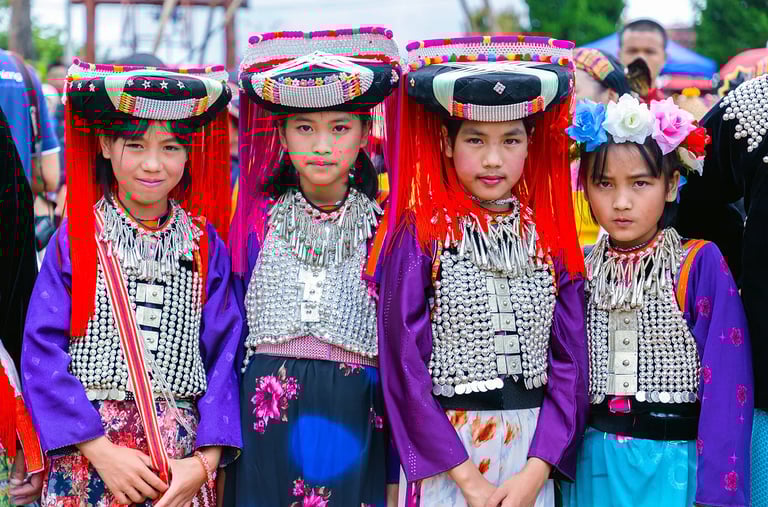
Part 2: The Golden Rule – Community-Based Tourism (CBT)
If you take only one thing from this article, let it be this: Choose Community-Based Tourism (CBT).
In a standard commercial tour, a large van dumps 15 tourists in a village. The guide (who is often not from that village) walks you around, points at things, and encourages you to buy souvenirs. The money you pay for the tour rarely reaches the villagers themselves, aside from the few baht spent on a bracelet.
CBT is different. In a CBT model, the village manages the tourism.
The guides are locals from that specific village.
The money stays in the community fund to build schools, clinics, or roads.
The activities are designed by the villagers to show you what they want to show you.
How to find them: Instead of booking the cheapest "5 Hill Tribes in 1 Day" tour, search for "Community Based Tourism Chiang Mai." Look for agencies like Local Alike or specific village projects (like Baan Mae Kampong or Baan Tong Luang—though the latter is a preservation center, it is better than many exploitative options).
Part 3: The Etiquette Guide – How to Be a Good Guest
Once you arrive at the village, your behavior sets the tone for the interaction. Here is a checklist of respectful actions.
1. The Camera Conundrum: Ask Before You Click
Imagine you are sitting on your front porch drinking coffee, and a stranger walks up, sticks a camera in your face, snaps a photo, and walks away without saying hello. You would be offended.
Yet, tourists do this in villages every day.
The Rule: Always ask for permission. A smile, a gesture to your camera, and a nodding head are usually enough.
The Phrase: Learn to say "Thaai Roop Dai Mai?" (Can I take a picture?) in Thai. Most villagers speak Thai as well as their tribal dialect.
The Interaction: Try to engage first. Buy a small item, compliment their weaving, or just smile and say hello. The photo should be the result of an interaction, not the goal.
2. Dress Modestly
While Chiang Mai city is modern, hill tribe villages are often conservative.
Avoid short shorts, spaghetti straps, or revealing tops.
If you enter a home, take your shoes off immediately.
If you enter a village shrine or spirit gate (especially in Akha or Lisu villages), do not touch the religious items.
3. The "Candy Trap": Gifting Responsibly
You will see cute children running around. Your instinct might be to give them candy or money. Please do not do this.
The Problem: Giving money creates a begging culture. It teaches children that tourists are walking ATMs and encourages them to skip school to beg. Giving candy contributes to tooth decay in areas where dental care is scarce.
The Solution: If you want to help, donate to the village headman, the local school, or a project fund. Or, bring useful supplies like pencils and notebooks and give them to the teacher, not the kids directly.
4. Support the Local Economy Directly
The best way to say "thank you" for the visit is to buy something.
Instead of buying mass-produced souvenirs at the Night Bazaar in the city, buy your textiles directly from the weaver in the village.
You are getting a better price, a guaranteed authentic item, and 100% of the money goes to the artist. It is a win-win.
Part 4: Deepening the Experience – What to Look For
To move from "Sightseeing" to "Insight," look for the details of daily life.
In a Hmong Village: Look for the Batik. The Hmong are masters of wax-resist dyeing. Watch the women drawing intricate geometric patterns on hemp cloth using beeswax before dyeing it in indigo. Ask about the "story cloths"—embroidered tapestries that tell the history of the Hmong migration.
Tip: Try Hmong hill tribe coffee. The Hmong were some of the first to replace opium crops with coffee plants in the 1970s (Royal Project), and the Arabica they grow is world-class.
In a Karen Village: Look at the weaving. Karen women weave on back-strap looms. They sit on the ground with the warp threads attached to a strap around their waist. It is a physically demanding, rhythmic process.
Tip: Notice the houses. Karen houses are traditionally built on stilts with a space underneath for livestock.
In a Lisu Village: Look for the Needlework. Lisu tunics are trimmed with hundreds of tiny, multi-colored strips of cloth sewn together. The precision is mind-blowing.
Tip: Lisu New Year (usually in February) is a massive party with dancing around a central tree. If you are invited to join the circle dance, do it!


Part 5: Navigating the Spirit World
It is important to understand that for many Highland people, the world is full of spirits (Animism).
The Doorways: In many cultures (especially Hmong and Akha), the door threshold is the boundary between the spirit world outside and the ancestors inside. Never step on the threshold; step over it.
The Spirit Gate: Akha villages often have a wooden gate at the entrance adorned with carvings. Never touch this gate. It is a spiritual barrier protecting the village from bad spirits.
Trees: Large trees wrapped in colored cloth are sacred. Do not treat them as climbing frames for photos.
Part 6: After the Trek – The Importance of Recovery
Visiting these villages usually involves travel. You might be bouncing in the back of a 4x4 truck for two hours, or trekking through the jungle on foot to reach a remote settlement.
While your heart will be full, your body might be feeling the journey.
The "Truck Ride" Back: The winding mountain roads and stiff suspension of trucks can compress your spine and tighten your lower back.
The "Village Walk": Walking on uneven, mountainous terrain engages stabilizer muscles in your ankles and calves that you don't use on city pavements.
This is where the journey comes full circle back to C and R Thai Massage.
After a day of cultural immersion, you need physical integration. We recommend:
Thai Herbal Compress Massage: The heat from the steamed herbs (Plai, Turmeric, Lemongrass) is perfect for soothing muscles that have been tensed up during a long drive or hike. It mimics the natural medicine used by the very tribes you just visited.
Foot Reflexology: If you trekked to the village, your feet deserve honor. Our reflexology will reset your energy levels.
Traditional Thai Massage: To realign the spine and open the hips after sitting in a vehicle.
A Moment of Reflection Use your time on the massage bed to reflect. In the quiet of our spa, with the smell of herbs in the air, think back to the village. Think about the slow pace of life, the connection to nature, and the craftsmanship you witnessed. Let the massage ground those memories into your body.
Conclusion: Travel with an Open Heart
Visiting the ethnic minority villages of Chiang Mai can be the highlight of your trip. It challenges your perspective, introduces you to incredible art, and connects you with the human history of this region.
By visiting ethically—by asking permission, dressing respectfully, and supporting the local economy—you ensure that these cultures continue to thrive, not just survive. You move from being a tourist to being a guest.
So go explore. Go up the mountain. Buy the handmade silver bracelet. Drink the locally grown coffee. And then, come back down to Chiang Mai city, and let us take care of you.
Have you visited a hill tribe village in Chiang Mai? What was your most memorable interaction? Share your stories in the comments below!
Branch 1: Sunday Walking Street
(10 AM - 10PM)
Address: 145/8 Rajdamnern Road T. Prasingh
A. Mueng Chiang Mai 50200
Branch 2: Chiang Mai Gate
(10 AM - 10PM)
Address: 18/5 Rat Chiang Saen Road T. Hai Ya
A. Mueng Chiang Mai 50100
Phone Number:
+66 (0) 94 601 6207
+66 (0) 83 480 2627
Email: services.crgroup@gmail.com