



What Should You Expect During Your First Thai Massage? | C and R
Nervous about your first Thai massage in Chiang Mai? Discover our step-by-step guide on what to wear, the "good pain," and what happens during the session.
THAI MASSAGE AND WELLNESS
4/13/20264 min read
What Should You Expect During Your First Thai Massage? A Step-by-Step Guide
So, you’ve made it to Chiang Mai. You’ve walked the sun-drenched streets of the Old City, marveled at the golden spires of Wat Phra Singh, and perhaps your legs are starting to feel the miles. You see the sign for C and R Thai Massage, and you’re tempted. But then, the hesitation kicks in.
What actually happens in there? Is it like a spa back home? Will they really walk on my back?
Traditional Thai Massage (known as Nuad Thai) is a 2,500-year-old healing art that was recently recognized by UNESCO as part of the Intangible Cultural Heritage of Humanity. It is unlike any other massage in the world. It is a dance of energy, a workout for the sedentary, and a deep release for the stressed.
If you are a first-timer, the unknown can be a little intimidating. At C and R Thai Massage, we believe that the more you know, the more you can let go. Here is a step-by-step breakdown of exactly what to expect during your first authentic Thai massage experience.
1. The Arrival: Entering the Sanctuary
When you walk into our branches—whether it’s the one near the bustling Sunday Walking Street or our peaceful location by Chiang Mai Gate—the first thing you’ll notice is the atmosphere. The air smells of lemongrass and menthol.
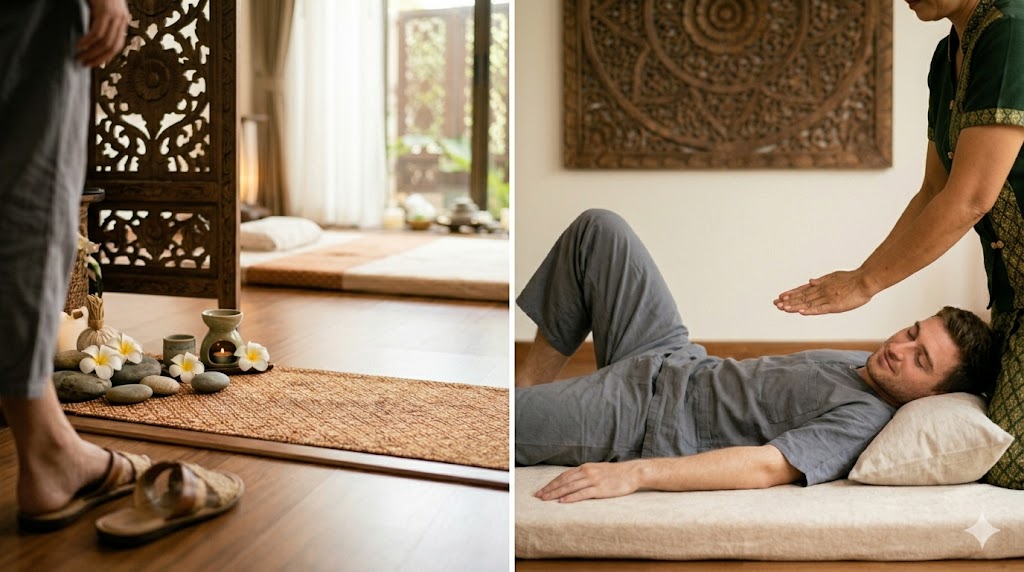
The Foot Ritual: In Thai culture, the feet are considered the lowest and "dirtiest" part of the body, while the head is the highest and most sacred. Almost all traditional sessions begin with a foot wash. You’ll sit on a low wooden bench while a therapist gently scrubs your feet with warm water and lime or salt. This isn't just for hygiene; it is a ritualistic "cleansing" that helps you leave the chaos of the outside world at the door.
2. The Attire: No Oil, No Disrobing
One of the biggest surprises for first-timers is that you do not undress. Unlike a Swedish or Aromatherapy massage, Thai massage is performed over clothing.
What you’ll wear: We will provide you with a set of traditional Thai "pajamas"—usually a loose-fitting, breathable cotton top and oversized trousers that tie at the waist.
Pro Tip: Leave your jewelry and watch in your bag. You want to be as "unrestricted" as possible.
3. The Environment: Grounded Healing
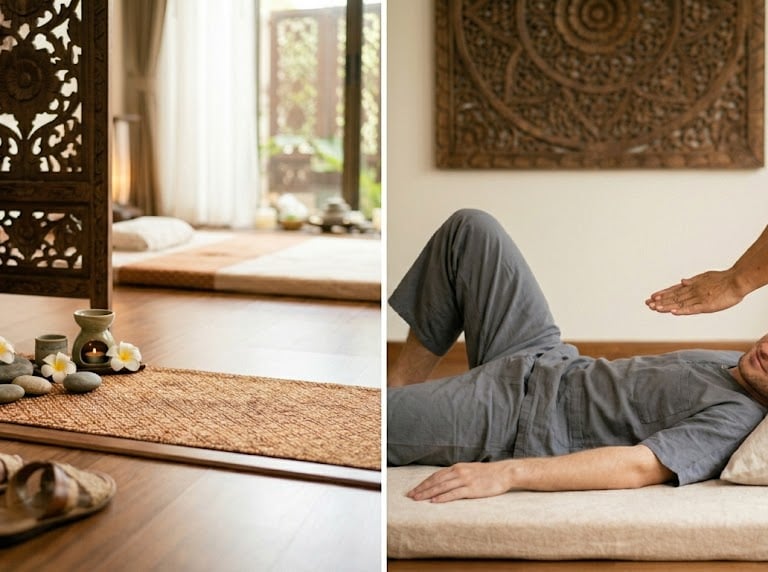
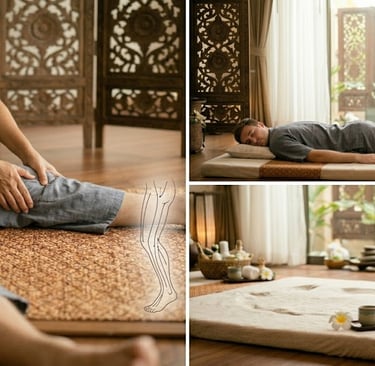
Forget the high, padded massage tables you see in Western spas. Authentic Thai massage takes place on a firm, comfortable mattress on the floor.
Why the floor? Because Thai massage is an active process. The therapist needs to use their body weight, leverage, and sometimes their entire body to move yours. Being on the floor gives the therapist the stability to lean into the stretches safely and effectively.
4. The Philosophy: It’s All About the "Sen"
You might wonder why the therapist is pressing on your calf when your back is what hurts. Thai massage is based on the concept of "Sen" lines—ten primary energy pathways that run through the body.
In Lanna (Northern Thai) tradition, physical pain is seen as a "blockage" in these lines. By applying rhythmic pressure along these pathways, the therapist "flushes" the system, allowing blood and energy to flow freely again. It is a holistic approach: fixing the foundation to heal the roof.
5. The Experience: "Lazy Man’s Yoga"
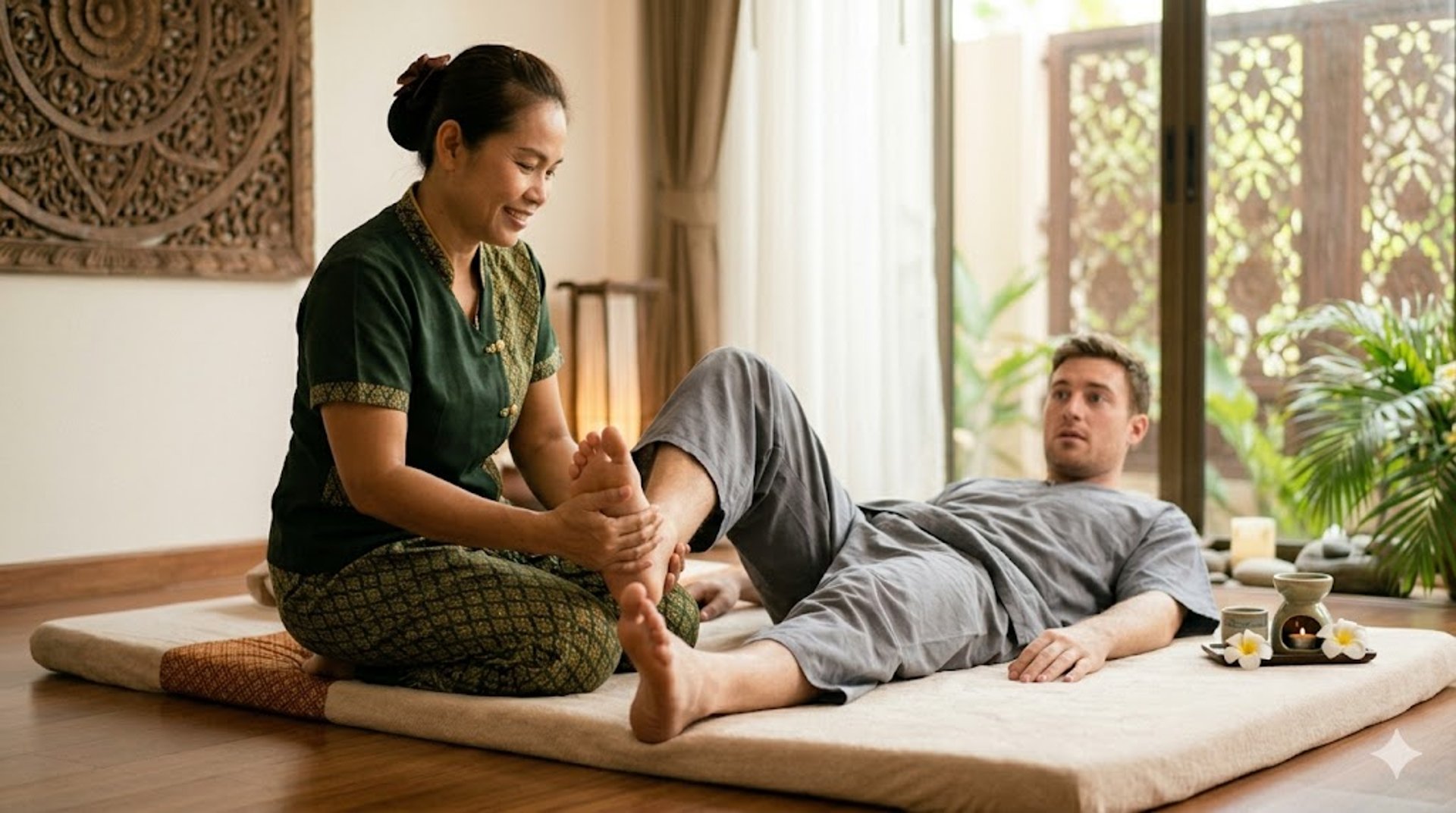
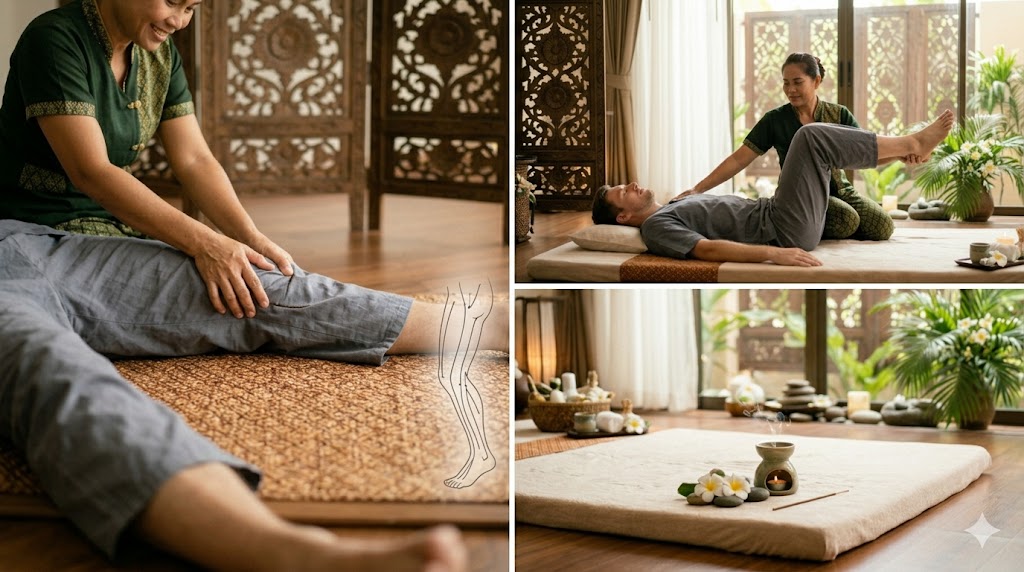
This is where the magic (and the stretching) happens. During a 60 or 90-minute session, your therapist will use their hands, thumbs, elbows, knees, and feet.
Rhythmic Compressions: The session usually starts at the feet and moves upward. The therapist uses a rocking motion to apply pressure. It feels like a deep, slow wave moving through your muscles.
The Stretches: This is why it’s called "Lazy Man’s Yoga." The therapist will move your body into various positions—twisting your torso, pulling your arms back to open your chest, or lifting your legs to stretch your hamstrings.
The Sound: You might hear a few "pops" or "cracks" in your joints. Don't panic! This is just air being released from the joint capsules as your body finds its natural alignment again.
6. The "Good Pain" vs. "Bad Pain"
We have to be honest: Thai massage can be intense.
What is normal: A sensation of "intensity" or a deep, dull ache as a knot is released. We call this "Good Pain"—the kind that makes you want to exhale deeply.
What is NOT normal: Sharp, stabbing, or electric-like pain.
Communication is Key: At C and R, our therapists are highly trained, but they aren't mind readers. If the pressure is too much, simply say "Bao Bao" (Softer). If you love it and want more, say "Nak Nak" (Harder).
7. The Closing: The "Karate Chop" and Tea
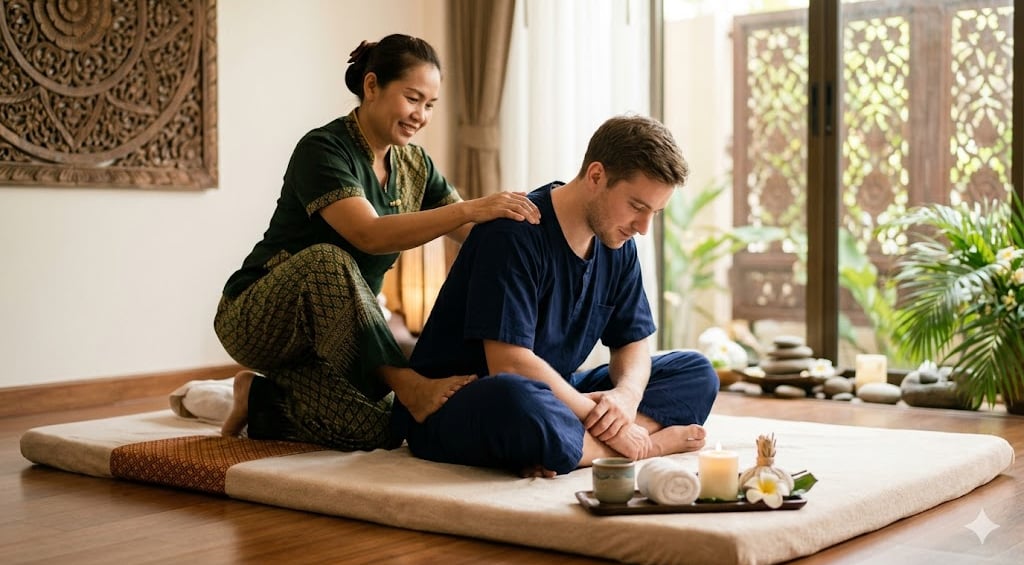
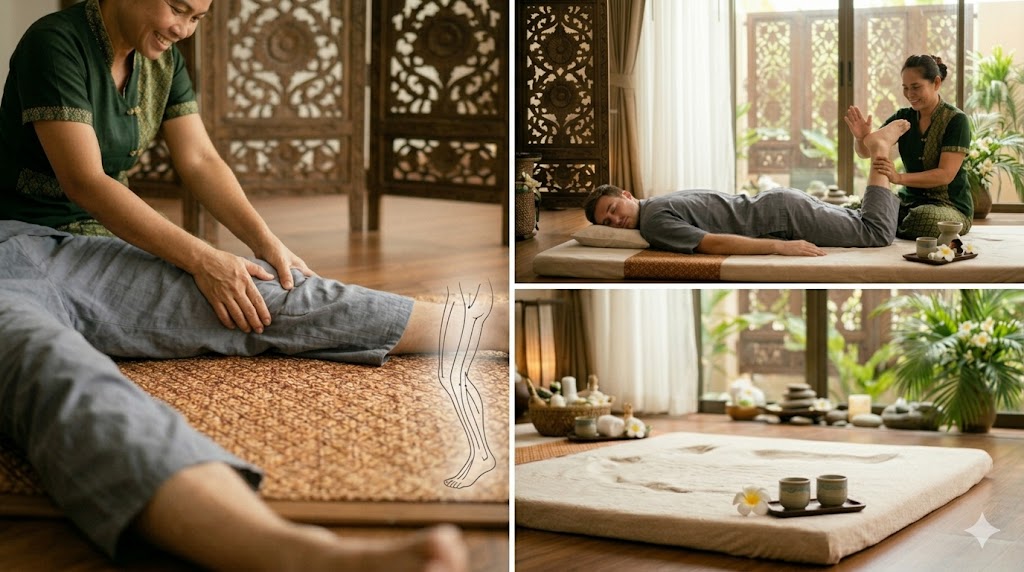
As the session ends, the therapist will usually perform a series of quick, light rhythmic taps on your back and shoulders (the "karate chop" move) to wake up your circulation.
You’ll be invited to sit up, given a final shoulder squeeze, and then led back to the reception area.
The Final Touch: We always serve a warm cup of herbal tea after the session. Drink it. The tea helps to flush out the toxins that were released from your muscles during the massage.
8. How You’ll Feel Afterward
Immediately after, you might feel a bit "spaced out" or lightheaded. This is the "massage high."
By the next morning, however, most people report feeling:
Incredibly flexible.
"Lighter" in their walk.
More mentally clear.
Deeply rested (Thai massage is famous for curing insomnia!).
Branch 1: Sunday Walking Street
(10 AM - 10PM)
Address: 145/8 Rajdamnern Road T. Prasingh
A. Mueng Chiang Mai 50200
Branch 2: Chiang Mai Gate
(10 AM - 10PM)
Address: 18/5 Rat Chiang Saen Road T. Hai Ya
A. Mueng Chiang Mai 50100
Phone Number:
+66 (0) 94 601 6207
+66 (0) 83 480 2627
Email: services.crgroup@gmail.com