



How to Rent a Motorbike in Chiang Mai (Safely): A Complete 2025 Checklist
Planning to rent a motorbike in Chiang Mai? Read our 2025 safety guide. Learn about International Driving Permits, how to avoid scams, best routes, and recovery massage tips.
CHIANG MAI OLD TOWN AND TRAVEL TIPS
12/13/20257 min read


How to Rent a Motorbike in Chiang Mai (Safely): A Complete Checklist for 2025
There is a specific dream that draws travelers to Chiang Mai. It’s the image of hopping on a scooter, feeling the warm tropical breeze, and driving up the winding road to Doi Suthep with the city shrinking in the rearview mirror.
Renting a motorbike offers ultimate freedom. You aren't waiting for red trucks (Songthaews); you aren't haggling with Tuk-Tuks. You are the captain of your own adventure.
However, there is a flip side to this coin. If you look around the Night Bazaar or the Old City, you will inevitably see travelers sporting white bandages on their knees, elbows, and calves. Locals call this the "Chiang Mai Tattoo." It is the mark of a motorbike accident, and it is a souvenir you absolutely do not want to take home.
Welcome to the C and R Thai Massage Blog. Usually, we talk about relaxation and healing. But we believe that the best way to heal an injury is to prevent it from happening in the first place. We see many clients coming in with stiff necks from hunching over handlebars or, worse, recovering from minor road accidents.
We want you to enjoy the freedom of the open road safely.
Whether you are a seasoned rider or a complete novice, this guide covers everything you need to know—from the confusing legal requirements and police checkpoints to the mechanical checks you must perform before you drive off the lot.
Part 1: The Legal Reality (Do You Have a License?)
This is the most common question we get asked. Can I rent a bike without a license?
The short answer is: Yes, you can rent one, but you probably shouldn't.
Rental shops in Chiang Mai are businesses; they will rent a bike to almost anyone with cash and a passport. However, the Thai Police and your Insurance Company have very different rules.
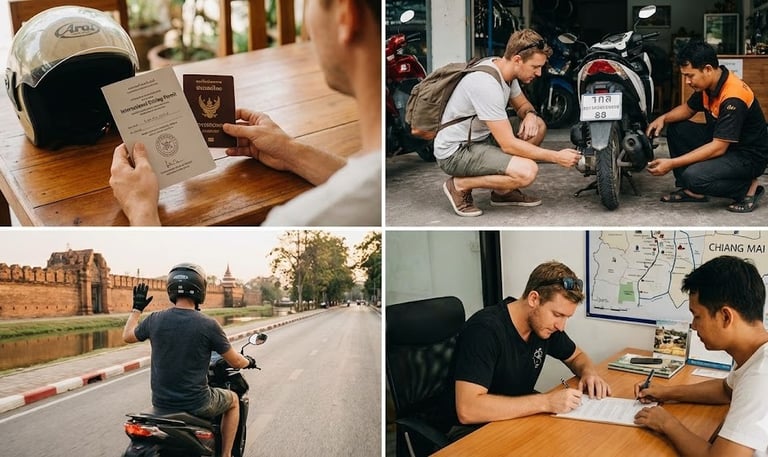
The "Golden Ticket": The IDP
To drive legally in Thailand, you need:
A valid motorcycle license from your home country.
An International Driving Permit (IDP).
The Police Checkpoints: Chiang Mai police set up daily checkpoints, usually around the corners of the moat (especially near Tha Phae Gate and Huay Kaew Road). They specifically look for tourists on scooters.
If you have an IDP with a motorbike stamp: You smile, show it, and drive away.
If you do not: You will be fined. The current official fine is usually 500 to 1,000 Baht. You will get a receipt that allows you to drive for the rest of the, or sometimes 3 days, without being fined again.
The Insurance Trap: The fine is annoying, but the real danger is insurance. If you get into an accident and you do not have a valid motorcycle license (both home and IDP), your travel insurance will likely void your claim. This means you could be personally liable for tens of thousands of dollars in medical bills.
Part 2: Choosing the Right Rental Shop
Not all shops are created equal. Some maintain their fleets impeccably; others rent out death traps with loose brakes.
Red Flags (Avoid these shops):
The bikes look dirty, scratched, and old.
They don't ask for a deposit.
They try to force you to give them your actual passport (see below).
The Passport vs. Deposit Debate: Most shops will ask you to leave your physical passport as a deposit.
Our Advice: Never leave your passport. It is your most important document. It is actually illegal for a hotel or rental shop to hold it.
The Solution: Find a reputable shop that accepts a cash deposit instead (usually 3,000 to 5,000 Baht) along with a photocopy of your passport.
Part 3: The Pre-Rental Inspection Checklist
Once you’ve chosen a bike (we recommend a Honda Click 125cc for beginners—it’s automatic and reliable), do not just sign the paper and leave. Perform this 5-minute check.
1. The "360" Video Take your phone out. Walk around the bike while recording video. Point out every single scratch, dent, or cracked plastic.
Why: When you return the bike, if they accuse you of a scratch, you have video proof that it was already there.
2. The Brake Test Sit on the bike and squeeze both brakes. They should feel tight, not spongy. You should not be able to pull the lever all the way to the handlebar.
3. The Tire Squeeze Kick the tires. They should be firm. Look at the tread—if the tires are "bald" (smooth), refuse the bike. Bald tires on wet roads are the #1 cause of sliding accidents.
4. Lights and Horn Check the turn signals (indicators), the brake light, and the headlight. Test the horn. You will need all of these in Chiang Mai traffic.
5. The Helmet (Don't Compromise) Do not take the flimsy plastic "bowl" helmets that offer zero protection. Ask for a full-face helmet or at least one with a visor and thick padding. If the shop doesn't have good ones, go buy a decent helmet for 500 Baht at a shop; it’s cheaper than a head injury.
Part 4: Rules of the Road in Chiang Mai
Driving here is different from Europe or the US. It is an "organized chaos."
Drive on the LEFT.
The "Left Turn" Rule: At red lights, you can usually turn left continuously (unless signed otherwise), but you must yield to incoming traffic.
The Songthaew Factor: The Red Trucks are unpredictable. They will stop suddenly to pick up passengers. Never follow a Red Truck too closely. Always leave a gap.
Use Your Mirrors: Traffic comes from all directions. Locals might overtake you on the left or right. Check your mirrors constantly.
Speed Limit: In the city, keep it under 40-50 km/h. There is no need to rush.
Part 5: Best Beginner Routes to Build Confidence
Don't go straight to the busy highway. Start easy.
1. The Samoeng Loop (The Classic) This is widely considered one of the best motorbike loops in Asia. It’s about 100km.
Why: The roads are paved, wide, and offer stunning mountain views. You can stop at the Queen Sirikit Botanic Garden or various coffee shops along the way.
2. Huay Tung Tao Reservoir A short 20-minute drive north of the city. The roads are straight and simple. You end up at a beautiful lake where you can practice riding in the parking lot or relax in a bamboo hut.
3. Doi Suthep (The Challenge) Only attempt this once you are confident. The road is wide but very twisty. The reward at the top—the golden temple and the view—is worth the climb.
Part 6: The "Motorbike Syndrome" (And How We Fix It)
Riding a scooter, especially if you are new to it, is physically demanding. You are holding a static posture, gripping the handlebars tight, and dealing with the vibrations of the road.
After 2 or 3 days of riding, you might notice:
"Scooter Shoulder": Tension in the trapezius muscles from shrugging your shoulders up toward your ears due to stress.
Lower Back Pain: From hitting potholes and sitting on a thinly padded seat.
Wrist Strain: From working the throttle and brakes.
This is where C and R Thai Massage comes in. We specialize in treating "Traveler’s Fatigue."
If you have spent the day exploring the Samoeng Loop, we recommend:
Tok Sen (Hammer Massage): The rhythmic vibration of the Tok Sen tools is incredible for releasing deep tension in the back caused by road vibration.
Head, Back, and Shoulder Massage: We focus specifically on the upper body to lower your shoulders and release the neck stiffness from wearing a heavy helmet.
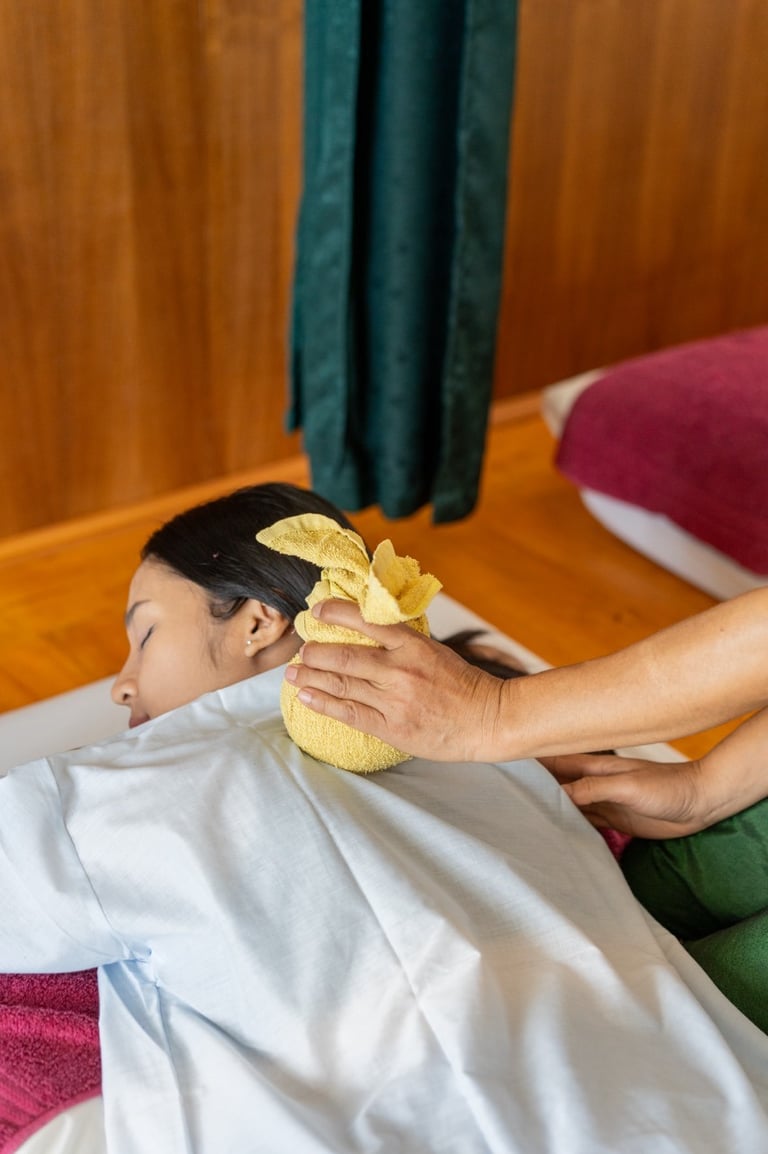
Thai Herbal Compress: The heat from the herbs helps relax muscles that have been clenched in the "riding position" all day.
Think of it as essential maintenance for your body, ensuring you can get back on the bike tomorrow feeling fresh and alert.
Part 7: What to Do If You Crash
We hope this never happens, but preparedness is key.
Move to Safety: Get yourself and the bike off the road immediately.
Call for Help: The emergency number in Thailand is 191 (Police) or 1669 (Ambulance).
Document Everything: Take photos of the bike, the road, and any other vehicles involved.
Call the Rental Shop: Be honest. Tell them what happened.
Go to the Hospital: Even if you feel fine, adrenaline can mask injuries. Go to Chiang Mai Ram or Bangkok Hospital for a check-up. (See our previous blog post on Medical Care for more details!).

Conclusion: Ride Safe, Relax Deeply
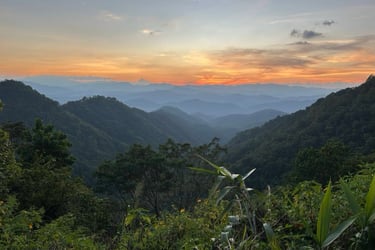
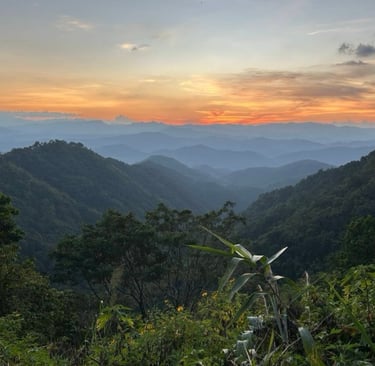
Renting a motorbike in Chiang Mai is an unforgettable experience. It gives you the freedom to chase sunsets, find hidden waterfalls, and eat at noodle shops that tourists never see.
By following this checklist—getting your IDP, checking your bike, and driving defensively—you can ensure your adventure remains a happy memory, not a medical emergency.
And remember, after a long day of conquering the mountain roads, C and R Thai Massage is here to help you unwind. Park your bike, take off your helmet, and let us take care of the rest.
Have you rented a bike in Thailand before? What is your number one tip for new riders? Let us know in the comments!
Branch 1: Sunday Walking Street
(10 AM - 10PM)
Address: 145/8 Rajdamnern Road T. Prasingh
A. Mueng Chiang Mai 50200
Branch 2: Chiang Mai Gate
(10 AM - 10PM)
Address: 18/5 Rat Chiang Saen Road T. Hai Ya
A. Mueng Chiang Mai 50100
Phone Number:
+66 (0) 94 601 6207
+66 (0) 83 480 2627
Email: services.crgroup@gmail.com