




Is Thai Massage Painful? What Beginners Should Know
Is Thai massage actually painful? Discover the truth about "good" vs. "bad" pain, Sen energy lines, and how to talk to your therapist in our beginner's guide.
HEALTHCARE & MEDICAL TIPSTHAI MASSAGE AND WELLNESS
4/4/20269 min read
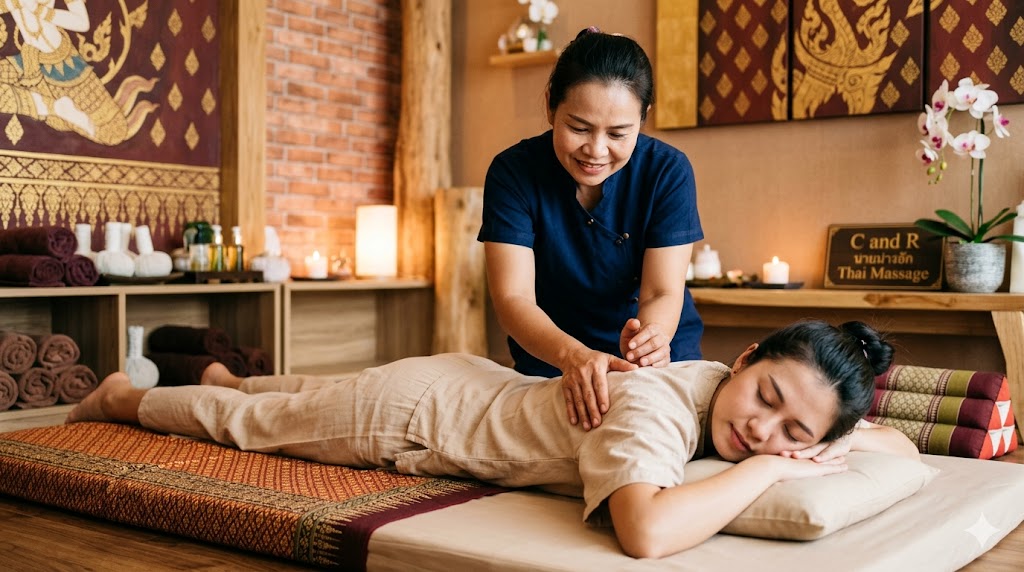
Is Thai Massage Painful? What Every Beginner Needs to Know Before Stepping on the Mat
Introduction: The Elephant in the Room
Let’s be honest. If you have never had a traditional Thai massage, you have probably heard the rumors. You might have seen videos of people being twisted into human pretzels, or heard a friend recount a story about a tiny Thai woman walking on their back while they gritted their teeth.
The reputation of Thai massage often precedes it. It is frequently described as "intense," "vigorous," or even "painful."
For a beginner stepping off the plane in Chiang Mai, exhausted from a 15-hour flight and just looking for some relaxation, this reputation can be terrifying. You want to relieve your stiff neck and swollen ankles, but you do not want to endure an hour of torture to get there.
So, let’s address the elephant in the room: Is Thai massage actually painful?
The short answer is: It shouldn't be, but it can be intense.
The long answer is much more nuanced. Traditional Thai massage is an ancient healing art that is fundamentally different from the gentle, oil-based Swedish massages you might be used to in the West. It is active, not passive. It is deep, not surface-level.
At C and R Thai Massage, we specialize in introducing beginners to this incredible healing tradition. We believe that fear comes from a lack of understanding. When you know what is happening to your body, and more importantly, when you know how to communicate with your therapist, the fear disappears.
In this complete beginner’s guide, we are going to debunk the myths, explain the science behind the "good pain," teach you exactly what to say to your therapist, and show you why a proper Thai massage might just be the best thing you ever do for your body.
Part 1: The Western Expectation vs. The Eastern Reality
To understand why Thai massage feels the way it does, we have to look at its origins.
In the West, massage is primarily viewed as a luxury. You lie naked under a warm towel, soft music plays, and a therapist uses slick oils to gently knead your muscles until you fall asleep. The goal is pure, immediate relaxation.
Traditional Thai Massage (Nuad Thai) is not a spa treatment; it is a medical discipline. It was developed over 2,500 years ago, drawing influences from Indian Ayurvedic medicine and traditional Chinese medicine. The goal is not just to relax you for an hour, but to fundamentally fix the imbalances in your body.
Key Differences You Will Notice:
You stay fully clothed: You will be given a set of loose, comfortable pajamas to wear.
There is no oil: Instead of gliding over the skin, the therapist uses compression.
You are on the floor: You lie on a firm mat on the floor, allowing the therapist to use their body weight effectively.
It is an active process: You do not just lie there. The therapist will move your limbs, stretch your back, and manipulate your joints. This is why it is often called "Lazy Man's Yoga."
Because the goal is to clear energetic blockages and release deep, chronic muscle tension, the techniques used are inherently more invasive than a Swedish massage. But "invasive" does not have to mean "painful."
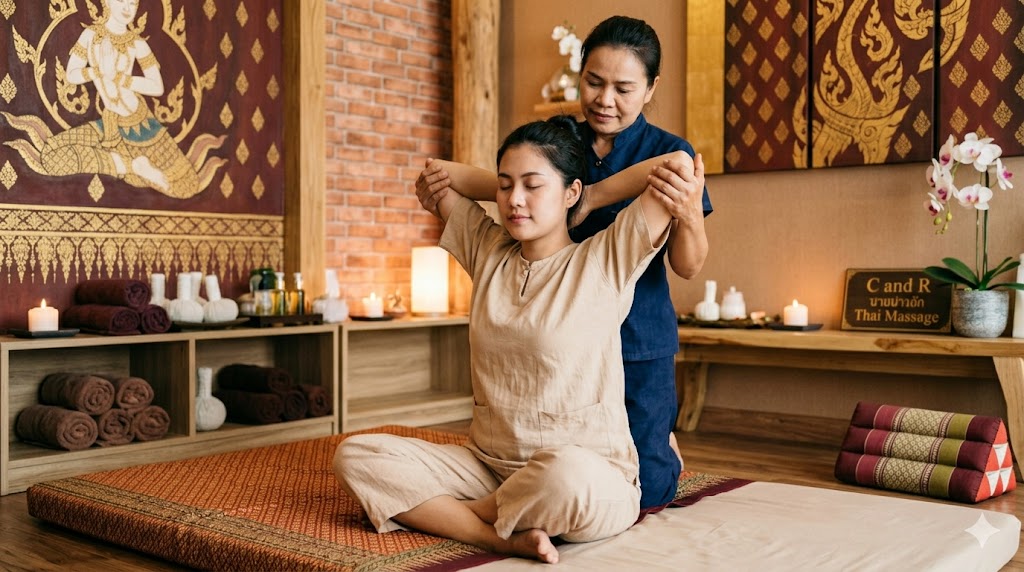
Part 2: The Concept of "Sen" Energy Lines
Why is the therapist pressing their thumb so hard into that specific spot on your calf? It’s not random.
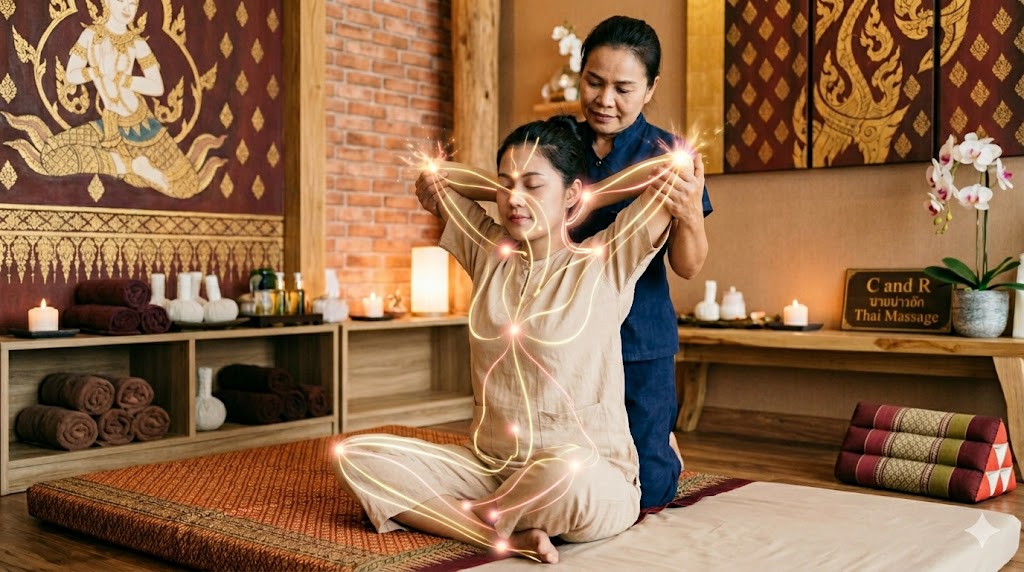
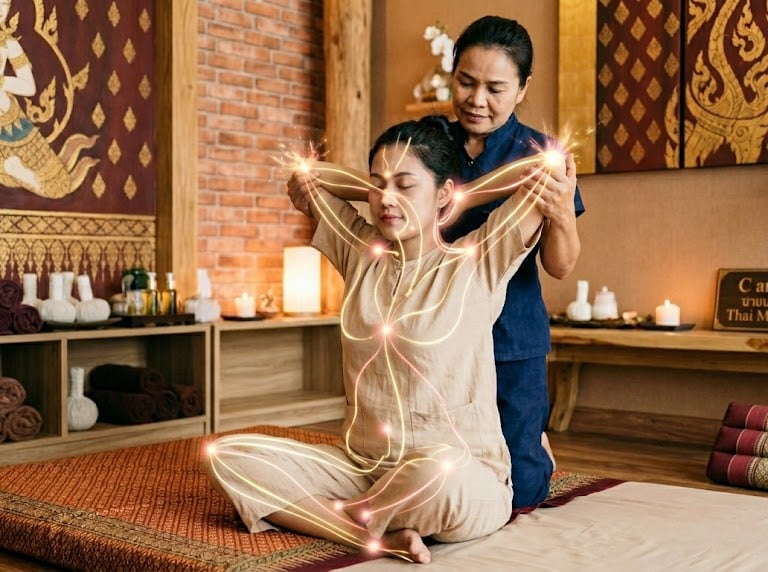
Thai massage is based on the concept of "Sen" lines. According to traditional Lanna and Thai medicine, the human body consists of 72,000 invisible energy pathways. When you are stressed, sitting at a desk all day, or carrying a heavy backpack around Chiang Mai, this energy becomes blocked. These blockages manifest as physical knots, stiffness, and pain.
To unblock the energy, the therapist uses acupressure. They will use their thumbs, palms, forearms, elbows, and sometimes even their feet to apply deep, sustained pressure along these specific lines.
When a therapist hits a major blockage—a tight knot of muscle fiber that has been tense for months—it is going to feel sensitive. This is where the perception of "pain" comes from.
Part 3: Decoding the Pain (Good vs. Bad)
This is the most important concept for any beginner to grasp. There is a massive difference between therapeutic discomfort and actual injury.
Your body is incredibly smart and relies on different physical warning signals. You need to listen to these signals during your massage so you know exactly how to react:
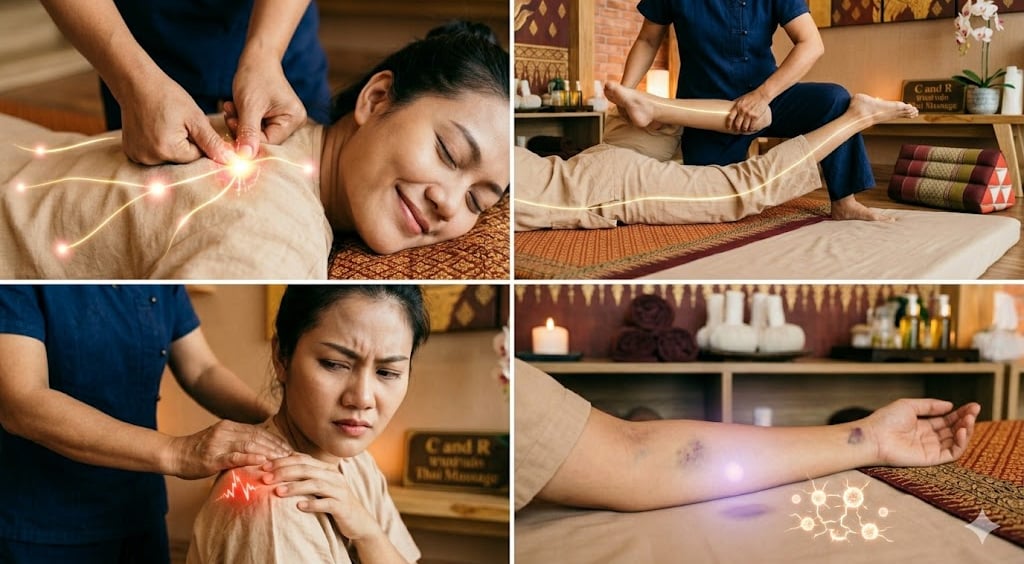
"Good Pain" (The Release): This manifests as a deep, dull ache or a satisfying sensation of pressure and release. It often feels like the therapist is finally "hitting the spot" that has been bothering you for weeks. When you feel this, your job is to breathe deeply and consciously sink into the feeling, allowing the muscle knot to break down.
"The Stretch" (The Elongation): During the active, yoga-like movements of the massage, you will feel tension directly in the belly of the muscle. This simply means your muscle fibers are being safely elongated. To help the process, exhale slowly and relax any physical resistance.
"Bad Pain" (The Warning): This type of pain is sharp, shooting, pinching, or electric. It is your body's alarm bell signaling that a nerve is being pinched or a joint is being pushed past its natural, safe limit. If you feel this, speak up immediately. The therapist needs to adjust their angle or stop the movement entirely.
"The Bruise" (The Overload): If the pressure causes a crushing sensation that makes you instinctively hold your breath, clench your jaw, or tense your whole body, the weight is simply too heavy for your tissue's current tolerance. Politely ask the therapist to soften their touch.
The Golden Rule: If the pressure causes you to tense your muscles to "fight" the therapist, the massage is no longer working. A tensed muscle cannot be effectively released. Never suffer in silence; clear communication is the secret to a perfect Thai massage.
Part 4: Why Does it Hurt More for Some People?
Have you ever noticed that a seasoned expat can sleep through a deep Thai massage, while a newly arrived tourist is wincing?
Your experience of the massage is entirely dependent on the current state of your body. If you experience discomfort, it is usually due to one of the following factors:
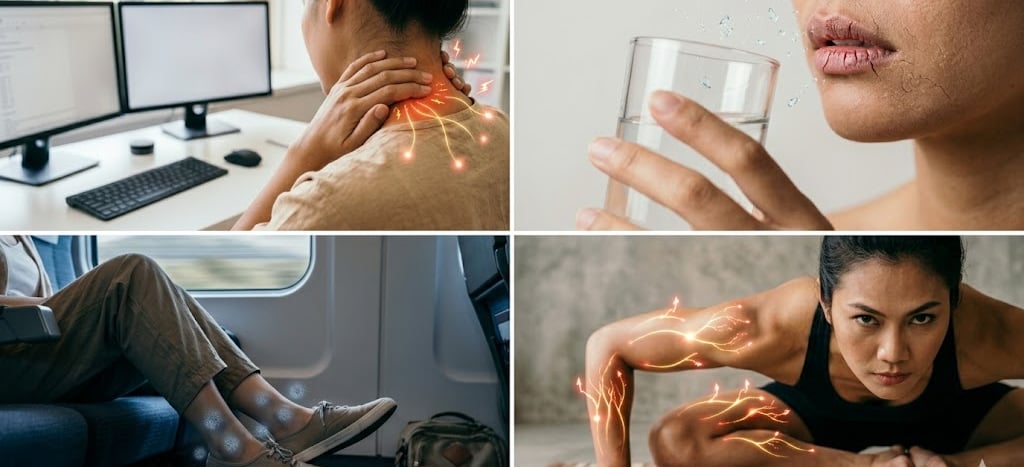
1. The "Desk Worker" Syndrome If you spend 40 hours a week hunched over a laptop, your hip flexors are shortened, your hamstrings are tight, and your chest is caved in. When a Thai massage therapist tries to open those hips or pull your shoulders back into alignment, your body will resist. The tighter you are, the more intense the stretching will feel.
2. Dehydration and Travel Fatigue Fascia (the connective tissue surrounding your muscles) needs water to remain pliable. If you have just stepped off a long flight and have been walking around Chiang Mai in the heat, you are dehydrated. Dehydrated fascia is sticky and stiff, making acupressure feel much more painful.
3. The "No Pain, No Gain" Mindset Many beginners think they have to endure pain to get a good massage, so they don't tell the therapist when it hurts. They lie there suffering in silence. This is a mistake!
Part 5: Communication is Your Best Defense
At C and R Thai Massage, we cannot stress this enough: You are in control of your massage.
A common misconception is that Thai massage therapists only know one speed: hard. This is simply not true. A highly trained therapist knows how to modulate their pressure. However, they are not mind readers. Because every body is different, what feels like a feather to a bodybuilder might feel like a hammer to an office worker.
You must communicate. Do not wait until the massage is over to say it was too hard.
Here are the essential Thai phrases you need to memorize before your session:
Bao Bao (เบาเบา): "Softer" or "Lighter." (Use this if it hurts!).
Nak Nak (หนักหนัก): "Harder" or "More pressure." (Use this if you want a deeper tissue massage).
Jep (เจ็บ): "It hurts." (Say this immediately if you feel sharp, bad pain).
Sabaay (สบาย): "Comfortable" or "Relaxing." (Say this when the pressure is perfect so the therapist knows to keep doing what they are doing!).
Part 6: The C and R Difference (Trusting Your Therapist)
The biggest factor in whether a Thai massage is painful or therapeutic is the skill of the person delivering it.
Unfortunately, in highly touristed areas, there are "massage shops" where the staff have very little formal training. They memorize a routine and apply it to every single person the same way, regardless of that person's body type, age, or flexibility. That is when injuries and bad experiences happen.
True traditional Thai massage is a customized dialogue between the giver and the receiver.
When you book a session at C and R Thai Massage, you are not getting a cookie-cutter routine. You are in the hands of seasoned professionals. Our team is our family, and our senior therapists—Jin, Ben, and Vee—are masters of reading the body.
When Kaew presses into your shoulder, she is feeling the density of the tissue. If Jin is guiding you into a spinal twist, he is watching your breathing patterns to see when your body naturally stops. Tee, Pol, and Dao know exactly how to warm up the muscles before applying deeper acupressure so that the body accepts the work rather than fighting it.
They will never force your body into a position it is not ready for. They know the difference between pushing a boundary for therapeutic release and pushing a boundary into pain.
Part 7: What to Expect During the Session
If you are a beginner, here is a quick roadmap of what will actually happen, so there are no surprises.
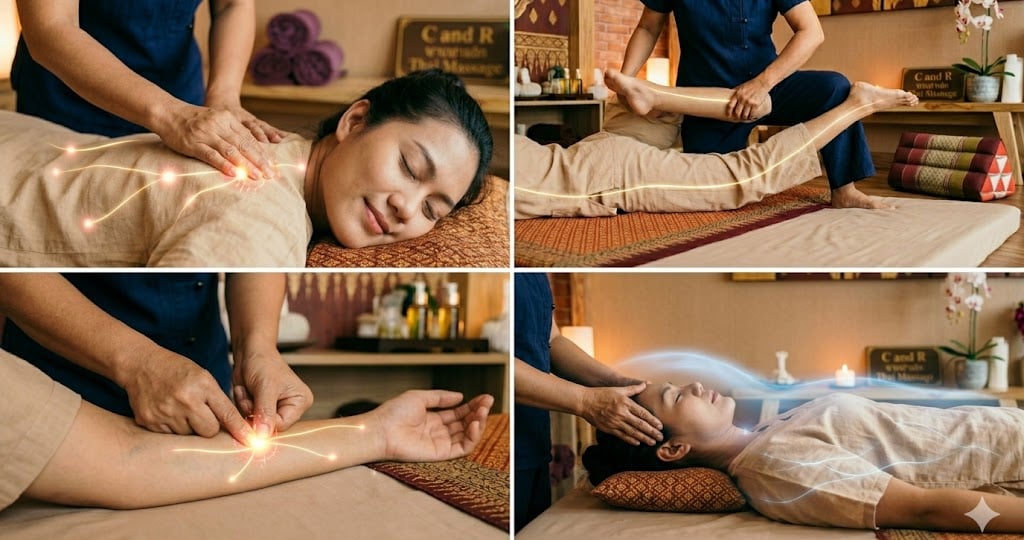
The Feet First: The massage almost always starts at the feet and works its way up. In Thai medicine, energy flows upward. Starting at the feet grounds you and begins to clear the major energy lines in the legs.
The Legs and Hips: Expect deep thumb pressing along your calves and thighs. The therapist will use their body weight to open your hip joints.
The Arms and Hands: Your arms will be stretched, and your palms and fingers will be massaged to release tension from typing and phone use.
The Back (Face Down): The therapist will walk their palms up and down your spine. They may use their elbows to dig into the tight muscles between your shoulder blades.
The Stretches (The "Yoga" Part): This usually happens towards the end. The therapist will sit you up and may twist your torso, pull your arms back to open your chest, or stretch your neck.
The Head and Face: The session usually ends with a soothing, gentle massage of the scalp, temples, and jaw to release stress.
Part 8: Alternatives if You Are Still Nervous
If you have read all of this and still feel that Traditional Thai Massage might be too intense for your first day in Chiang Mai, that is completely okay! We have other options to ease you into the world of Thai wellness.
Thai Foot Reflexology: This is the perfect introduction. It focuses entirely on the lower legs and feet. It is deeply relaxing, helps with jet lag, and avoids any intense body stretching.
Thai Aromatherapy Oil Massage: This bridges the gap between East and West. You lie on a traditional table, and the therapist uses smooth, flowing strokes with essential oils to relax the muscles, applying firm pressure only where needed without the joint manipulation.
Herbal Compress Massage (Luk Pra Kob): If you are feeling sore, this is magic. We use a steamed bundle of Thai herbs (like turmeric, camphor, and lemongrass) to press into the muscles. The deep heat melts away tension with zero pain.
Part 9: The Aftermath (The "Massage Hangover")
Let’s say you had a great, deep Thai massage. You communicated well, the pressure was perfect, and you walked out feeling two inches taller.
The next morning, you might wake up feeling like you did a heavy workout at the gym. Your muscles might feel slightly bruised or tender to the touch.
Do not panic. This is completely normal.
When a therapist releases deep, chronic tension, it flushes stagnant blood and built-up lactic acid out of the muscle tissue and into your bloodstream. Your body needs to process this.
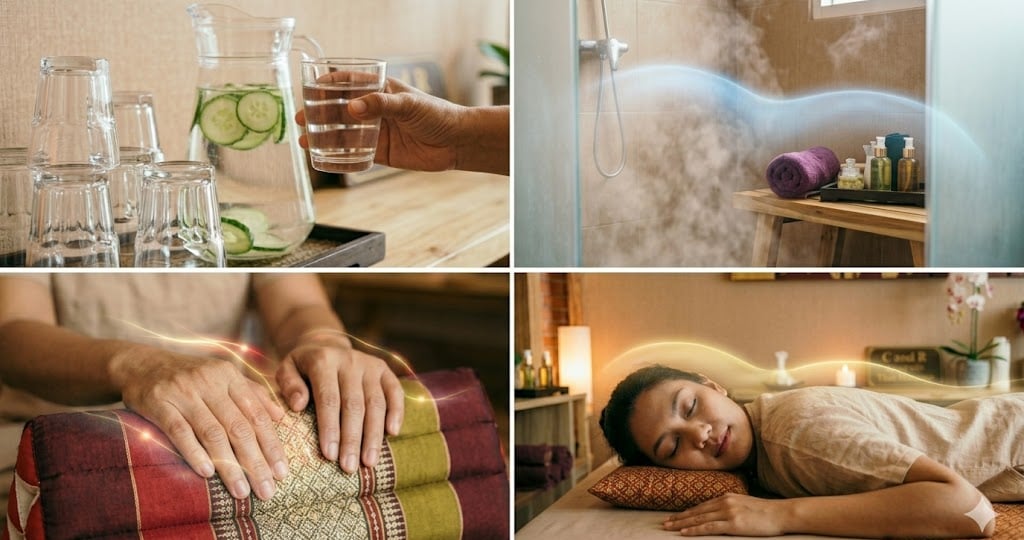
Post-Massage Care Tips:
Drink Water: A lot of it. Water helps flush the released toxins out of your system.
Take a Warm Shower: The heat will soothe any residual muscle tenderness.
Rest: Do not go hike the Monk's Trail immediately after a 2-hour Thai massage. Let your body integrate the changes.

Conclusion: Embrace the Healing
So, is Thai massage painful?
It is entirely up to you and your therapist. It can be a gentle, rhythmic release of tension, or it can be an intense, deep-tissue structural realignment.
The key is to step onto the mat with an open mind, drop the expectation of a gentle spa rub-down, and actively participate in your own healing by communicating your needs.
At C and R Thai Massage, we are honored to guide beginners through their very first authentic Thai massage. We promise to listen to your body, respect your limits, and show you exactly why this 2,500-year-old practice is revered all over the world.
Take a deep breath. Say "Bao Bao" if you need to. And let the healing begin.
Branch 1: Sunday Walking Street
(10 AM - 10PM)
Address: 145/8 Rajdamnern Road T. Prasingh
A. Mueng Chiang Mai 50200
Branch 2: Chiang Mai Gate
(10 AM - 10PM)
Address: 18/5 Rat Chiang Saen Road T. Hai Ya
A. Mueng Chiang Mai 50100
Phone Number:
+66 (0) 94 601 6207
+66 (0) 83 480 2627
Email: services.crgroup@gmail.com