


Lanna Culture Guide: Understanding Northern Thailand
Discover the magic of Lanna culture in Chiang Mai. Explore Northern Thailand's history, food, architecture, and traditional healing arts in our beginner's guide.
CHIANG MAI OLD TOWN AND TRAVEL TIPS
3/6/20268 min read


Understanding Lanna Culture: A Beginner's Guide to Northern Thailand's Unique Heritage
When you arrive in Chiang Mai, you immediately sense a shift in the atmosphere. The air is slightly cooler. The smiles seem a little wider. The pace of life slows down from a frantic sprint to a comfortable, steady stroll. If you have traveled up from Bangkok or the southern islands, you might find yourself wondering, Is this even the same country?
Geographically and politically, yes. But culturally, you have just stepped into the ancient realm of Lanna.
Lanna translates to "The Kingdom of a Million Rice Fields." It is a distinct cultural identity that encompasses Northern Thailand, sharing historical roots with neighboring Laos, Myanmar (Burma), and southern China. For centuries, this region was entirely separate from the central kingdom of Siam. It had its own kings, its own written alphabet, its own spicy cuisine, and its own profound methods of healing.
Today, Chiang Mai stands as the cultural capital of this ancient kingdom. The crumbling brick walls and the tranquil moat that encircle the Old City are not just picturesque ruins; they are the physical boundaries of a heritage that locals fiercely and proudly keep alive.
At C and R Thai Massage, situated right in the heart of this historic Old City, our roots are deeply intertwined with Lanna culture. The traditional healing techniques we practice daily were born from the wisdom of Northern ancestors. To truly appreciate your time in Chiang Mai—and to understand the philosophy behind your massage treatments—you need to understand the culture that built this city.
This is your beginner's guide to the art, food, language, and soul of the Lanna Kingdom.
Part 1: A Brief History of the Walled City
You cannot understand Chiang Mai without knowing a little bit about its founder, King Mengrai.
In the late 13th century, King Mengrai sought a new capital for his expanding empire. Legend has it that he chose the site for Chiang Mai (which literally means "New City") after seeing several auspicious omens, including two white sambar deer chasing away a pack of wolves.
Founded in 1296, the city was built as a perfect square, surrounded by a defensive moat and a massive brick wall to protect against the invading Mongol and Burmese armies. For over two hundred years, the Lanna Kingdom flourished as a center of Buddhism, trade, and art.
Eventually, the kingdom fell to the Burmese, who ruled it for nearly two centuries before it was reclaimed and ultimately integrated into modern-day Thailand in the late 19th century.
Why it matters today: When you walk through the Thapae Gate or wander down the narrow sois (alleys) of the Old City, you are walking on ground that was specifically designed using ancient astrology and spiritual geometry. The city itself is a living museum of resilience.


Part 2: The Sound of the North (Kam Mueang)
The first thing you will notice interacting with locals in Chiang Mai is the sound of their voices.
The Northern Thai dialect is called Kam Mueang. Compared to the fast, sharp tones of the Central Thai spoken in Bangkok, Kam Mueang is remarkably soft, melodic, and slow. It reflects the gentle, unhurried nature of the northern people.
While almost everyone in Chiang Mai speaks standard Thai and basic English, learning a few words of Kam Mueang is the quickest way to win a local's heart.
The "Hello" and "Thank You": In standard Thai, women end their sentences with Ka and men with Krap to show politeness. In the North, women use the beautifully drawn-out word Jao.
Standard Thai: Sawasdee Ka (Hello)
Kam Mueang: Sawasdee Jao (Hello)
If you are a woman and you say "Sawasdee Jao" with a warm smile, you will instantly see the vendor's face light up. (Men generally still use Krap, but often with a softer inflection).
Part 3: Lanna Architecture (The Art of Wood)
Look up as you walk around the city. The architecture here tells a story. Lanna builders were absolute masters of woodwork, specifically teak.
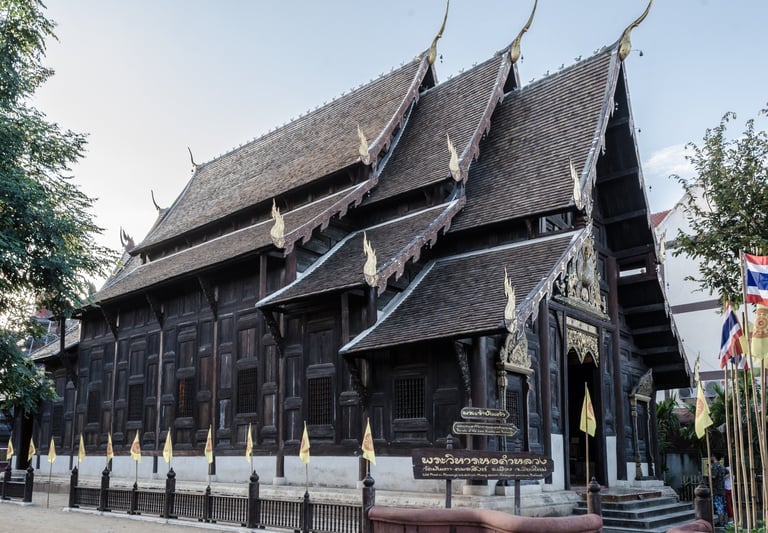
The Kalae: If you look at the roofline of traditional northern houses or older temples, you will often see V-shaped, intricately carved wooden pieces extending from the top of the gables. These are called Kalae. They resemble the crossed horns of a water buffalo. Historically, they were a sign of wealth and were believed to ward off evil spirits.
The Multi-Tiered Roofs: Lanna temple roofs sweep low toward the ground, often in overlapping tiers. This design was practical (to sweep away heavy monsoon rains) but also spiritual, creating a dark, incredibly intimate, and humbling atmosphere inside the prayer halls (Viharns).
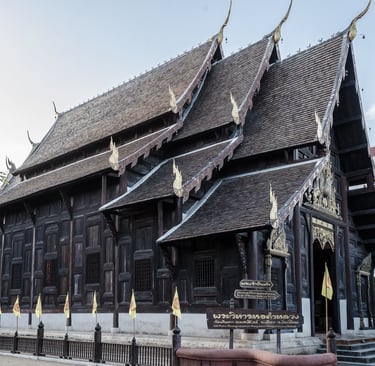
Wat Phan Tao: If you want to see the pinnacle of Lanna woodworking, visit Wat Phan Tao in the Old City. The entire main hall is constructed from dark, oiled teak wood, featuring a stunning golden peacock carved over the main entrance. It is a stark, gorgeous contrast to the glittering gold temples around it.


Part 4: The Culinary Identity (Sticky Rice and Spice)
Northern Thai food is fundamentally different from the food in the south. You will not find much coconut milk here, and the food is generally less sweet. The flavors are earthy, herbaceous, bitter, and intensely spicy.
The Foundation: Sticky Rice (Khao Niew) In the rest of Thailand, people eat jasmine rice with a spoon and fork. In Lanna culture, sticky rice is king, and you eat it with your hands. You roll a small amount into a ball with your fingers and use it to dip into curries and chili pastes.
Must-Try Lanna Dishes:
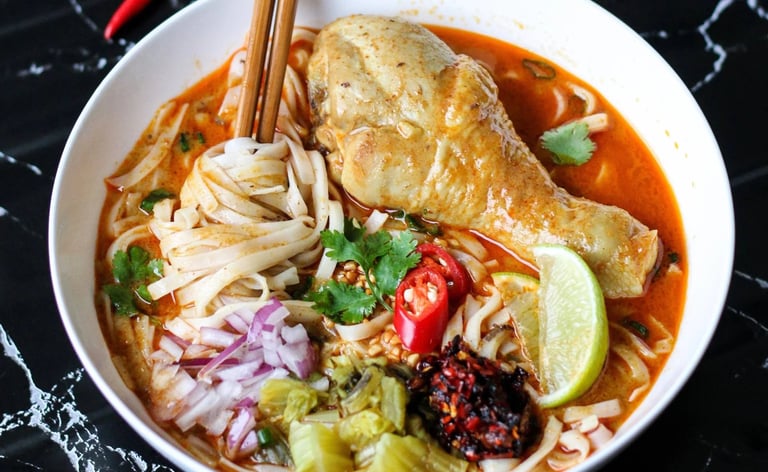
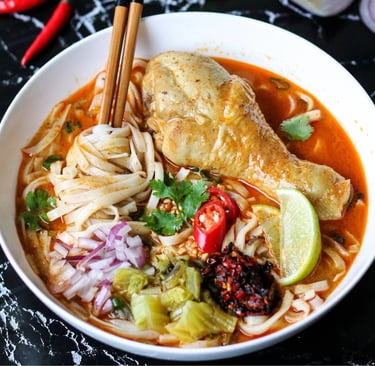
Khao Soi: The undisputed champion of Chiang Mai. A rich, coconut-curry broth poured over soft egg noodles and topped with crispy fried noodles, served with a chicken leg or beef.
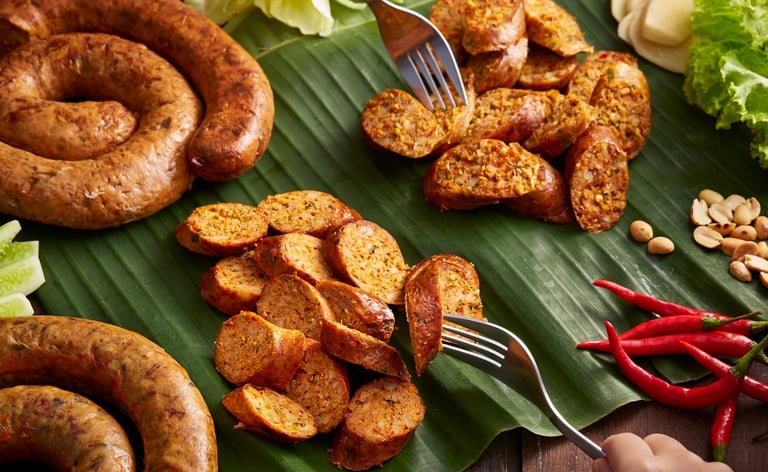
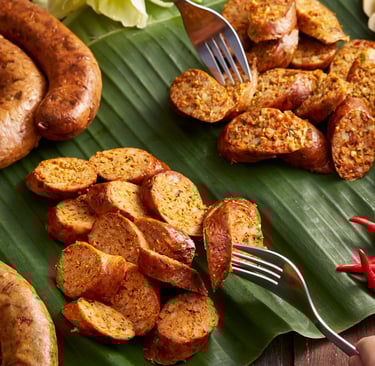
Sai Oua (Northern Sausage): A coiled pork sausage packed with lemongrass, kaffir lime leaves, galangal, and fiery chilies. It is smoky, aromatic, and addictive.
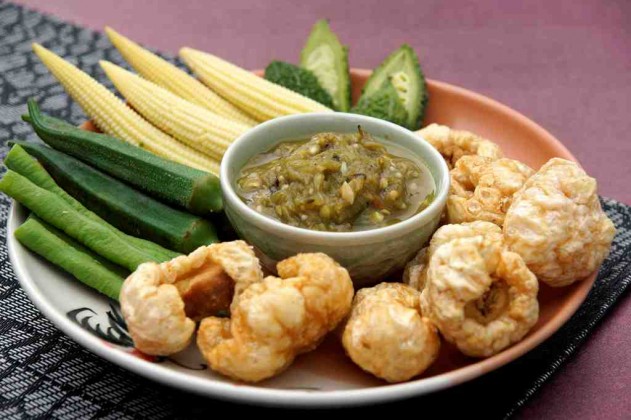
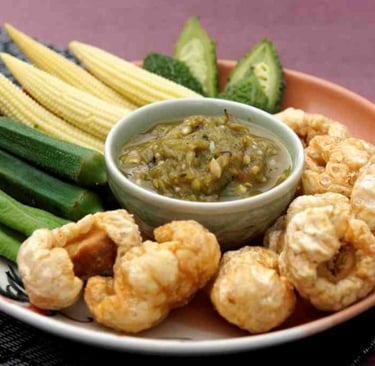
Nam Prik Noom: A roasted green chili dip that packs a serious punch. It is traditionally eaten with sticky rice and crispy pork rinds (Khaeb Moo).
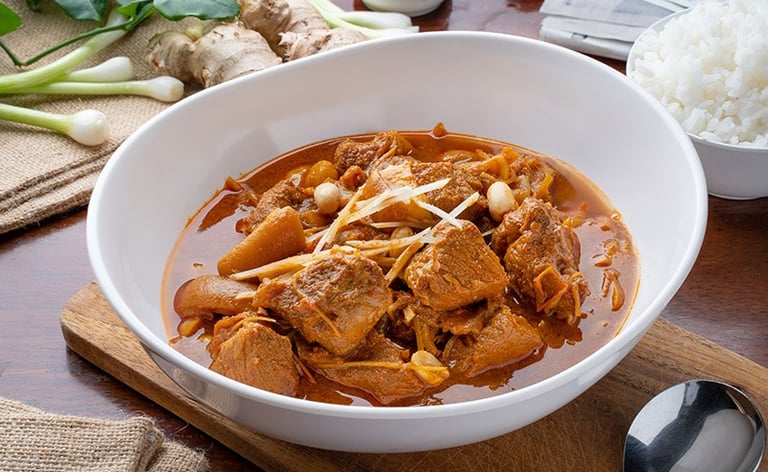
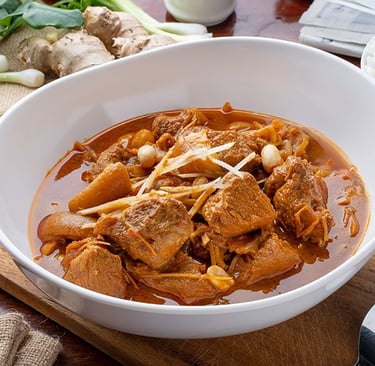
Gaeng Hang Lay: A rich, dark pork belly curry heavily influenced by Burmese spices, featuring tamarind, ginger, and garlic.
Tip: Order a "Khantoke" dinner to experience these dishes served in small bowls on a traditional round, low pedestal table, just as Lanna royalty used to eat.
Part 5: Dress and Craftsmanship
Lanna culture is highly visual, characterized by specific textiles and crafts that have been passed down through generations.
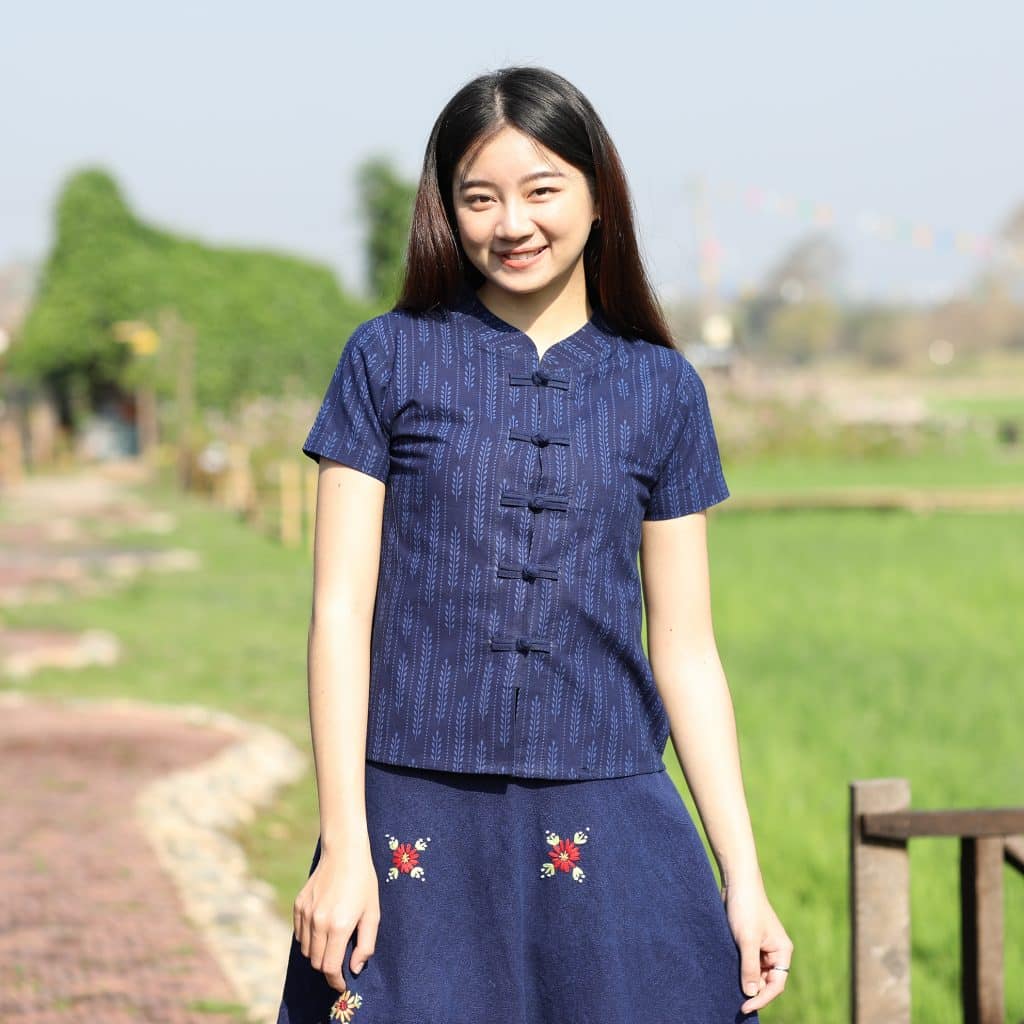
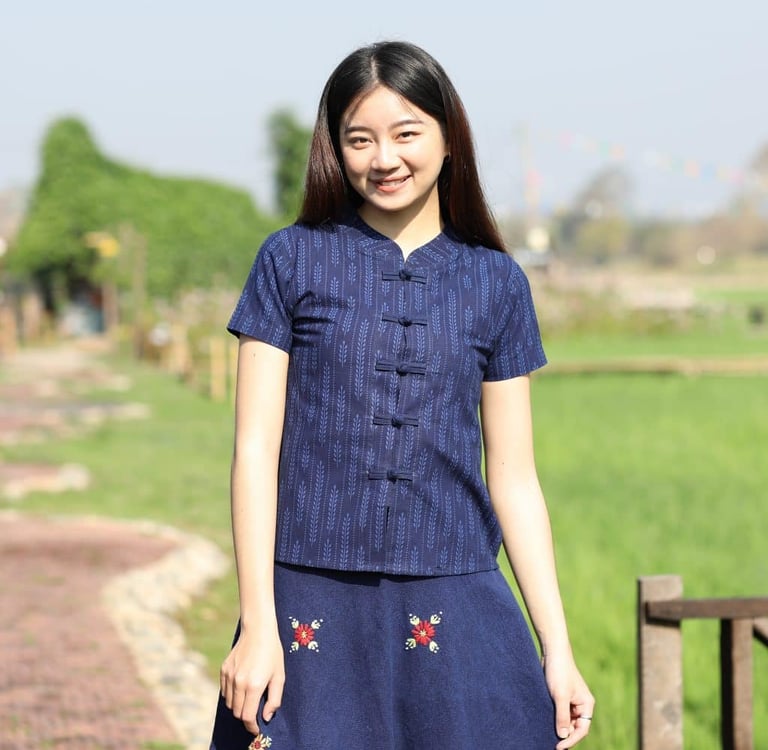
The Mo Hom: You will often see local men (and women) wearing collarless, short-sleeved shirts dyed a deep, vibrant indigo blue. This is the Mo Hom shirt, the traditional clothing of northern farmers. Today, it is worn proudly as a symbol of northern identity, especially on Fridays when many locals dress in traditional attire.
The Sinh: Women traditionally wear a Sinh, a beautiful tubular skirt woven from cotton or silk. The patterns at the hem of the skirt can historically indicate which specific village or ethnic group the wearer belongs to.
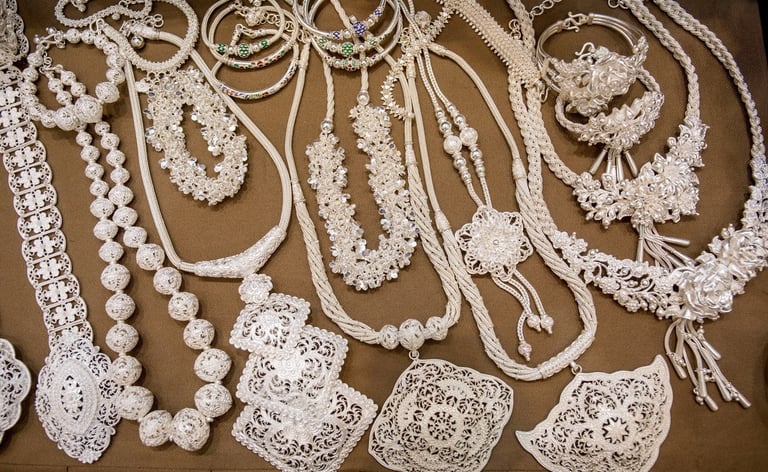
Silver and Umbrellas: Just south of the Old City lies Wualai Road, the historic silver-making district, home to the breathtaking Silver Temple (Wat Sri Suphan). To the east lies Bo Sang, the village famous for its hand-painted bamboo and mulberry paper umbrellas. Craftsmanship in Chiang Mai is not just for souvenirs; it is a living, breathing economy.
Part 6: Traditional Lanna Healing Arts
This is where the culture transitions from something you look at, to something you physically feel.
Before modern medicine, the Lanna people relied on the forest and the wisdom of local healers (Mor Muang). The approach to health was holistic, focusing on the balance of the body's elements (Earth, Water, Wind, and Fire) and the flow of energy lines (Sen).
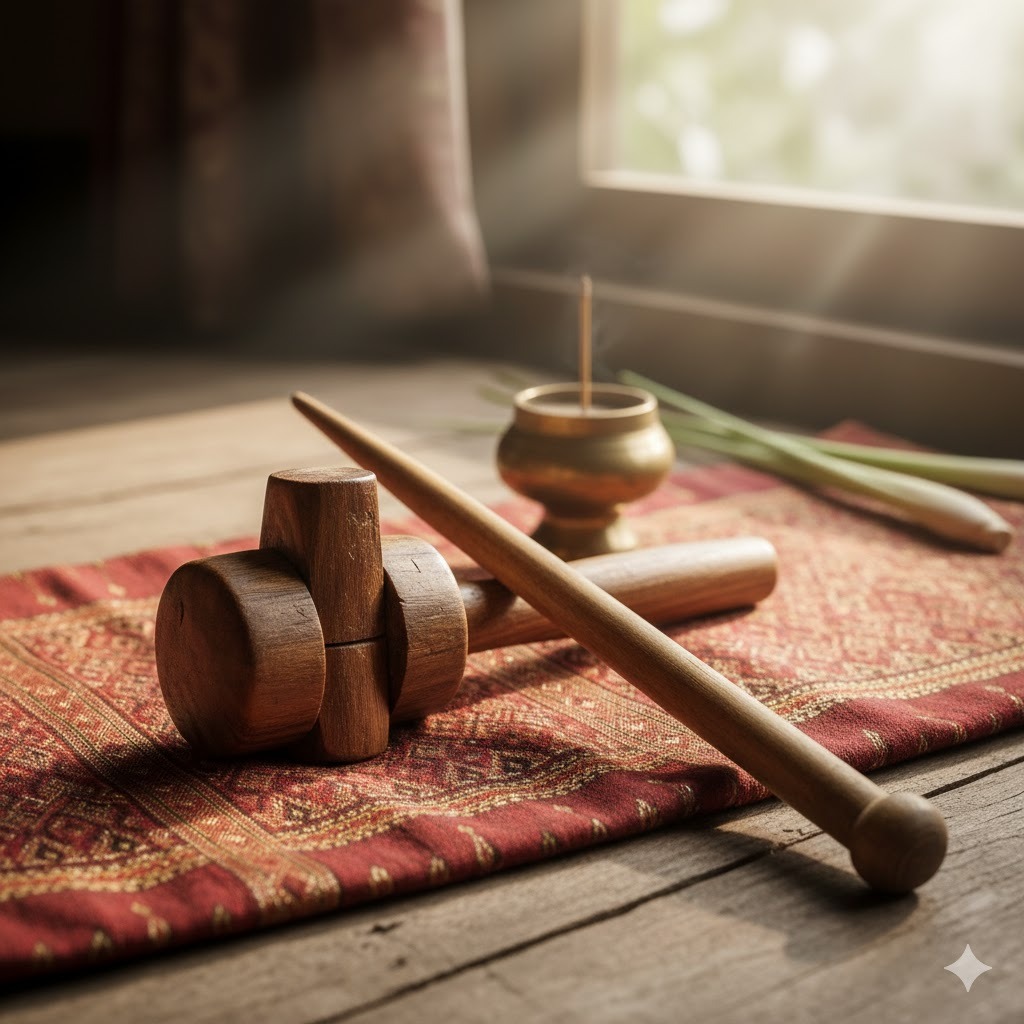
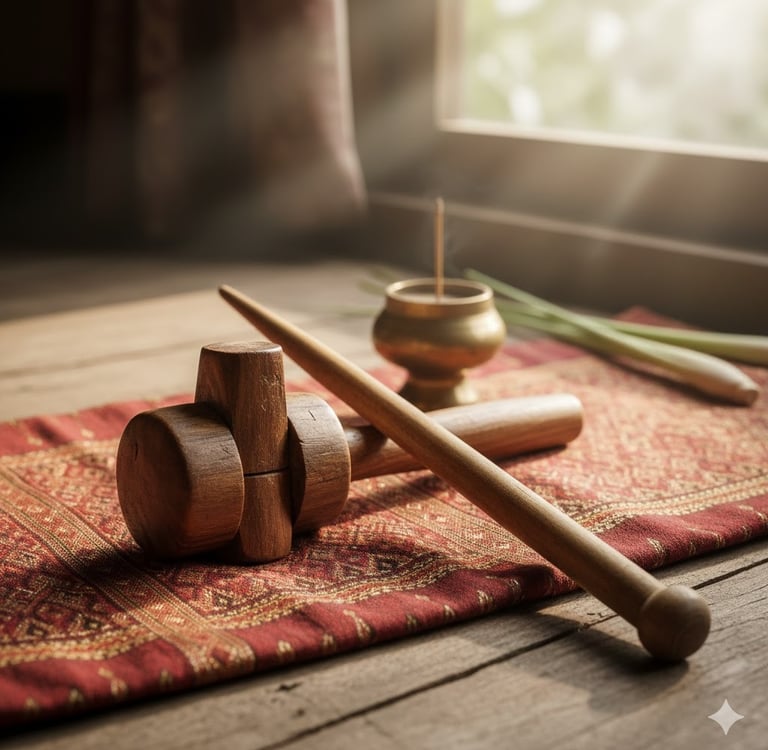
Tok Sen (Hammer Massage): This is a uniquely Lanna therapy that you will rarely find in Bangkok or the south. Tok means to hit, and Sen refers to the energy lines. A therapist uses a specialized wooden mallet and wedge (often made from a lightning-struck tamarind tree, believed to hold special energy) to gently but firmly tap along the body's energy lines. The rhythmic tock-tock-tock sound creates a mechanical vibration that penetrates deep into the fascia and thick muscle tissue. It is incredibly effective for releasing stubborn, deep-seated tension and clearing blocked energy.
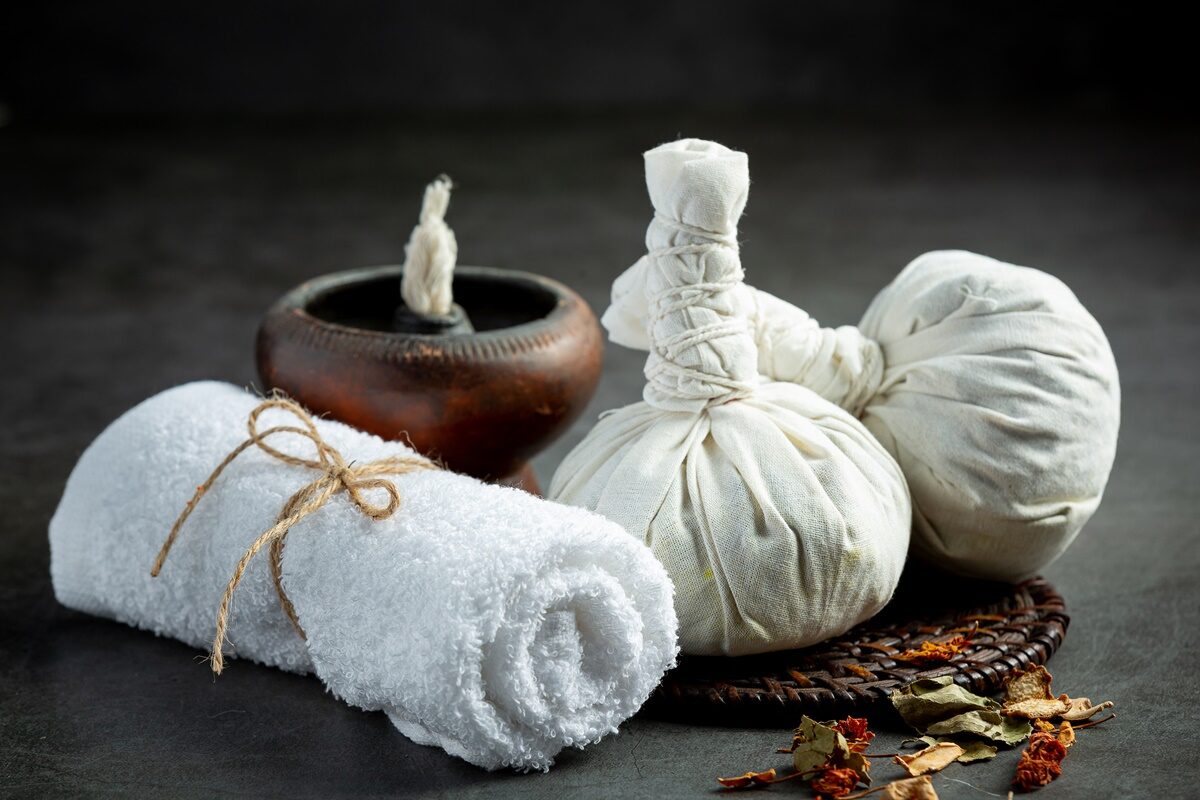
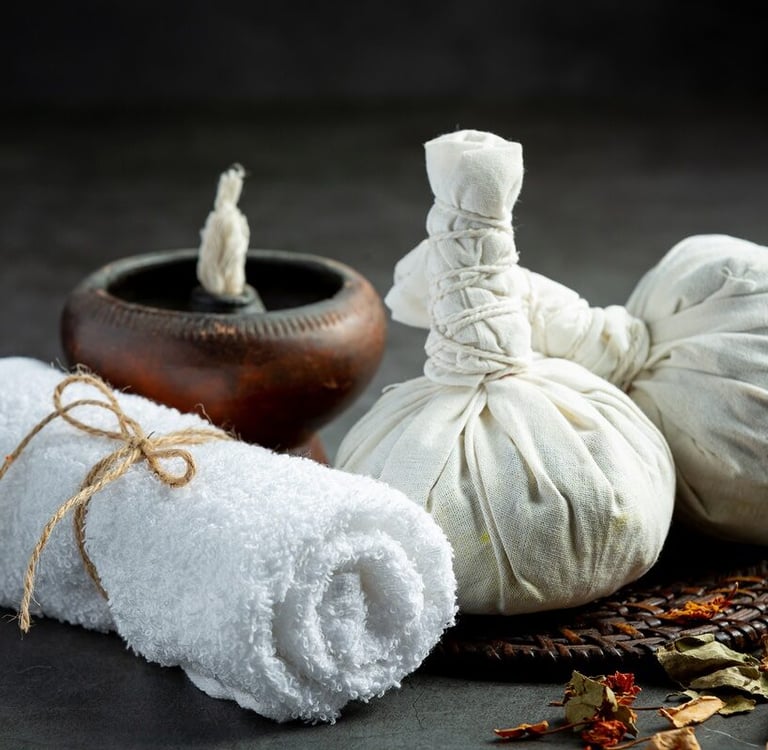
Luk Pra Kob (Herbal Compress): Northern Thailand's lush mountains are a pharmacy of medicinal herbs. In Lanna healing, herbs like Plai (cassumunar ginger), turmeric, camphor, and lemongrass are tightly bound in a cotton cloth, steamed until hot, and then pressed rhythmically into the muscles. The heat opens the pores, allowing the anti-inflammatory properties of the herbs to seep directly into aching joints and sore muscles.
Part 7: Experiencing Lanna Wellness at C and R Thai Massage
To fully immerse yourself in a culture, you have to engage all your senses. You have tasted the Khao Soi, you have seen the teak temples, and you have heard the soft Kam Mueang dialect. Now, it is time to let your body experience the healing heritage of the North.
At C and R Thai Massage, located inside the historic walls of the Old City, we honor these ancient Lanna traditions. We do not just offer a standard rub-down; we offer a therapeutic journey rooted in centuries of northern wisdom.
If you have spent your day walking the brick paths of King Mengrai's city, your legs and back will eventually feel the toll. We highly recommend trying a combination of our Traditional Thai Massage with a Hot Herbal Compress. Let our experienced therapists stretch your limbs to improve your energy flow, while the steamed northern herbs melt the fatigue from your muscles.
For those seeking something truly unique to the region, ask us about incorporating Lanna healing techniques to address deep tension.
Conclusion: A Living Heritage
Lanna culture is not confined to glass cases in a museum. It is alive. It is in the street food sizzling in the night markets, the marigold offerings on the temple steps, the indigo shirts worn by the baristas, and the healing hands of our massage therapists.
By understanding the history and the heart of the Lanna Kingdom, your visit to Chiang Mai transforms from a simple holiday into a deeply meaningful cultural experience. Walk slowly, smile often, eat the spicy sausage, and let the gentle spirit of the North embrace you.
Branch 1: Sunday Walking Street
(10 AM - 10PM)
Address: 145/8 Rajdamnern Road T. Prasingh
A. Mueng Chiang Mai 50200
Branch 2: Chiang Mai Gate
(10 AM - 10PM)
Address: 18/5 Rat Chiang Saen Road T. Hai Ya
A. Mueng Chiang Mai 50100
Phone Number:
+66 (0) 94 601 6207
+66 (0) 83 480 2627
Email: services.crgroup@gmail.com