



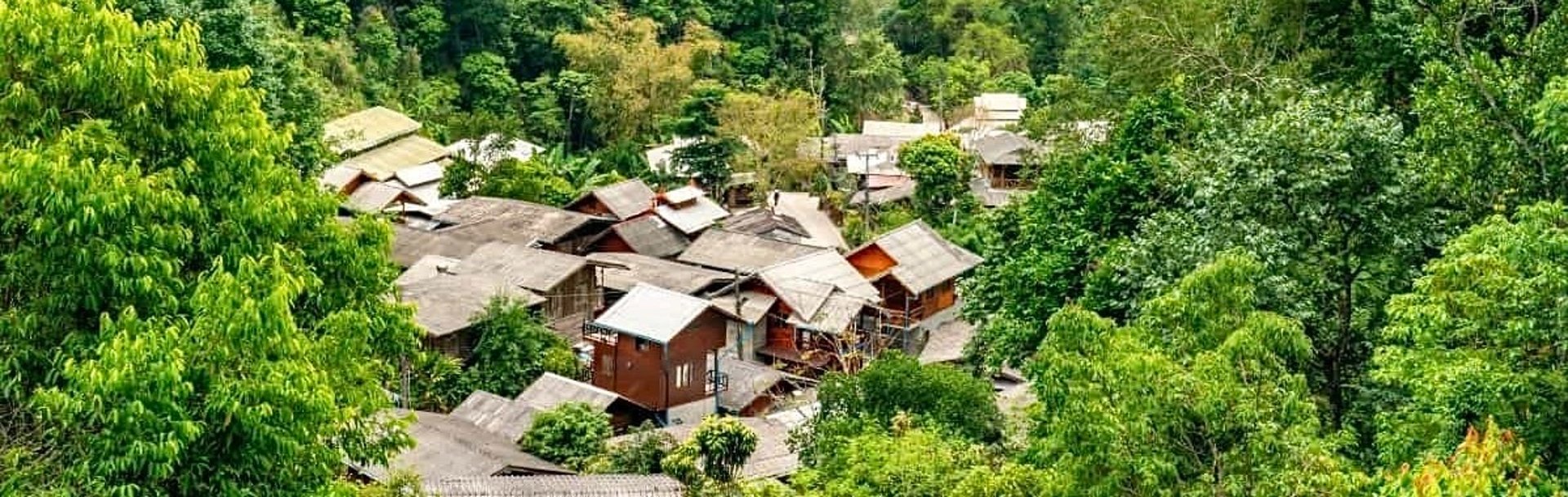
Mae Kampong Village Guide: Chiang Mai's Hidden Eco-Gem
Discover Mae Kampong, Chiang Mai's charming eco-village. A complete guide on getting there, food, waterfalls, and post-trip massage recovery tips.
CHIANG MAI OLD TOWN AND TRAVEL TIPS
12/23/20258 min read
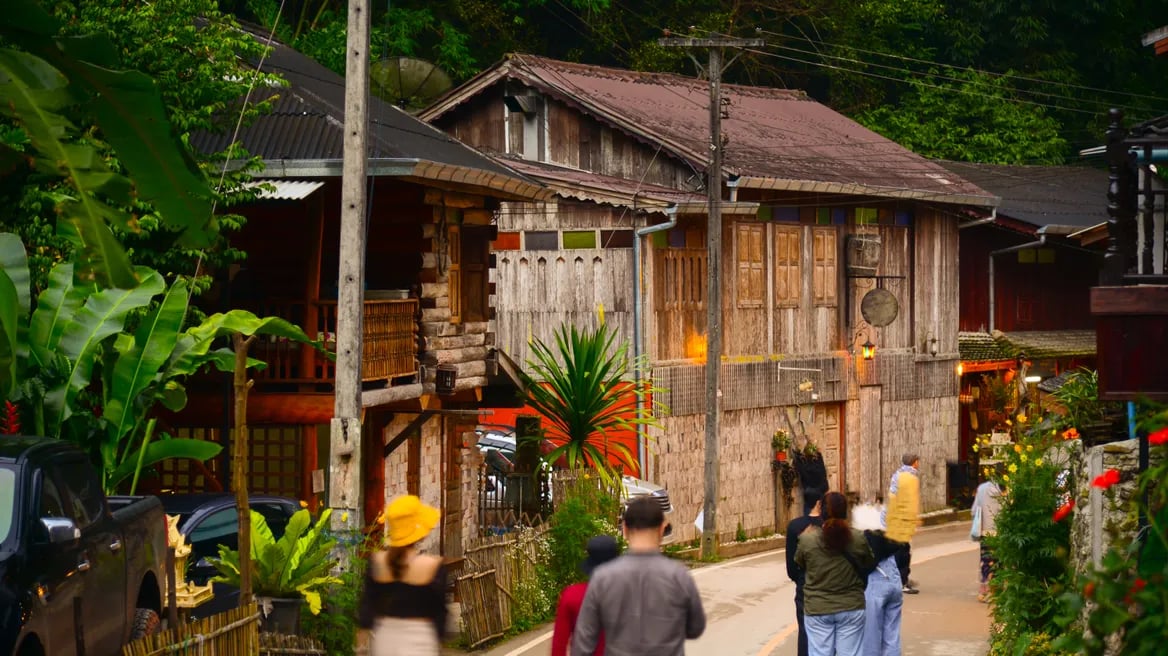
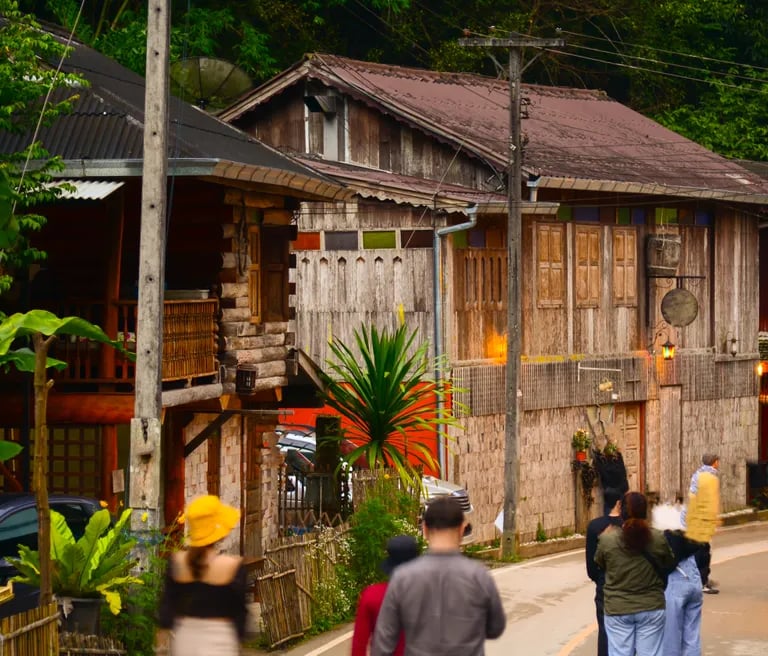
Mae Kampong: A Complete Guide to Chiang Mai's Charming, Hidden Eco-Village
Chiang Mai is hot. The sun beats down on the moats, the traffic hums on the Superhighway, and the energy is vibrant and ceaseless. But imagine, for a moment, driving just one hour east. Imagine the road winding upwards, the air cooling rapidly, dropping 5, maybe 10 degrees. Imagine the concrete fading away, replaced by towering ironwood trees, rushing streams, and the scent of wild tea leaves.
Welcome to Mae Kampong.
Often whispered about by travelers as a "hidden gem" (though its secret is certainly out among locals), Mae Kampong is more than just a picturesque village. It is a living, breathing example of how humans can exist in harmony with nature. Perched 1,300 meters above sea level, this village has existed for over 100 years, originally settled by farmers looking for land to grow Miang (fermented tea leaves).
Today, it stands as Thailand’s premier model for Eco-Tourism and Community-Based Tourism.
At C and R Thai Massage, we see hundreds of travelers every week. Many ask us, "Where can I go to escape the city? Where can I see the real Northern Thailand?" Our answer is always Mae Kampong. It offers a slower pace of life that aligns perfectly with our philosophy of wellness and relaxation.
However, visiting a mountain village requires preparation. The roads are steep, the culture is specific, and the physical toll of hiking those vertical slopes is real!
In this complete guide, we will take you through everything you need to know: how to get there safely, what to eat, where to sleep, and how to recover your tired legs at C and R Thai Massage after your adventure.
Part 1: The History and The "Eco" Philosophy
To understand Mae Kampong, you have to understand Miang.
For a century, the villagers here didn't grow rice; they grew tea. The assam tea trees grow wild in the forest, co-existing with the larger jungle canopy rather than replacing it. This means the villagers had a vested interest in protecting the forest. If the forest died, their tea died.
In the 1990s, as tea prices fluctuated, the community came together to form a cooperative. Instead of selling their land to big developers or building massive concrete hotels, they decided to open their homes. They created a "Homestay" standard where visitors could live with locals, eat local food, and learn about the forest.
Why is it an Eco-Village?
Community Power: Tourism is managed by the village cooperative. A portion of every Baht spent goes into a community fund for healthcare, education, and forest preservation.
Hydro-Power: The village produces much of its own electricity through a small hydro-power plant powered by the waterfall that runs through the town center.
No Air Conditioning: You won't find AC units here. The high altitude makes the air naturally cool (and sometimes freezing at night!), reducing the energy footprint.
Part 2: Getting There (The Safety Warning)
Mae Kampong is located in the Mae On district, about 50 kilometers from Chiang Mai city. While it looks close on a map, the journey is vertical.
Option 1: The Private Van/Car (Recommended) Hiring a private driver or a Grab car (negotiate a round trip!) is the safest option. The cost is usually between 1,500 – 2,500 THB for a day trip.
Why: You can relax, enjoy the scenery, and not worry about the driving conditions.
Option 2: The Shared Van There is a scheduled van service from the Warorot Market area (Chang Moi Road) to Mae Kampong. It costs around 150 THB per person each way.
The Catch: You must book in advance, and schedules can be rigid.
Option 3: The Motorbike (Proceed with Caution!) We see many "Chiang Mai Tattoos" (road rash bandages) at our massage shop. Many of them happen on the road to Mae Kampong.
The Danger: The last 5 kilometers into the village are incredibly steep and winding.
The Requirement: Do not attempt this on a 110cc scooter with two people. The brakes will overheat coming down, and the engine will struggle going up. You need a 125cc bike minimum, and you must be an experienced rider. If it rains, the road becomes slippery. Please, ride safely.
Part 3: Exploring the Village – Top Attractions
Once you arrive, park your vehicle. The village consists of one main road winding up the valley stream. The best way to see it is on foot.
1. Mae Kampong Waterfall
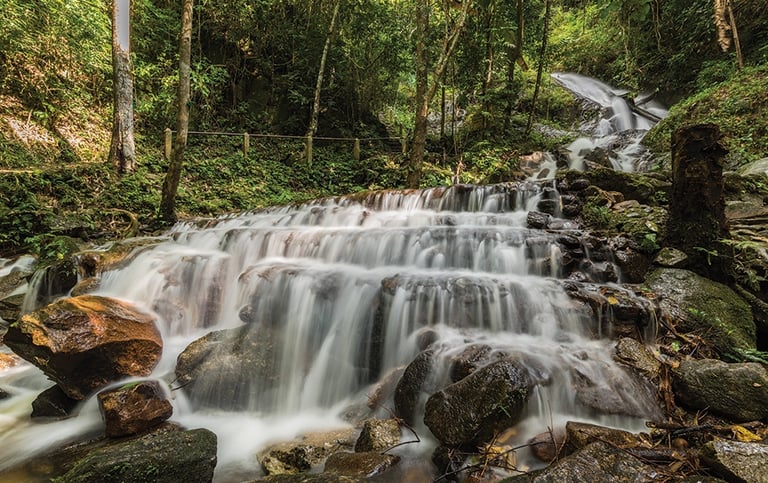
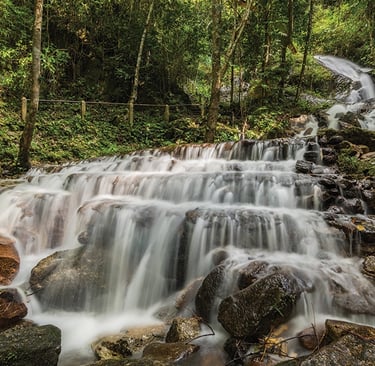
Located at the very top of the village road, this is a multi-tiered waterfall surrounded by ferns and moss.
The Experience: It isn't the biggest waterfall in Chiang Mai, but it is one of the most pristine. The water is ice-cold year-round. You can hike up a nature trail alongside the falls to reach higher tiers.
Wellness Note: The sound of running water is a natural stress reliever (White Noise). Take a moment here to just breathe.
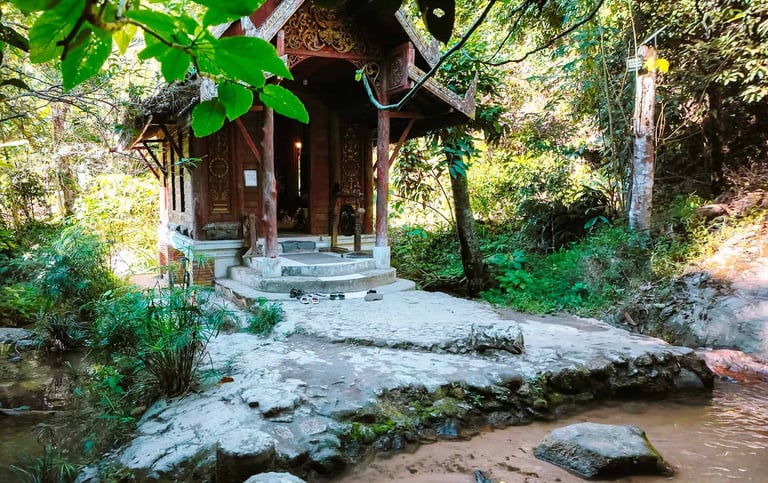
2. Wat Khantha Phueksa (The Temple in the Stream)
This is not your typical gold-plated city temple. This is a jungle temple.
The Architecture: The Ubosot (ordination hall) sits right in the middle of the flowing stream. It is made of teak wood and covered in green moss due to the humidity. The roof is carved with intricate Lanna designs but weathered by the elements.
The Vibe: It is incredibly peaceful. It represents the perfect harmony between Buddhism and Nature that defines Northern Thai spirituality.
3. Kew Fin Viewpoint
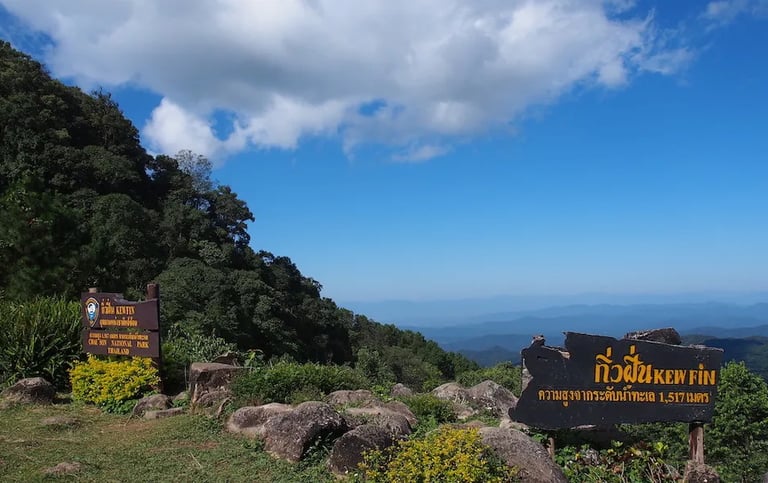
Located about 4km above the village (you will need a shuttle truck from the village center; do not drive your own car as the road is dangerously steep), this is the border between Chiang Mai and Lampang provinces.
The View: On a clear day, you can see layer upon layer of mountains. It is arguably one of the best sunrise spots in Thailand.
4. The "Flight of the Gibbon" Area
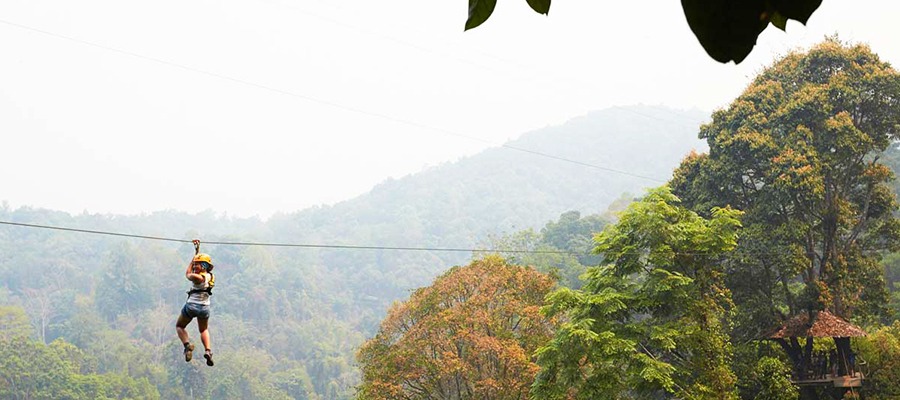
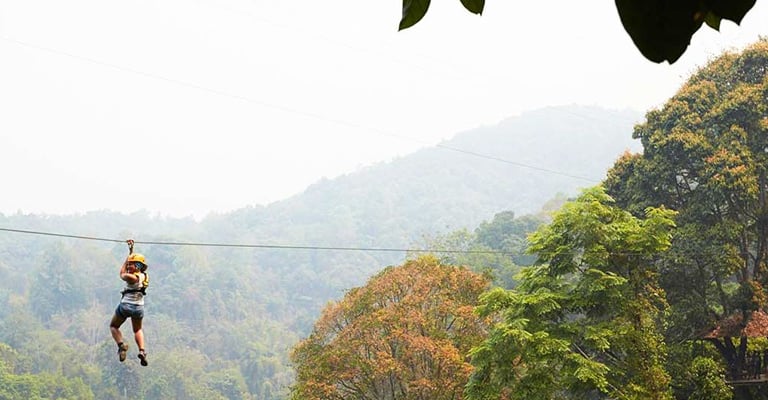
While the zipline course is a separate activity, the forest surrounding the village is home to wild gibbons. If you are quiet and lucky, you might hear their haunting calls echoing through the valley in the early morning.
Part 4: A Culinary Adventure (What to Eat)
You cannot visit Mae Kampong without eating. The food here is distinct from Chiang Mai city food. It is "Jungle Food."
1. Sai Oua (Northern Sausage) at "Mae Nim" You will smell it before you see it. Sai Oua Mae Nim is the most famous shop in the village. The sausage here is grilled over charcoal, packed with lemongrass, kaffir lime, and chili. It is spicy, smoky, and addictive.
2. Yum Bai Miang (Tea Leaf Salad) Since this is a tea village, you must eat the tea! Unlike the Burmese version (which uses pickled tea), here they often use fresh young tea leaves deep-fried or mixed into a spicy salad with sardines and nuts. It offers a unique caffeine kick!
3. Khai Pam (Grilled Egg in Banana Leaf) A healthy, oil-free snack. Eggs are beaten with scallions and seasonings, poured into a banana leaf boat, and grilled over a low fire. It has a custard-like texture and a smoky aroma.
4. The Coffee Culture Mae Kampong is famous for its cafes with views.
Chom Nok Chom Mai: The iconic photo spot. The balcony overlooks the entire village roofline.
Ted Du: Located down by the waterfall, you sip coffee while the water rushes beneath your feet.
Lung Pud Pa Peng: The landmark "old house" right by the stream. Great for photos and coconut cake.
Part 5: Staying Overnight – Homestays vs. Resorts
Should you stay overnight? Absolutely. The village changes after 5:00 PM. The day-trippers leave, the silence returns, and the temperature drops.
Traditional Homestays: You sleep in a local’s house. You get a mattress on the floor, a mosquito net, and a shared bathroom. It is rustic, cheap (500-800 THB), and authentic. You eat dinner with the family.
Boutique Resorts: In recent years, more upscale options have opened on the outskirts. Places like April Cottage offer comfortable beds, private bathrooms, and stylish design while maintaining the nature vibe.
Part 6: The Physical Toll (Why You Need C and R Thai Massage)
We love Mae Kampong, but we also know what it does to the body. After a day trip or an overnight stay, you might notice some specific aches and pains.
1. "Hiker's Calves" (Gastrocnemius Tension) The main road in Mae Kampong is steep. Walking from the lower village to the waterfall puts an immense strain on your calves and Achilles tendons. You are constantly engaged in an uphill climb or breaking your momentum on the downhill.
Result: Tight, cramping calves the next morning.
2. "Driver’s Neck" (Trapezius Strain) If you drove a motorbike or car up those winding roads, your shoulders were likely glued to your ears from concentration and stress. The 50km drive involves hundreds of curves.
Result: A stiff neck and tension headaches.
3. "Cold Damp" Stiffness The village is humid and cold. According to Traditional Thai Medicine, "Wind" and "Dampness" can enter the body, causing joints to feel stiff and heavy, especially in the lower back.
Part 7: Your Post-Trip Recovery Plan
When you descend from the mountains back to the warmth of Chiang Mai city, your first stop should be C and R Thai Massage. Do not let that stiffness settle into your muscles.
We recommend the following treatments specifically for the "Mae Kampong Survivor":
1. The "Mountain Leg" Rescue (Foot Reflexology + Leg Massage)
Duration: 60 Minutes.
Focus: We focus heavily on the Sen lines of the lower legs. We use deep thumb pressure to release the gastrocnemius muscles (calves) and stimulate blood flow to the feet. This flushes out the lactic acid built up from the steep hiking.
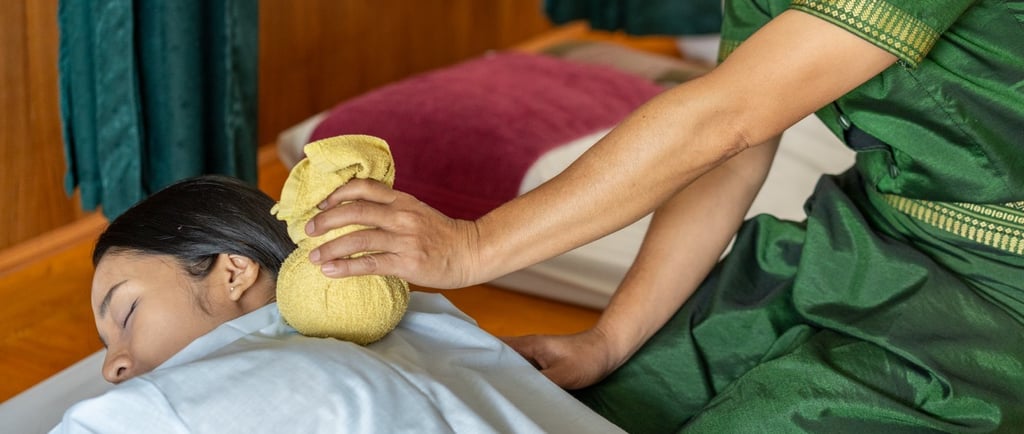
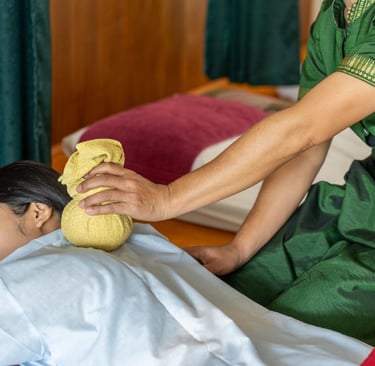
2. The Herbal Compress Cure (Luk Pra Kob)
Duration: 90 Minutes (Combined with Thai Massage).
Focus: This is perfect for the "Cold Damp" stiffness. We use a steamed ball of Thai herbs (Plai, Turmeric, Lemongrass, Tamarind leaves). The heat penetrates deep into the muscles, driving out the mountain chill and relaxing the tension in your back and shoulders. The Plai root is a natural anti-inflammatory, perfect for sore hiking muscles.
3. Head, Back, and Shoulder Relief
Duration: 60 Minutes.
Focus: Specifically for those who drove. We will work on the upper trapezius and the base of the skull to release the stress of navigating those hairpin turns.
Conclusion: A Journey for the Soul
Mae Kampong is a reminder of a simpler time. It is a place where the community matters, where nature is respected, and where the air is clean enough to heal your lungs.
It is a trip that feeds your soul with beauty and your stomach with delicious food. But it is also a trip that demands effort from your body.
We encourage you to go. Explore the waterfall. Eat the sausage. Talk to the locals. And when you return, tired but happy, come visit us at C and R Thai Massage. Let us take care of your body so you can keep exploring the wonders of Chiang Mai with a spring in your step.
Have you visited Mae Kampong? Did you brave the steep roads? Tell us about your favorite coffee spot in the comments below!
Branch 1: Sunday Walking Street
(10 AM - 10PM)
Address: 145/8 Rajdamnern Road T. Prasingh
A. Mueng Chiang Mai 50200
Branch 2: Chiang Mai Gate
(10 AM - 10PM)
Address: 18/5 Rat Chiang Saen Road T. Hai Ya
A. Mueng Chiang Mai 50100
Phone Number:
+66 (0) 94 601 6207
+66 (0) 83 480 2627
Email: services.crgroup@gmail.com