




Meditation in Chiang Mai: A Beginner's Guide to Inner Peace
Discover the best places for meditation in Chiang Mai for beginners. From Monk Chats to forest temples. Plus, how to heal meditation aches with Thai Massage.
CHIANG MAI OLD TOWN AND TRAVEL TIPS
1/30/20267 min read


A Beginner's Guide to Meditation: Finding Peace at Chiang Mai's Temples and Retreats
Chiang Mai has a rhythm. Unlike the frenetic heartbeat of Bangkok or the crashing waves of the southern islands, Chiang Mai breathes slowly. You feel it in the early morning mist clinging to Doi Suthep. You hear it in the gentle chime of temple bells at sunset. You see it in the slow, deliberate walk of the monks collecting alms on the Old City streets.
For centuries, this city has been a sanctuary for the spirit. It is arguably one of the best places in the world to hit the "pause" button on life and look inward.
But for the modern traveler, the idea of "meditation" can be intimidating. We are used to constant stimulation—phones buzzing, notifications pinging, schedules demanding our attention. The thought of sitting in silence for hours seems impossible, perhaps even frightening. What if I can't stop thinking? What if my legs fall asleep? Do I have to be Buddhist?
At C and R Thai Massage, we understand this hesitation. We work with the body every day, releasing the tension that stress stores in your muscles. But we also know that true wellness requires a partnership between the body and the mind. Just as a massage detangles the knots in your shoulders, meditation detangles the knots in your thoughts.
Whether you are a complete novice who has never closed your eyes for more than sleep, or someone looking to deepen a budding practice, Chiang Mai is the perfect classroom.
In this guide, we will demystify the practice of meditation, introduce you to the most welcoming temples for beginners, and explain how to care for your body during this journey of the mind.
Part 1: What is Meditation? (And What It Isn't)
First, let’s clear up some myths. Meditation is not about "emptying your mind" or turning your brain off. If you try to stop thinking, you will fail, and you will get frustrated.
In the Thai Buddhist tradition (Theravada), the most common form of meditation taught is Vipassana, which translates to "Insight" or "Clear-Seeing."
Think of your mind like a glass of muddy water. When you are rushing through life, you are constantly stirring the glass. The water is swirled and cloudy. Meditation is simply the act of putting the glass down and letting it sit. Eventually, the mud settles to the bottom, and the water becomes clear.
You are not forcing the mud down; you are just sitting still enough for gravity to do the work.
The Two Pillars:
Samatha (Concentration): Focusing on one thing (usually the breath) to calm the mind.
Vipassana (Insight): Observing your thoughts and sensations without judgment to understand reality.
For a beginner in Chiang Mai, you don’t need to worry about the complex philosophy. You just need to show up with an open mind.
Part 2: Where to Go – The Best Spots for Beginners
Chiang Mai is home to over 300 temples. While all are beautiful, not all are equipped to teach beginners, especially those who don't speak Thai. Here are the most welcoming, English-friendly sanctuaries for your first experience.
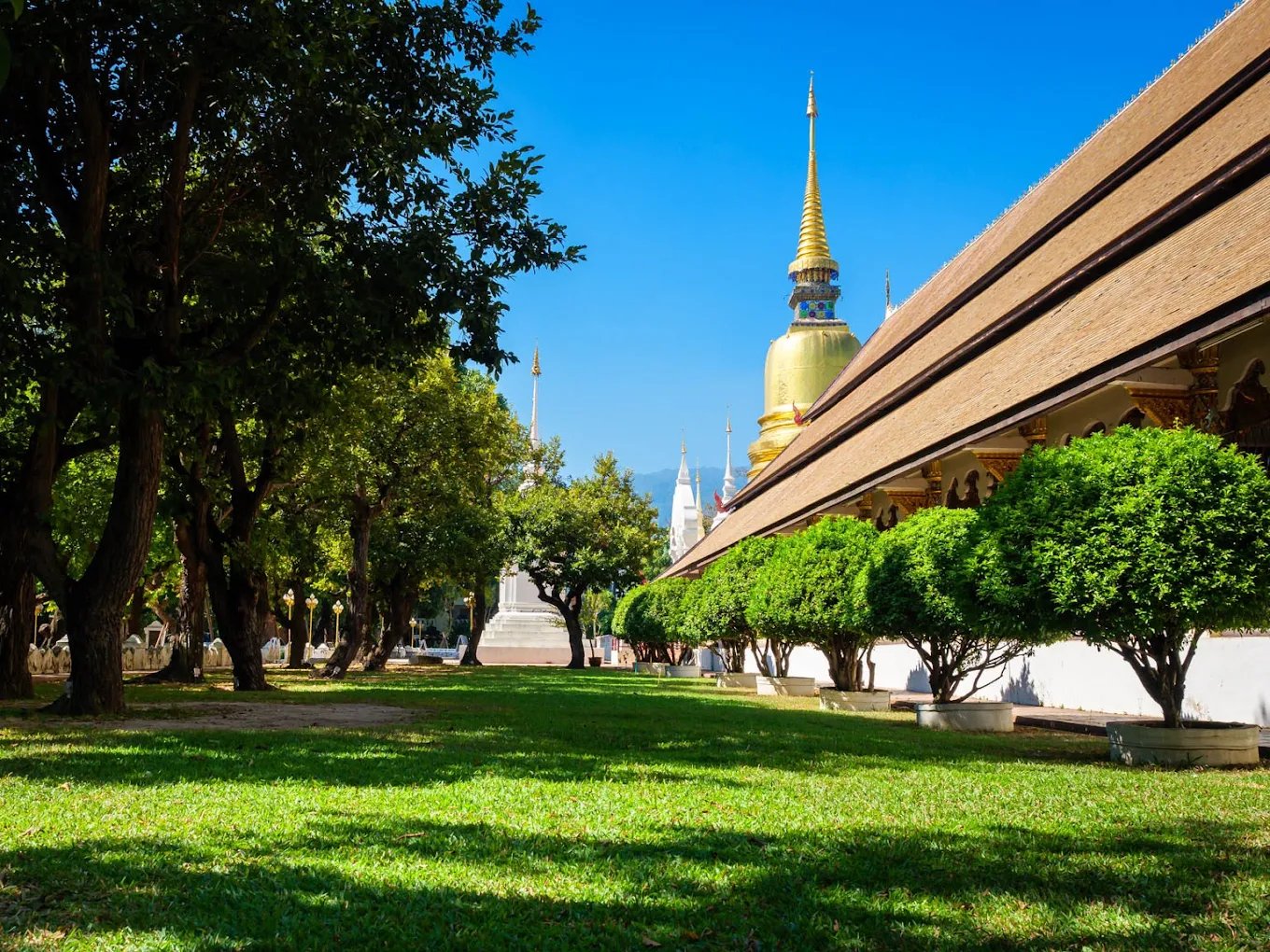
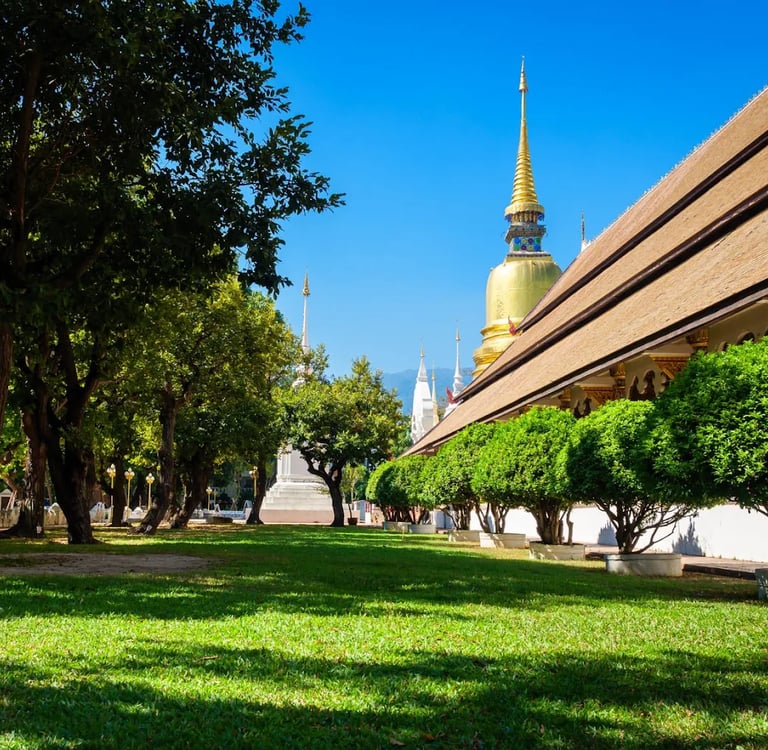
1. Wat Suan Dok (The Monk Chat & Intro)
The Vibe: Educational and Welcoming.
Why it’s great for beginners: Located on Suthep Road, this temple is famous for its "Monk Chat" programs. Before you try to meditate, you can sit with a novice or senior monk and ask questions. Why do we meditate? How do I deal with anger? What is the life of a monk like?
The Program: They offer 1-day and 2-day meditation retreats specifically designed for tourists. It is a "light" introduction that covers the basics of sitting, walking, and standing meditation without being overly intense.
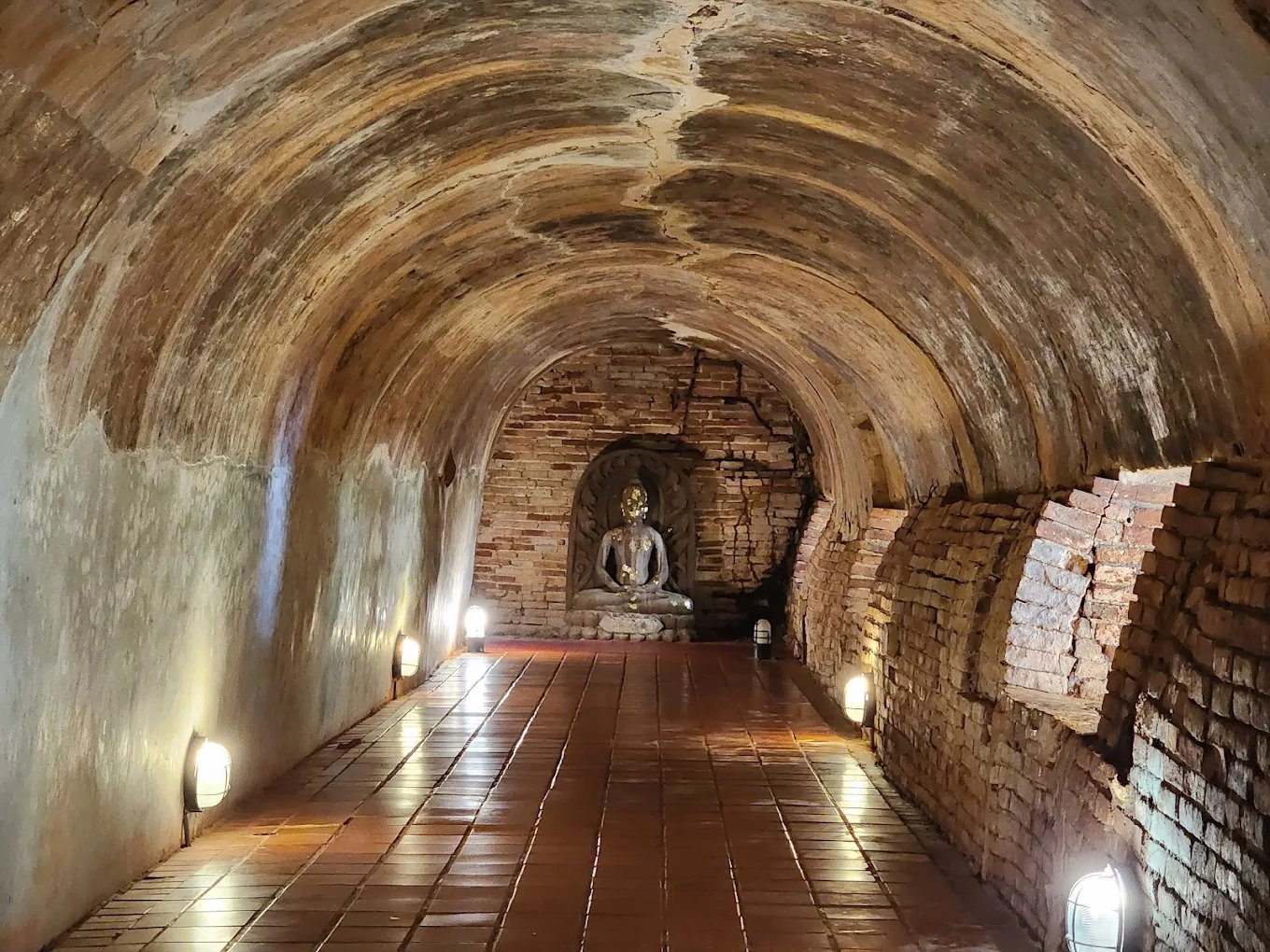
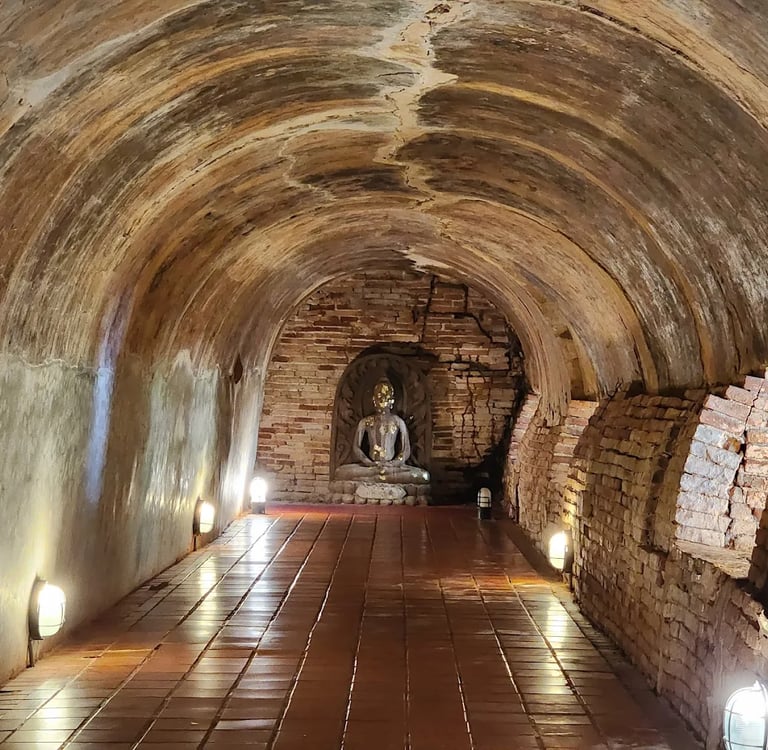
2. Wat Umong (The Forest Tunnel Temple)
The Vibe: Ancient, Nature-Focused, and Atmospheric.
Why it’s great for beginners: If sitting in a classroom feels too clinical, go to Wat Umong. Located at the foot of the mountains, this 700-year-old temple is famous for its underground tunnels and large forest grounds.
The Experience: You can practice "Walking Meditation" around the lake, feeding the fish and turtles. The environment itself does half the work for you. The sound of the wind in the trees and the cooling atmosphere of the tunnels naturally lowers your heart rate. They host a meditation center (Wat Ram Poeng is nearby for serious courses, but Umong is great for self-guided peace).
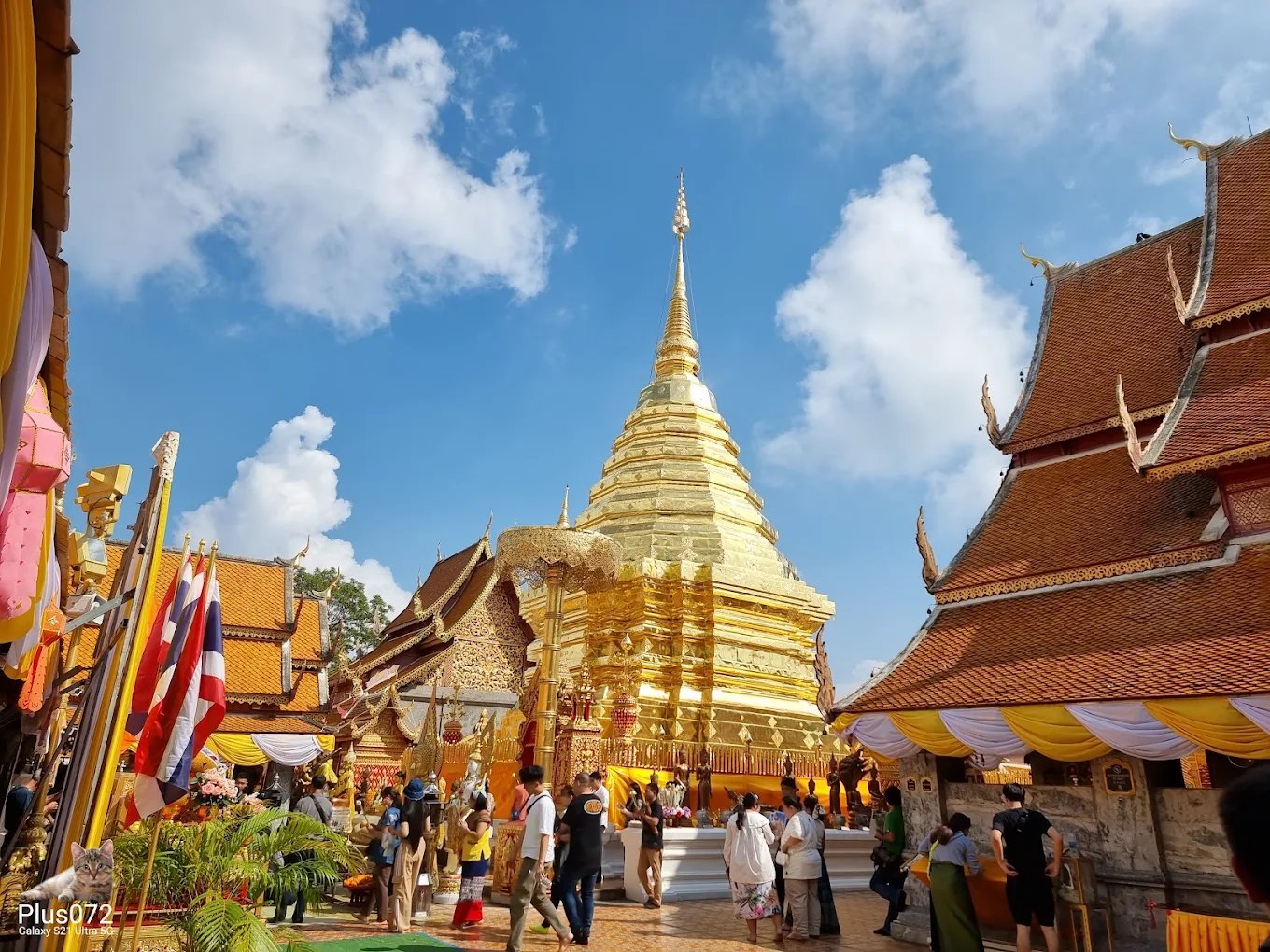
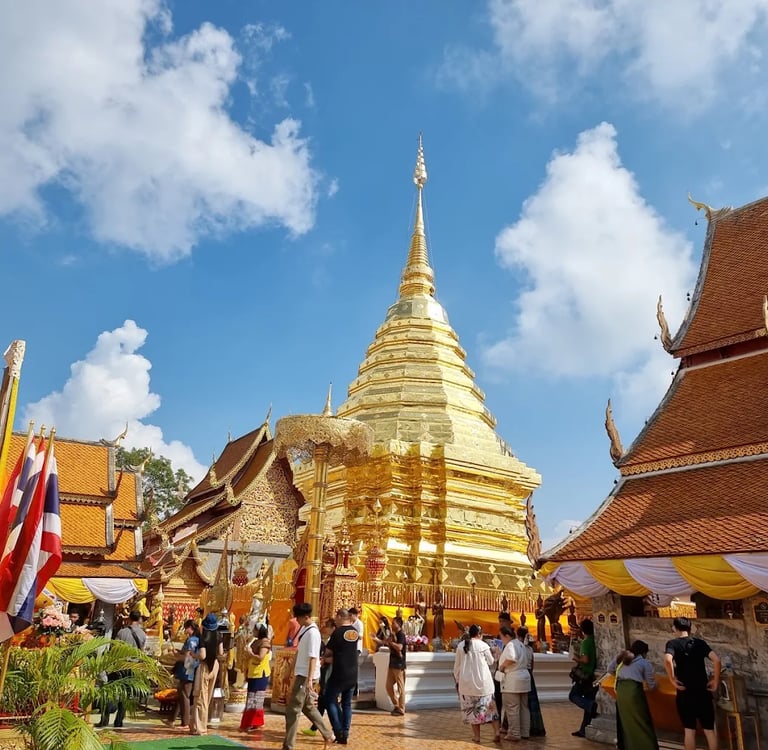
3. Wat Phra That Doi Suthep (The Mountain Top)
The Vibe: Sacred and Spectacular.
Why it’s great for beginners: While the main pagoda is crowded with tourists, the International Buddhism Center located within the temple complex is a haven of silence. Imagine meditating at sunrise, looking out over the entire city of Chiang Mai from the mountain top. The air is cooler, fresher, and cleaner.
The Program: They offer courses ranging from 3 days to roughly 21 days. For a beginner, a 3-day retreat here is a life-changing experience.
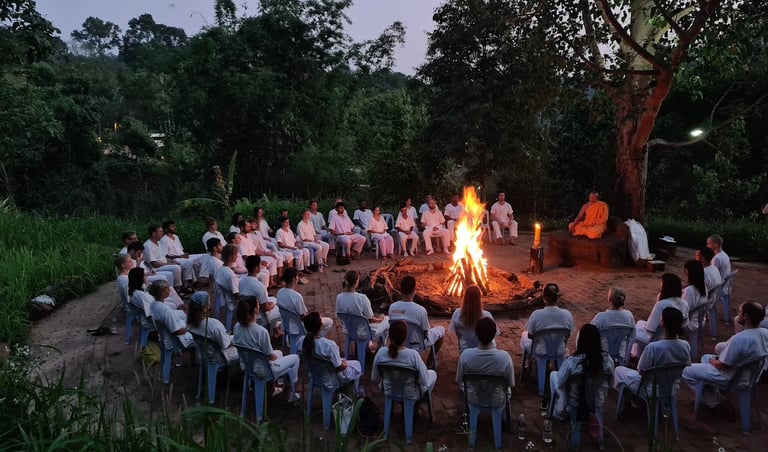
4. Pa Pae Meditation Retreat (The Secular Option)
The Vibe: International, lush, and laid back.
Why it’s great for beginners: Located about an hour outside the city in the mountains, Pa Pae is tailored for international visitors. It is run by monks but feels slightly more like a wellness retreat than a rigid monastery. It sits on the famous "Middle Way" philosophy—not too strict, not too loose.
Part 3: A Crash Course – How to Start Today
You don't need to sign up for a retreat to start. You can do this in your hotel room or a quiet corner of a park. Here is the "C and R Beginner Method":
Step 1: The Posture You do not need to sit in the full Lotus position (legs tangled like a pretzel).
Sit on a cushion with your hips higher than your knees.
Keep your back straight, like a stack of golden coins.
Rest your hands in your lap.
Close your eyes gently.
Step 2: The Anchor Bring your attention to your breath. Don't control it. Just watch it.
Feel the air entering your nostrils (Cool).
Feel the air leaving your nostrils (Warm).
Or, feel your belly rising and falling.
Step 3: The Monkey Mind Within 30 seconds, your mind will wander. What should I eat for dinner? My knee itches. I forgot to email my boss.
This is normal. Do not get angry.
Simply label the thought: "Thinking."
Then, gently bring your attention back to the breath.
Repeat this 1,000 times. That is the meditation. The "rep" isn't staying focused; the "rep" is noticing you got distracted and coming back.
Part 4: Temple Etiquette (Do's and Don'ts)
To practice in a Thai temple, you must respect the culture.
Dress Modestly: This is non-negotiable. Shoulders and knees must be covered. White clothing is preferred for retreats (it symbolizes purity and equality), but for a casual visit, loose, modest clothing is fine.
Silence: Turn off your phone. Whisper if you must speak.
Body Language: Never point your feet at a Buddha statue or a monk. Sit with your legs tucked behind you (mermaid style) or crossed.
Gender Rules: Women must never touch a monk or hand anything directly to him. Place the item on a receiving cloth or table.
Part 5: The Physical Reality (Why Meditation Hurts)
This is the part nobody tells you in the brochures. Meditation is physically painful.
We see it all the time at C and R Thai Massage. Clients come back from a 3-day retreat spiritually enlightened but physically wrecked.
Why?
The Hips: Sitting cross-legged on the floor requires open hip flexors and external rotation that most Westerners (who sit in chairs all day) do not have. This strains the hip joints.
The Thoracic Spine (Upper Back): Trying to hold your back perfectly straight for hours without core strength leads to burning pain between the shoulder blades (the Rhomboids and Trapezius).
The Knees and Ankles: The pressure of your legs resting on each other on a hard floor cuts off circulation and strains the ligaments.
The mind wants to be still, but the body screams to move. This physical discomfort is often the biggest barrier for beginners.
Part 6: The C and R Solution – Integrating Body and Mind
This is where we come in.
In the ancient Ayurvedic and Thai traditions, Yoga/Massage and Meditation were never separate. Yoga was invented to prepare the body to sit for meditation. Massage was used to heal the body after the rigors of spiritual practice.
You cannot have a peaceful mind in a painful body.
If you are planning to visit a temple or try a meditation course in Chiang Mai, we highly recommend pairing it with restorative massage therapy. Think of it as "Pre-hab" and "Re-hab."
Before You Go (The Preparation):
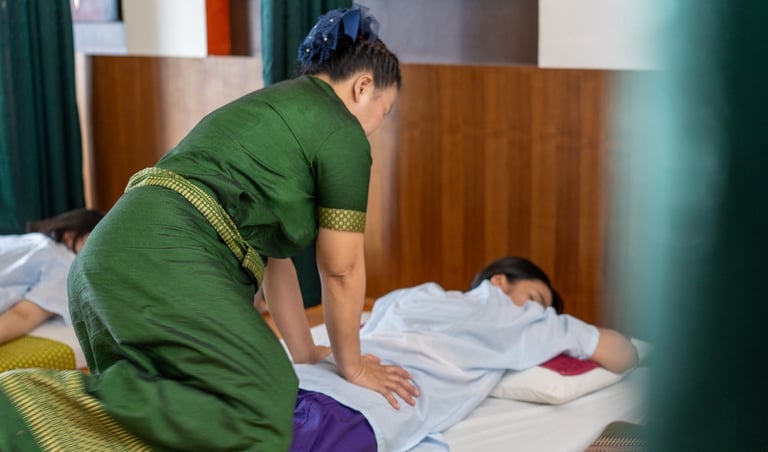
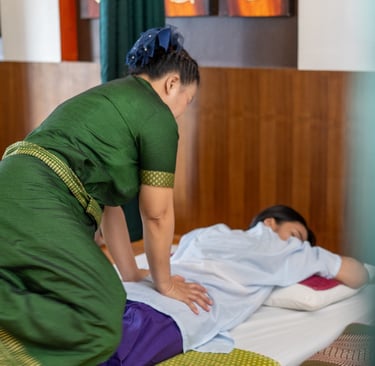
Treatment: Traditional Thai Massage (2 Hours)
Why: Thai massage is often called "Lazy Man's Yoga." We use assisted stretching to open your hips and lengthen your hamstrings. We work on the "Sen" energy lines to ensure blood flows freely to your legs. This will make sitting on the floor significantly more comfortable.
After You Return (The Recovery):
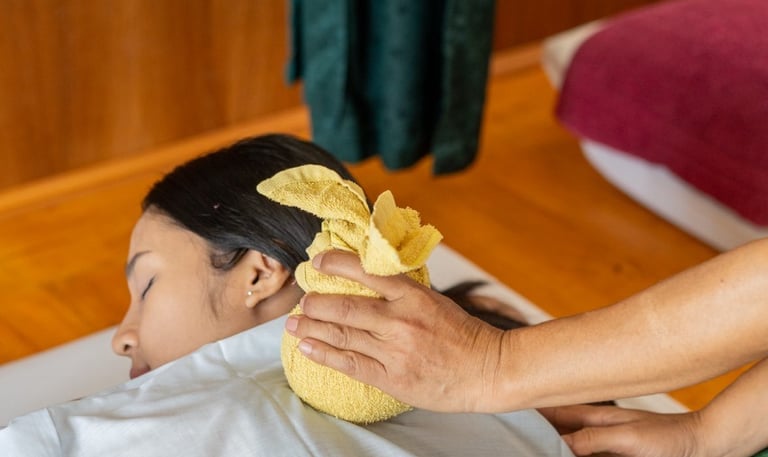
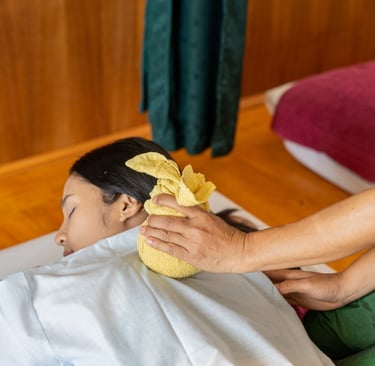
Treatment: Herbal Compress Massage (Luk Pra Kob)
Why: After days of sitting still, your muscles will be cold and stiff. The steamed herbal ball (filled with Plai, Turmeric, and Lemongrass) drives deep heat into the lower back and joints. It promotes circulation and melts away the stiffness of the "meditator’s posture."
Treatment: Tok Sen (Hammer Massage)
Why: This ancient Lanna technique uses vibration to penetrate deep into the thick muscles of the back and hips, releasing deep-seated tension without the pain of deep tissue digging.
Conclusion: The Journey Inward
Chiang Mai invites you to slow down. It offers you a rare gift: the time and space to meet yourself.
We encourage you to step into a temple. Sit in the silence. Watch your breath. It might be difficult at first, and your mind might jump around like a monkey, but the peace you find on the other side is worth it.
And remember, you don't have to do it alone. Let the monks guide your spirit, and let C and R Thai Massage support your body. When your mind is clear and your body is relaxed, you have truly arrived in Chiang Mai.
"Namo Tassa..." (Homage to the Blessed One). May you find peace in our beautiful city.
Have you tried meditation in Chiang Mai? Did you find it difficult to sit still? Share your experience in the comments below!
Branch 1: Sunday Walking Street
(10 AM - 10PM)
Address: 145/8 Rajdamnern Road T. Prasingh
A. Mueng Chiang Mai 50200
Phone Number:
+66 (0) 94 601 6207
+66 (0) 83 480 2627
Email: services.crgroup@gmail.com