



Muay Thai Chiang Mai: Where to Watch, Train & Recover
The ultimate guide to Muay Thai in Chiang Mai. Best stadiums to watch fights, top gyms for training, and essential massage tips for fighter recovery.
CHIANG MAI OLD TOWN AND TRAVEL TIPS
2/14/20267 min read


Muay Thai in Chiang Mai: The Ultimate Guide to Watching, Training, and Recovering
You hear it before you see it. The rhythmic thud of shin against leather. The guttural grunt of effort. The high-pitched, hypnotic wail of the Java pipe music (Sarama).
Welcome to the world of Muay Thai.
In Chiang Mai, Muay Thai isn't just a sport; it is the heartbeat of the city. Walk down any street in the evening, and you will likely see a TV flickering with a match in a local noodle shop, or pass a gym where sweat-drenched students are skipping rope in the humidity.
Known as the "Art of Eight Limbs," Muay Thai is distinct from Western boxing because it utilizes the entire body: fists, elbows, knees, and shins. It is beautiful, brutal, and deeply spiritual.
For visitors to Chiang Mai, engaging with Muay Thai is a rite of passage. But there are two very different ways to experience it. You can be a Spectator, sipping a cold Leo beer while watching the pros battle under the stadium lights. Or, you can be a Warrior, wrapping your hands and stepping onto the mats to test your own limits.
At C and R Thai Massage, we have a special relationship with Muay Thai. In traditional Thai culture, Massage and Muay Thai are sibling arts. One breaks the body down to build resilience; the other heals the body to restore balance. You cannot have the fighter without the healer.
Whether you want to sit ringside or sweat it out in the ring, this guide covers everything you need to know about Chiang Mai’s fight scene.
Part 1: The Cultural Context (Respect the Ring)
Before you buy a ticket or sign up for a class, it helps to understand what you are looking at. Muay Thai has been the national sport of Thailand for centuries, originating as a battlefield hand-to-hand combat technique.
The Ram Muay / Wai Kru: If you watch a fight, do not be impatient when the fighters perform a slow, dance-like ritual before the first round. This is the Wai Kru Ram Muay. It is a ceremony where the fighter seals the ring to block out bad spirits and pays homage to their teachers, parents, and the King. It is a moment of grace before the violence.
The Music: The music you hear isn't a recording. It is a live band (usually consisting of a drummer, a cymbal player, and a Java pipe player) sitting ringside. The tempo of the music speeds up as the fight gets more intense. It is the pulse of the fight.
Part 2: Where to Watch a Fight (The Spectator Experience)
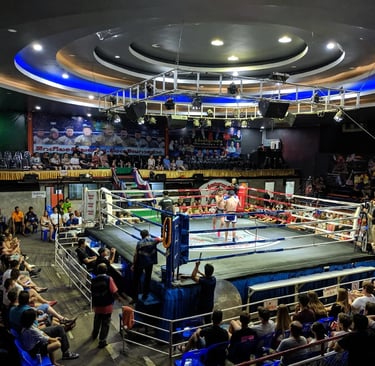
Chiang Mai has several stadiums. Choosing the right one depends on the "vibe" you are looking for.
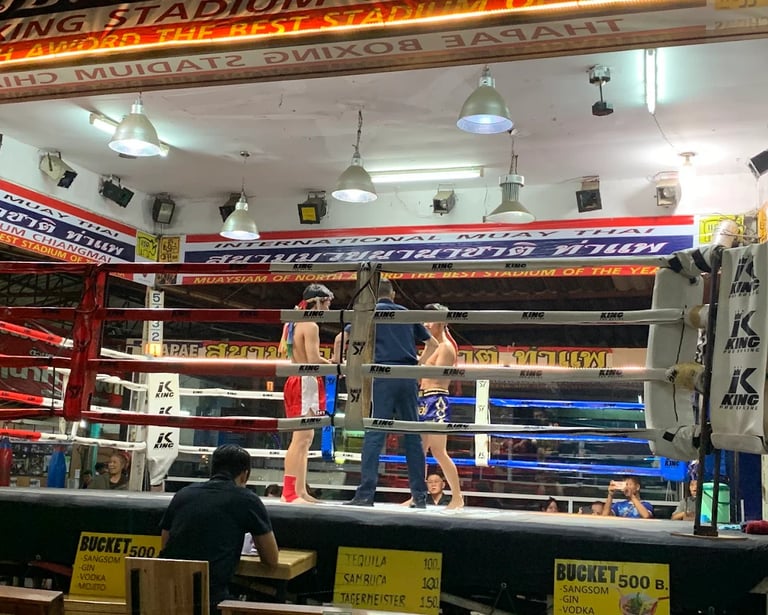
1. Thapae Boxing Stadium (The Original)
Location: Moon Muang Road (Near Thapae Gate).
The Vibe: Gritty, loud, and intense.
The Experience: This is the oldest stadium in the city. It feels like a movie set from the 1980s. It is smaller and enclosed, which means the noise is deafening. You are incredibly close to the action—close enough to hear the slap of skin and see the sweat fly.
The Crowd: A mix of tourists and hardcore local gamblers.
Best For: Those who want the raw, unfiltered atmosphere.
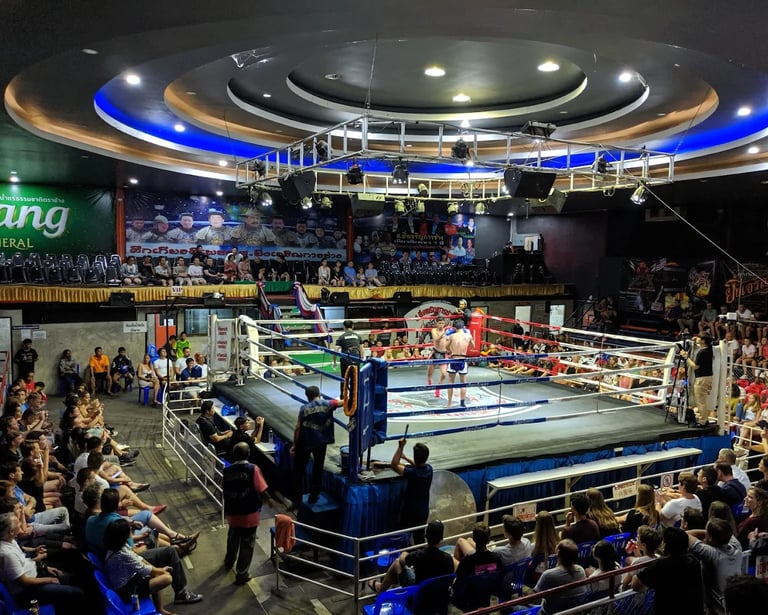
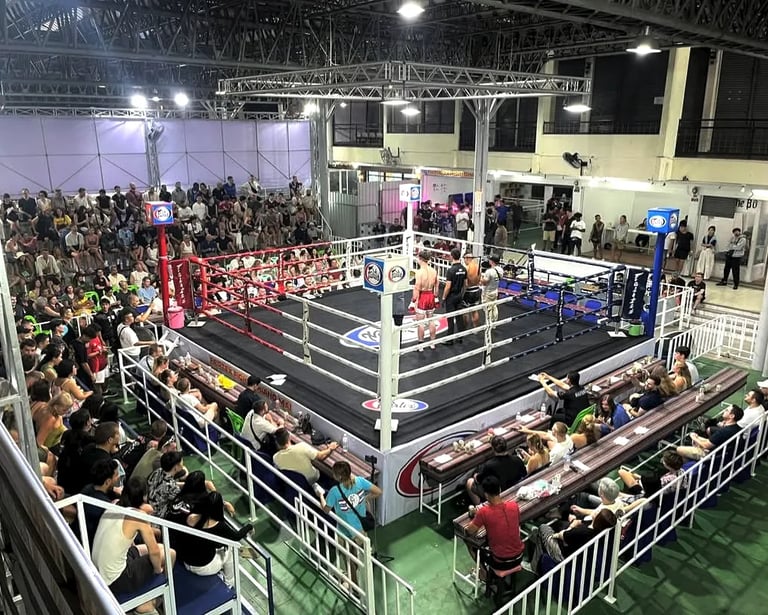
2. Chiang Mai Boxing Stadium (The Big Stage)
Location: Chang Phueak Road (North of the city).
The Vibe: Polished, spacious, and professional.
The Experience: This is the "main" stadium. It is larger, cleaner, and has better ventilation than Thapae. The fight cards here often feature higher-level fighters and international bouts. There are dedicated VIP sections with comfortable sofas and table service.
Best For: Families, groups, or anyone who wants a comfortable night out with guaranteed good matchmaking.
3. Kalare Night Bazaar Boxing (The Tourist Fun)
Location: Inside the Night Bazaar.
The Vibe: Casual and accessible.
The Experience: These fights are often free (or very cheap) if you buy a drink. While you will see some real knockouts, the level of competition is generally lower than the dedicated stadiums. It’s more of a "show" for shoppers passing by.
Best For: A quick taste of Muay Thai without committing your whole evening.
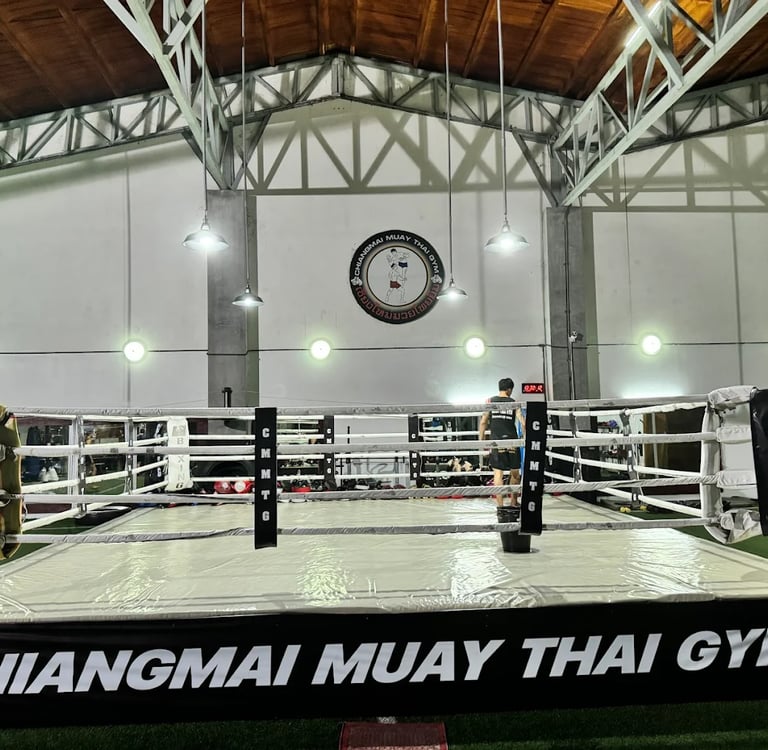
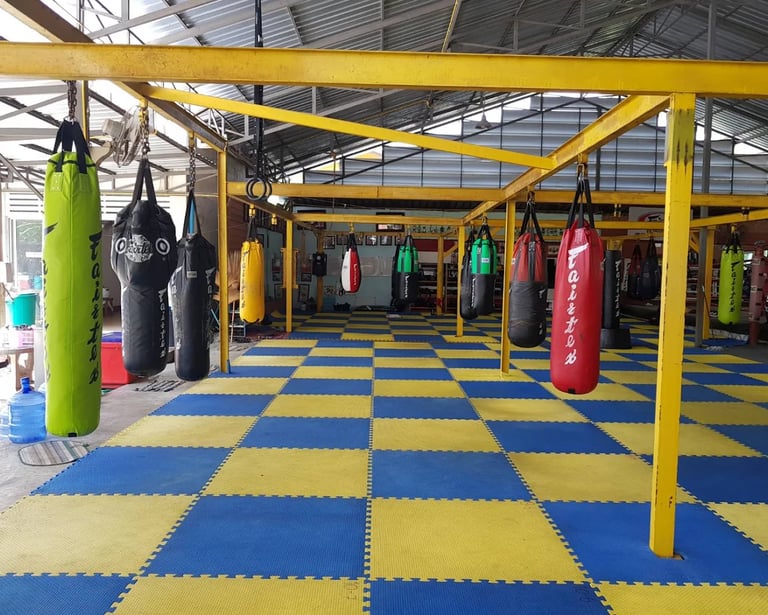
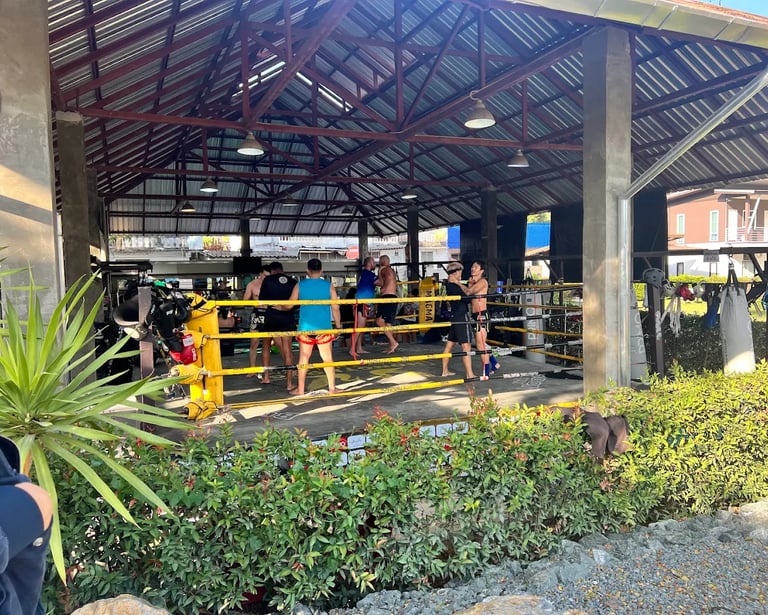
Part 3: Where to Train (The Warrior Experience)
So, you want to try it yourself? Good choice. Training Muay Thai is one of the best calorie-burning workouts on the planet.
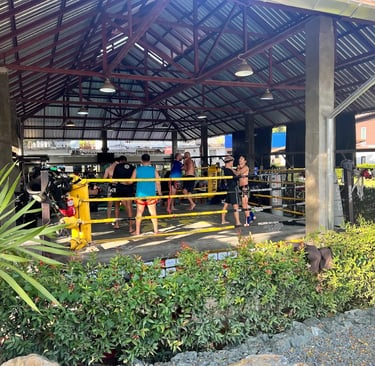
Chiang Mai is famous for having some of the best gyms in the world, often at a fraction of the price of Bangkok or Phuket. Don't be intimidated—most gyms are incredibly welcoming to beginners.
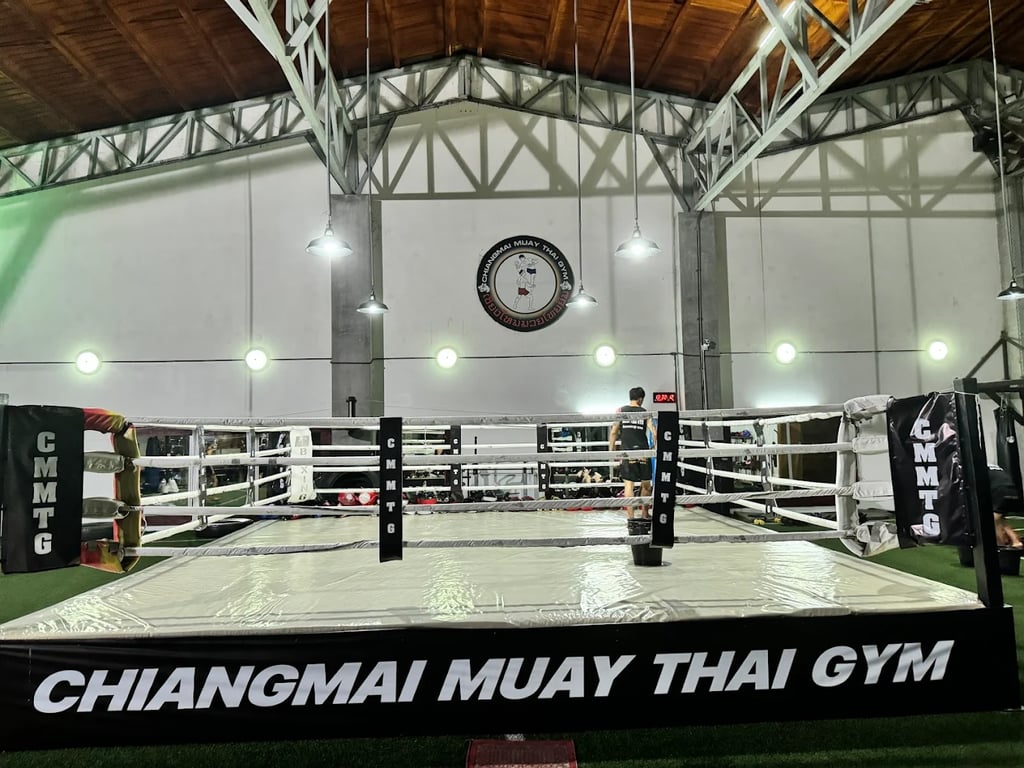
1. Chiang Mai Muay Thai Gym (Old City)
Best For: Beginners and Convenience.
The Vibe: Located right in the corner of the Old City moat, this gym is easy to find. It is open-air but shaded. The trainers here speak excellent English and are used to working with tourists who have zero experience. They make it fun, safe, and sweaty.
2. Santai Muay Thai (San Kamphaeng)
Best For: Serious technique and purists.
The Vibe: Located in the countryside among the rice paddies, Santai is a "camp" style gym. It is famous for "Stadium Muay Thai"—pure, technical, beautiful fighting style. If you want to stay for a month and really learn the art, this is the place.
3. Hongthong Muay Thai
Best For: Family atmosphere and long-term stays.
The Vibe: Run by two twin brothers (Gen and Joe), Hongthong feels like a family. It’s located a bit outside the city, offering a quiet environment to focus. They have great accommodation on-site and are fantastic with kids and families.
What to Expect in a Class:
A typical session lasts 90 minutes to 2 hours.
Warm-up: Skipping rope (10-15 mins) and running.
Shadow Boxing: Practicing movement in the mirror.
Pad Work: The highlight. You get in the ring with a trainer who holds pads. You hit them; they yell at you (nicely). "OEEEY!"
Bag Work: Hitting the heavy bag.
Clinch/Sparring: (Usually optional for beginners).
Conditioning: Pushups, situps, and stretching.
Part 4: The Physical Reality (The Morning After)
You felt like a warrior in the ring. But the next morning? You feel like a train wreck.
Muay Thai places specific, intense demands on the body that are different from running or lifting weights.
1. The "Shin Splint" Agony In Muay Thai, you kick with your shin, not your foot. Beginners often have "soft" shins. The impact on the heavy bag causes micro-bruising and inflammation along the tibia.
Result: Walking hurts. Touching your leg hurts.
2. The "Clinch Neck" The "Clinch" is grappling while standing up. Your opponent pulls your head down while you try to keep your posture up.
Result: Your Trapezius muscles (shoulders) and neck extensors will be screaming. It feels like the worst stiff neck of your life.
3. The "Hip Flexor" Lock Throwing 500 knees and 200 kicks requires your hips to open and close explosively.
Result: Tight, locked hips that make it hard to sit down or stand up straight.
4. The "Turtle Back" Because you hold your guard up high to protect your face, your upper back (Rhomboids) stays in a contracted state for hours.
Result: Knots between your shoulder blades.
Part 5: The C and R Recovery Plan (Your Ringside Team)
This is where we step in. In Thailand, a fighter never trains without massage. It is considered part of the training, not a luxury. If the muscles are too tight, they tear. If the blood doesn't flow, the bruises don't heal.
At C and R Thai Massage, we have specific protocols for our Muay Thai clients.
Recommendation 1: The "Fighter’s Balm" (Oil Massage + Tiger Balm)
Best For: Bruises and general soreness.
The Treatment: If you are bruised, do not get a deep tissue or traditional massage directly on the bruise. It will make it worse.
Our Approach: We use a gentle Aromatherapy Oil Massage combined with cooling herbal balms (like Tiger Balm or Plai oil). We work around the bruising to stimulate lymphatic drainage. This helps flush out the stagnant blood and speeds up the healing of shins and thighs.
Recommendation 2: The "Clinch Release" (Head, Neck, & Shoulder)
Best For: That stiff neck from grappling.
The Treatment: We focus entirely on the upper body. We use thumb pressure to release the trigger points in the Levator Scapulae (the muscle that connects the neck to the shoulder) and the Trapezius. We also work on the base of the skull to prevent tension headaches.
Recommendation 3: The "Hip Opener" (Traditional Thai Massage)
Best For: Tight hips and hamstrings.
The Treatment: Thai Massage is often called "Lazy Yoga." We will gently stretch your legs, opening the hip flexors and lengthening the hamstrings that have shortened from all the kicking. This restores your range of motion so you can kick higher next time!
Recommendation 4: The Herbal Compress (Luk Pra Kob)
Best For: Deep muscle fatigue and inflammation.
The Treatment: The steam from the herbal ball penetrates deep into the muscle fibers. The Plai root (a type of ginger) in the compress is a natural anti-inflammatory—nature's Ibuprofen. It is magic for sore lower backs.
Conclusion: Respect the Balance
Muay Thai teaches you to be tough. It teaches you to take a hit and keep moving forward. But it also teaches you respect—respect for your opponent, respect for your teacher, and respect for your own body.
You cannot train hard if you do not recover well.
So, go to the stadium. Cheer until your voice is gone. Go to the gym. Sweat until your shirt is soaked. Embrace the warrior spirit of Chiang Mai.
And when the final bell rings and the adrenaline fades, come to C and R Thai Massage. Let us heal you, so you can get back in the ring tomorrow.
"Chok Dee" (Good Luck)!
Branch 1: Sunday Walking Street
(10 AM - 10PM)
Address: 145/8 Rajdamnern Road T. Prasingh
A. Mueng Chiang Mai 50200
Phone Number:
+66 (0) 94 601 6207
+66 (0) 83 480 2627
Email: services.crgroup@gmail.com